



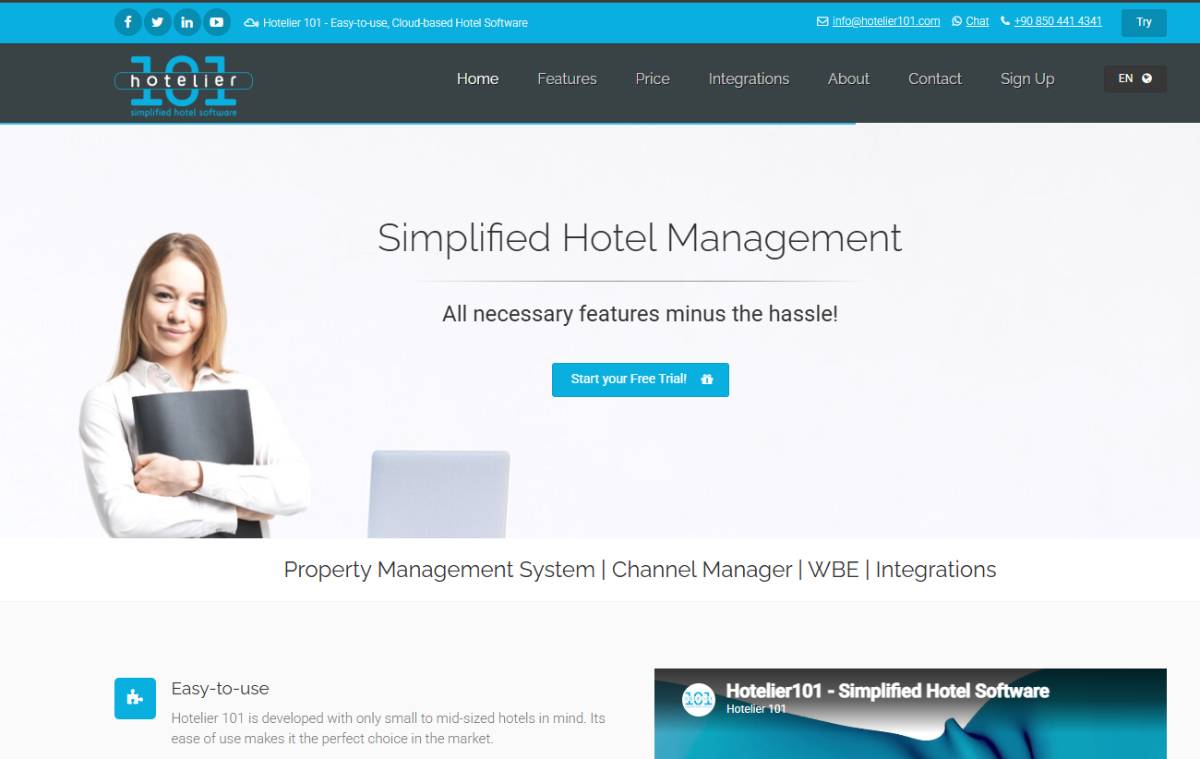
Hotelier 101 represents the growing shift toward digital tools designed to simplify hotel management and streamline day-to-day hospitality operations. By bringing operational processes into a more structured software environment, the platform addresses the needs of hotel operators seeking greater efficiency, consistency and visibility across increasingly competitive hospitality markets.
Hotelier 101 is positioned as a hospitality management solution focused on supporting core hotel operations. Its software-led approach reflects the industry's increasing reliance on centralized digital systems to coordinate workflows, manage operational information and improve organizational efficiency.
For hotel managers and hospitality businesses, such platforms can reduce dependence on fragmented processes while creating greater visibility into daily activities. The development is particularly relevant as hotels face pressure to improve service delivery while controlling operating costs. Digital management capabilities can also support more consistent decision-making as operators manage changing guest expectations, staffing requirements and competitive pressures across the hospitality sector.
The hospitality industry is undergoing a broader digital transformation as hotels increasingly adopt technology to improve operational efficiency and customer experiences. Property-management systems, cloud platforms, automation and integrated business applications are becoming important components of modern hotel infrastructure.
This transition is being driven by several factors, including rising labor costs, changing traveler expectations, growing competition and the need for real-time operational visibility. Smaller and independent properties face particular pressure to modernize without creating excessive technology complexity.
Hotelier 101 fits within this wider movement toward accessible hospitality software. Rather than relying exclusively on manual administration or disconnected tools, operators can increasingly use centralized platforms to organize information and standardize workflows. For executives, the strategic value extends beyond basic administration: better digital infrastructure can create a foundation for improved productivity, scalability and data-informed management across hotel operations.
From an industry perspective, the continued adoption of hospitality-management software reflects a broader recognition that technology is becoming an operational necessity rather than an optional investment. Hotel executives increasingly evaluate platforms based on their ability to simplify workflows, reduce administrative burdens and provide useful visibility into business performance.
Hotelier 101's relevance should therefore be viewed within the larger technology modernization cycle affecting hospitality businesses. Analysts examining the sector would likely focus on usability, integration capabilities, scalability, implementation costs and the platform's ability to support different hotel operating models.
There are also important questions around adoption. Hospitality businesses vary significantly in size, staffing structures and technology maturity. A solution that provides practical functionality without imposing excessive complexity can be particularly valuable for operators with limited technical resources. As competition intensifies, software providers will increasingly need to demonstrate measurable operational value rather than simply offering additional digital features.
For hospitality executives, digital management platforms can support more standardized operations and potentially improve productivity by reducing manual administrative work. The ability to organize operational information digitally may also help managers identify inefficiencies and respond more quickly to changing business conditions.
Investors and hotel owners should consider technology adoption as part of broader operational modernization strategies. However, software investment must be evaluated against implementation requirements, workforce adoption, integration needs and measurable returns.
For consumers, the indirect impact could appear through more consistent service and smoother hotel operations. From a policy perspective, the wider digitization of hospitality also increases the importance of cybersecurity, responsible data management and appropriate protection of business and customer information.
The next phase of hospitality technology will likely center on deeper automation, integration and data-driven decision-making. Hotel operators will increasingly assess whether management platforms can scale with their businesses while remaining simple enough for frontline teams to use effectively. Hotelier 101's positioning highlights a broader industry direction: digital infrastructure is becoming central to building efficient, adaptable and competitive hospitality operations.
Source: Crozdesk
Date: August 11, 2026


