
Hiring Verification Tools Reshape Recruitment Processes

Checkr is positioned as a technology-driven background screening platform designed to support employers with automated checks and hiring workflows.

August 11, 2026
|

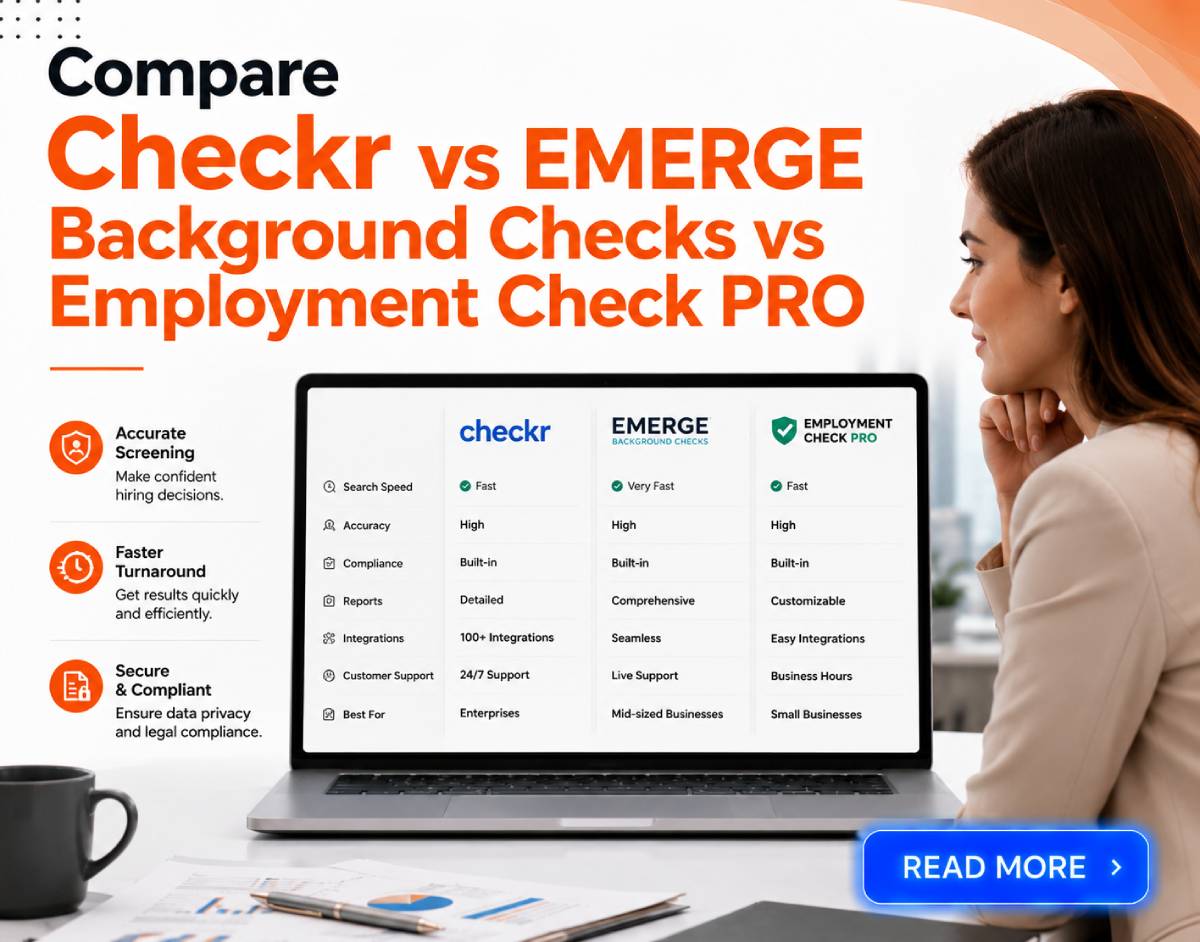
A comparison of Checkr, EMERGE Background Checks and Employment Check PRO highlights the changing landscape of employment screening technology. The platforms address different aspects of background verification, reflecting growing demand for faster, digitally managed hiring checks as employers seek to reduce recruitment risk while maintaining efficient and compliant hiring processes.

Checkr is positioned as a technology-driven background screening platform designed to support employers with automated checks and hiring workflows. EMERGE Background Checks focuses on employment screening services intended to help organizations evaluate candidates before hiring. Employment Check PRO similarly addresses background verification requirements for businesses and employers.

The comparison reflects an increasingly digital recruitment environment in which organizations want screening processes to integrate more closely with hiring operations. Automation can reduce manual administration, accelerate candidate verification and improve visibility across recruitment workflows.

For HR leaders, the competitive distinction increasingly comes down to screening coverage, turnaround times, integration capabilities, compliance support and the ability to manage background checks at scale.

The development aligns with a broader transformation in recruitment technology. As companies compete for talent, hiring teams are under pressure to move candidates through recruitment pipelines quickly while maintaining appropriate verification procedures.

Background screening has traditionally involved multiple manual steps, including collecting candidate information, ordering checks, reviewing reports and documenting hiring decisions. Digital platforms are increasingly consolidating these activities into centralized workflows, allowing HR teams to manage screening alongside broader recruitment processes.

The growth of remote and distributed hiring has made this capability even more important. Employers may recruit candidates across multiple jurisdictions, creating additional complexity around identity verification, employment history, criminal records and applicable regulations.

For executives, the issue is ultimately one of balancing speed and risk. Hiring too slowly can cause organizations to lose qualified candidates, while insufficient screening can create legal, operational or reputational exposure. Modern screening technology is therefore becoming an increasingly strategic component of workforce management.

Recruitment and HR technology specialists increasingly emphasize that background screening should be treated as part of the broader candidate experience rather than an isolated administrative task. Delays, unclear communication or repetitive processes can negatively affect both recruiters and applicants.

Checkr's technology-focused approach reflects the industry's movement toward automation and digital workflows. EMERGE Background Checks and Employment Check PRO represent alternative approaches within the employment-screening market, giving organizations different options based on their operational requirements.

For HR executives, however, the most important consideration is not simply the speed of a background check. Accuracy, compliance, data protection and consistency are equally important.

Organizations must also recognize that screening decisions can have significant consequences for applicants. Responsible implementation requires appropriate human oversight, clear policies and careful attention to applicable employment and privacy regulations.

The broader industry direction suggests that screening providers will increasingly compete on their ability to combine automation with reliable data, compliance controls and seamless integration into recruitment systems.

For employers, digital background-screening technology can reduce administrative workloads and accelerate hiring decisions. Faster verification may help organizations shorten recruitment cycles while maintaining structured screening procedures.

For executives, the key consideration is risk management. Screening platforms can support more consistent processes, but organizations remain responsible for ensuring that checks are conducted lawfully and that hiring decisions are made fairly.

Candidates are also directly affected. Transparent communication, accurate information and appropriate handling of personal data are essential to maintaining trust in digital screening systems.

From a policy perspective, employment screening remains closely connected to privacy, consumer-reporting and employment regulations. Organizations operating across jurisdictions may face different requirements governing candidate consent, data handling and the use of screening results.

Employment screening technology is likely to move toward greater automation, faster verification and deeper integration with applicant-tracking and human-resource systems. Artificial intelligence may also play a larger role in organizing screening information, although human oversight will remain critical.

Decision-makers should watch how providers balance speed, accuracy, privacy and regulatory compliance. The strongest platforms will be those that help employers make informed hiring decisions without creating unnecessary friction or compromising candidate rights.

Source: Crozdesk
Date: August 11, 2026

  • Featured tools
Symphony Ayasdi AI
Free

SymphonyAI Sensa is an AI-powered surveillance and financial crime detection platform that surfaces hidden risk behavior through explainable, AI-driven analytics.

#
Finance
Learn more
WellSaid Ai
Free

WellSaid AI is an advanced text-to-speech platform that transforms written text into lifelike, human-quality voiceovers.

#
Text to Speech
Learn more

Learn more about future of AI

Join 80,000+ Ai enthusiast getting weekly updates on exciting AI tools.
Thank you! Your submission has been received!
Oops! Something went wrong while submitting the form.

Hiring Verification Tools Reshape Recruitment Processes

August 11, 2026

Checkr is positioned as a technology-driven background screening platform designed to support employers with automated checks and hiring workflows.

A comparison of Checkr, EMERGE Background Checks and Employment Check PRO highlights the changing landscape of employment screening technology. The platforms address different aspects of background verification, reflecting growing demand for faster, digitally managed hiring checks as employers seek to reduce recruitment risk while maintaining efficient and compliant hiring processes.

Checkr is positioned as a technology-driven background screening platform designed to support employers with automated checks and hiring workflows. EMERGE Background Checks focuses on employment screening services intended to help organizations evaluate candidates before hiring. Employment Check PRO similarly addresses background verification requirements for businesses and employers.

The comparison reflects an increasingly digital recruitment environment in which organizations want screening processes to integrate more closely with hiring operations. Automation can reduce manual administration, accelerate candidate verification and improve visibility across recruitment workflows.

For HR leaders, the competitive distinction increasingly comes down to screening coverage, turnaround times, integration capabilities, compliance support and the ability to manage background checks at scale.

The development aligns with a broader transformation in recruitment technology. As companies compete for talent, hiring teams are under pressure to move candidates through recruitment pipelines quickly while maintaining appropriate verification procedures.

Background screening has traditionally involved multiple manual steps, including collecting candidate information, ordering checks, reviewing reports and documenting hiring decisions. Digital platforms are increasingly consolidating these activities into centralized workflows, allowing HR teams to manage screening alongside broader recruitment processes.

The growth of remote and distributed hiring has made this capability even more important. Employers may recruit candidates across multiple jurisdictions, creating additional complexity around identity verification, employment history, criminal records and applicable regulations.

For executives, the issue is ultimately one of balancing speed and risk. Hiring too slowly can cause organizations to lose qualified candidates, while insufficient screening can create legal, operational or reputational exposure. Modern screening technology is therefore becoming an increasingly strategic component of workforce management.

Recruitment and HR technology specialists increasingly emphasize that background screening should be treated as part of the broader candidate experience rather than an isolated administrative task. Delays, unclear communication or repetitive processes can negatively affect both recruiters and applicants.

Checkr's technology-focused approach reflects the industry's movement toward automation and digital workflows. EMERGE Background Checks and Employment Check PRO represent alternative approaches within the employment-screening market, giving organizations different options based on their operational requirements.

For HR executives, however, the most important consideration is not simply the speed of a background check. Accuracy, compliance, data protection and consistency are equally important.

Organizations must also recognize that screening decisions can have significant consequences for applicants. Responsible implementation requires appropriate human oversight, clear policies and careful attention to applicable employment and privacy regulations.

The broader industry direction suggests that screening providers will increasingly compete on their ability to combine automation with reliable data, compliance controls and seamless integration into recruitment systems.

For employers, digital background-screening technology can reduce administrative workloads and accelerate hiring decisions. Faster verification may help organizations shorten recruitment cycles while maintaining structured screening procedures.

For executives, the key consideration is risk management. Screening platforms can support more consistent processes, but organizations remain responsible for ensuring that checks are conducted lawfully and that hiring decisions are made fairly.

Candidates are also directly affected. Transparent communication, accurate information and appropriate handling of personal data are essential to maintaining trust in digital screening systems.

From a policy perspective, employment screening remains closely connected to privacy, consumer-reporting and employment regulations. Organizations operating across jurisdictions may face different requirements governing candidate consent, data handling and the use of screening results.

Employment screening technology is likely to move toward greater automation, faster verification and deeper integration with applicant-tracking and human-resource systems. Artificial intelligence may also play a larger role in organizing screening information, although human oversight will remain critical.

Decision-makers should watch how providers balance speed, accuracy, privacy and regulatory compliance. The strongest platforms will be those that help employers make informed hiring decisions without creating unnecessary friction or compromising candidate rights.

Source: Crozdesk
Date: August 11, 2026

Promote Your Tool

Copy Embed Code

Similar Blogs

August 14, 2026
|

Benefitfocus Expands Digital Benefits Administration

Benefitfocus provides cloud-based technology covering benefits enrollment, administration, communications, billing, payments and data exchange.
Read more
August 14, 2026
|

Travel Agent Revenue Models Evolve Digitally

Travel agencies can earn commissions when customers book hotels, cruises, tours, vacation packages and other travel products through them. Suppliers may pay agents for generating bookings, making commissions a traditional component of agency revenue.
Read more
August 14, 2026
|

Sofon Advances Guided Selling CPQ Automation

Sofon's platform combines guided selling, product configuration, pricing, quotation and sales-management capabilities. Guided questionnaires help sales teams identify customer requirements and translate them into suitable product configurations.
Read more
August 14, 2026
|

WellRyde Advances Medical Transportation Management

WellRyde provides technology for managing non-emergency medical transportation operations, including trip scheduling, dispatch coordination, transportation-provider management and reporting.
Read more
August 14, 2026
|

Review WAVE Advances Digital Patient Engagement

Review WAVE provides healthcare practices with tools for online appointment scheduling, two-way texting, automated appointment reminders, digital forms, web chat, marketing campaigns and online review generation.
Read more
August 14, 2026
|

Edgenuity Expands Digital Virtual Education

Edgenuity provides digital curriculum and learning solutions covering core academic subjects, electives, Advanced Placement and career-oriented education.
Read more