
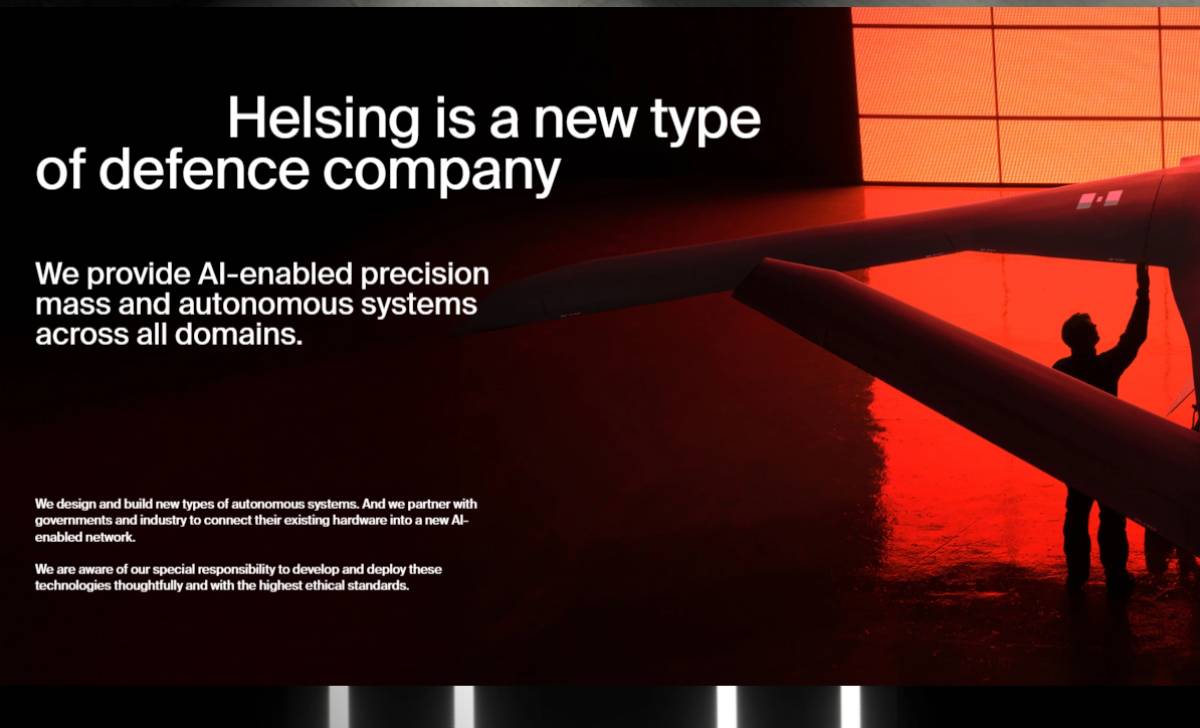
Helsing Fuels Nordic Defence AI Growth

Helsing’s reported $18 billion valuation marks a significant step in the company’s expansion within the European defence technology sector.

July 8, 2026
|

Defence AI company Helsing has reached a major growth milestone as its rising valuation attracts deeper investment from Nordic capital markets. The development highlights Europe’s accelerating focus on artificial intelligence-driven defence capabilities, reflecting broader geopolitical shifts and growing demand for advanced security technologies among governments, investors, and defence organizations.

Helsing’s reported $18 billion valuation marks a significant step in the company’s expansion within the European defence technology sector. The company develops artificial intelligence systems designed to support modern military operations, including decision-making, data analysis, and battlefield intelligence. The investment momentum reflects increasing interest from Nordic and European investors seeking exposure to strategic technologies linked to national security.

Helsing’s growth comes as European governments increase defence spending and prioritize technological independence. The company’s rise demonstrates how defence AI is becoming a major investment category, attracting both private capital and institutional attention across Europe’s emerging technology ecosystem.

The global defence industry is undergoing a transformation driven by advances in artificial intelligence, autonomous systems, cybersecurity, and data-driven decision-making. Rising geopolitical tensions and evolving security challenges have pushed governments to accelerate modernization efforts and invest in next-generation defence capabilities.

Europe has increasingly focused on strengthening its domestic defence technology sector to reduce dependence on external suppliers and improve strategic autonomy. Nordic countries, known for strong technology ecosystems and innovation-driven economies, have become important contributors to this shift.

The growth of companies like Helsing reflects a wider trend where venture capital and technology investment are moving deeper into defence-related innovation. As AI becomes central to military planning and operational efficiency, defence technology companies are gaining greater importance within national security strategies and global investment markets.

Industry analysts suggest that defence AI is entering a new phase as governments seek faster, more efficient, and data-driven security solutions. Experts believe companies developing advanced AI capabilities could play a critical role in future defence ecosystems by improving intelligence analysis, operational planning, and technology integration.

Investors are increasingly viewing defence technology as a long-term strategic sector, particularly as European countries expand defence budgets and prioritize domestic innovation. Analysts note that successful defence AI companies must balance technological advancement with responsible development, security standards, and regulatory oversight.

Policy experts also emphasize the importance of collaboration between governments, defence organizations, and technology companies. The ability to develop secure and reliable AI systems may become a defining factor in future defence competitiveness and national resilience.

For businesses, Helsing’s growth signals expanding opportunities in defence technology, AI infrastructure, cybersecurity, and advanced software development. Companies operating in related sectors may see increased demand for specialized solutions supporting defence modernization.

Investors are likely to continue evaluating defence AI as a strategic growth market, particularly in Europe where governments are increasing technology-focused defence spending. Policymakers must address issues including AI governance, ethical deployment, cybersecurity risks, and international cooperation.

The rise of defence AI companies also highlights the growing connection between technology innovation and national security, making artificial intelligence a critical component of future economic and geopolitical strategies.

Helsing’s valuation milestone reflects the growing influence of AI in shaping Europe’s defence landscape. Decision-makers should monitor government procurement trends, defence technology investments, regulatory frameworks, and international partnerships. As artificial intelligence becomes increasingly integrated into security operations, companies capable of delivering reliable and responsible defence solutions may become central players in the future global technology competition.

Source: Nordic Tech News
Date:
July 2026

  • Featured tools
Writesonic AI
Free

Writesonic AI is a versatile AI writing platform designed for marketers, entrepreneurs, and content creators. It helps users create blog posts, ad copies, product descriptions, social media posts, and more with ease. With advanced AI models and user-friendly tools, Writesonic streamlines content production and saves time for busy professionals.

#
Copywriting
Learn more
Twistly AI
Paid

Twistly AI is a PowerPoint add-in that allows users to generate full slide decks, improve existing presentations, and convert various content types into polished slides directly within Microsoft PowerPoint.It streamlines presentation creation using AI-powered text analysis, image generation and content conversion.

#
Presentation
Learn more

Learn more about future of AI

Join 80,000+ Ai enthusiast getting weekly updates on exciting AI tools.
Thank you! Your submission has been received!
Oops! Something went wrong while submitting the form.

Helsing Fuels Nordic Defence AI Growth

July 8, 2026

Helsing’s reported $18 billion valuation marks a significant step in the company’s expansion within the European defence technology sector.

Defence AI company Helsing has reached a major growth milestone as its rising valuation attracts deeper investment from Nordic capital markets. The development highlights Europe’s accelerating focus on artificial intelligence-driven defence capabilities, reflecting broader geopolitical shifts and growing demand for advanced security technologies among governments, investors, and defence organizations.

Helsing’s reported $18 billion valuation marks a significant step in the company’s expansion within the European defence technology sector. The company develops artificial intelligence systems designed to support modern military operations, including decision-making, data analysis, and battlefield intelligence. The investment momentum reflects increasing interest from Nordic and European investors seeking exposure to strategic technologies linked to national security.

Helsing’s growth comes as European governments increase defence spending and prioritize technological independence. The company’s rise demonstrates how defence AI is becoming a major investment category, attracting both private capital and institutional attention across Europe’s emerging technology ecosystem.

The global defence industry is undergoing a transformation driven by advances in artificial intelligence, autonomous systems, cybersecurity, and data-driven decision-making. Rising geopolitical tensions and evolving security challenges have pushed governments to accelerate modernization efforts and invest in next-generation defence capabilities.

Europe has increasingly focused on strengthening its domestic defence technology sector to reduce dependence on external suppliers and improve strategic autonomy. Nordic countries, known for strong technology ecosystems and innovation-driven economies, have become important contributors to this shift.

The growth of companies like Helsing reflects a wider trend where venture capital and technology investment are moving deeper into defence-related innovation. As AI becomes central to military planning and operational efficiency, defence technology companies are gaining greater importance within national security strategies and global investment markets.

Industry analysts suggest that defence AI is entering a new phase as governments seek faster, more efficient, and data-driven security solutions. Experts believe companies developing advanced AI capabilities could play a critical role in future defence ecosystems by improving intelligence analysis, operational planning, and technology integration.

Investors are increasingly viewing defence technology as a long-term strategic sector, particularly as European countries expand defence budgets and prioritize domestic innovation. Analysts note that successful defence AI companies must balance technological advancement with responsible development, security standards, and regulatory oversight.

Policy experts also emphasize the importance of collaboration between governments, defence organizations, and technology companies. The ability to develop secure and reliable AI systems may become a defining factor in future defence competitiveness and national resilience.

For businesses, Helsing’s growth signals expanding opportunities in defence technology, AI infrastructure, cybersecurity, and advanced software development. Companies operating in related sectors may see increased demand for specialized solutions supporting defence modernization.

Investors are likely to continue evaluating defence AI as a strategic growth market, particularly in Europe where governments are increasing technology-focused defence spending. Policymakers must address issues including AI governance, ethical deployment, cybersecurity risks, and international cooperation.

The rise of defence AI companies also highlights the growing connection between technology innovation and national security, making artificial intelligence a critical component of future economic and geopolitical strategies.

Helsing’s valuation milestone reflects the growing influence of AI in shaping Europe’s defence landscape. Decision-makers should monitor government procurement trends, defence technology investments, regulatory frameworks, and international partnerships. As artificial intelligence becomes increasingly integrated into security operations, companies capable of delivering reliable and responsible defence solutions may become central players in the future global technology competition.

Source: Nordic Tech News
Date:
July 2026

Promote Your Tool

Copy Embed Code

Similar Blogs

July 8, 2026
|

Safra Sarasin Completes Saxo Bank Acquisition

Safra Sarasin has completed the full acquisition of Saxo Bank, strengthening its position across global financial markets.
Read more
July 8, 2026
|

Data Centre Boom Sparks Energy Concerns

Data centre expansion has accelerated globally as companies race to support artificial intelligence, cloud services, and digital transformation.
Read more
July 8, 2026
|

Switzerland Leads Inclusive AI Governance Framework

A Swiss government minister emphasized the importance of an inclusive governance model for artificial intelligence ahead of international discussions surrounding the World AI Summit scheduled in Geneva in 2027.
Read more
July 8, 2026
|

Switzerland Tackles AI Deepfake Threats

Switzerland is exploring measures to counter AI-powered deepfakes, focusing on improving awareness, strengthening digital verification methods, and encouraging responsible use of artificial intelligence technologies.
Read more
July 8, 2026
|

Helsing Fuels Nordic Defence AI Growth

Helsing’s reported $18 billion valuation marks a significant step in the company’s expansion within the European defence technology sector.
Read more
July 8, 2026
|

IQM Integrates Quantum With Supercomputers

IQM is developing quantum computing systems designed to function as complementary resources within existing supercomputing ecosystems rather than standalone machines.
Read more