



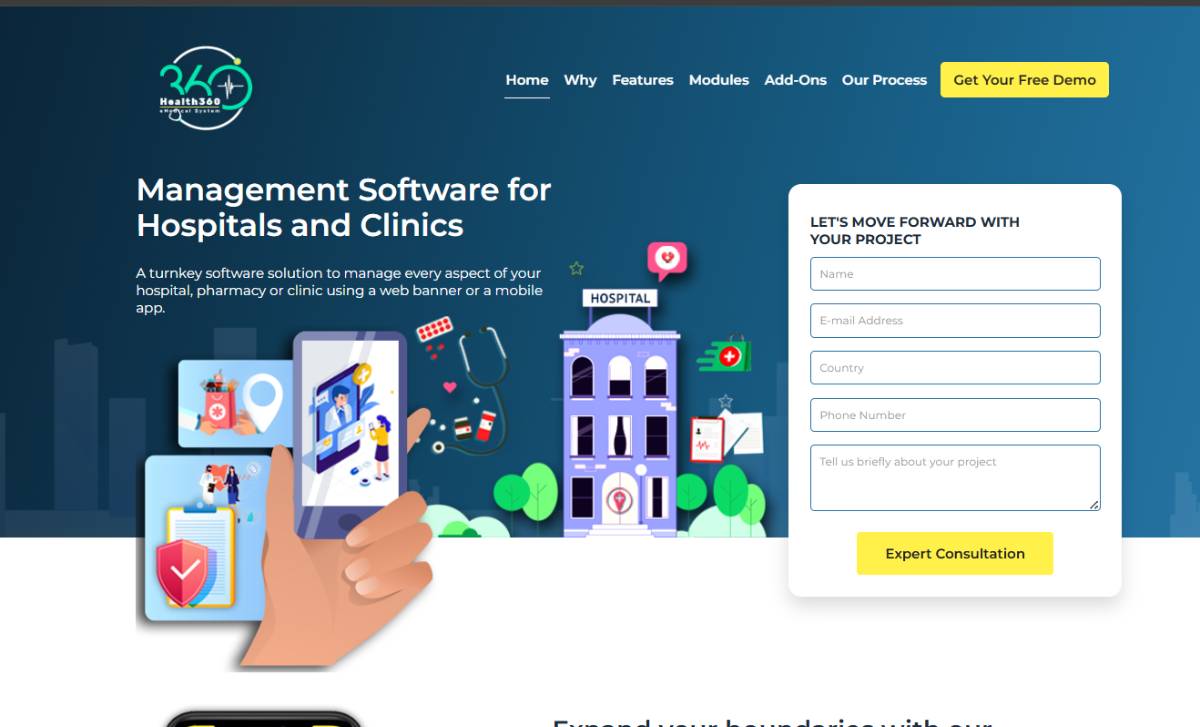
Health360 is strengthening digital healthcare delivery by providing an integrated platform that streamlines patient management, clinical workflows, appointment scheduling, and health information access. As healthcare providers accelerate digital transformation, the solution supports hospitals, clinics, and medical organizations in improving operational efficiency, patient engagement, and data-driven care coordination.
Health360 offers a cloud-based healthcare management platform designed to centralize patient records, appointment scheduling, care coordination, communication, and administrative workflows within a unified digital environment. The platform enables healthcare providers to improve clinical efficiency while enhancing patient access to healthcare services through secure digital interactions.
Serving hospitals, clinics, physician practices, and healthcare networks, the solution supports streamlined operations, improved documentation accuracy, and more effective collaboration among care teams. As healthcare organizations increasingly invest in digital infrastructure, platforms such as Health360 help modernize service delivery while supporting compliance with evolving healthcare standards and operational requirements.
Healthcare systems worldwide continue to undergo rapid digital transformation driven by rising patient expectations, workforce shortages, increasing chronic disease management needs, and expanding regulatory requirements. Governments and healthcare providers are investing heavily in digital health technologies to improve operational efficiency while delivering higher-quality patient care.
Cloud computing, electronic health records (EHR), telehealth, artificial intelligence, and data analytics have become central components of modern healthcare strategies. These technologies enable providers to improve care coordination, reduce administrative burdens, and deliver more personalized healthcare experiences across diverse patient populations.
Within this broader transformation, healthcare management platforms such as Health360 represent the industry's movement toward integrated digital ecosystems that connect clinical operations, patient engagement, and administrative functions. The growing adoption of these solutions reflects healthcare organizations' focus on improving accessibility, operational resilience, and long-term healthcare sustainability.
Healthcare technology analysts consistently identify integrated digital health platforms as essential infrastructure for modern medical organizations. Experts note that centralized healthcare management systems improve clinical workflow efficiency, reduce documentation errors, and enable better coordination between healthcare professionals through real-time access to patient information.
Industry specialists also emphasize that digital patient engagement tools strengthen communication, increase appointment adherence, and support more proactive healthcare delivery. As healthcare systems continue adopting value-based care models, technology platforms capable of integrating clinical and administrative operations are becoming increasingly important for long-term organizational performance.
While no official executive statement accompanies this platform overview, Health360 reflects broader healthcare priorities centered on digital transformation, patient-centered care, operational efficiency, secure health information management, and scalable healthcare technology adoption.
For healthcare providers, integrated management platforms improve operational efficiency, enhance patient experiences, and strengthen clinical decision-making through centralized access to healthcare information. Healthcare organizations can also improve resource utilization while reducing administrative complexity.
Investors continue to view digital health as a strategic growth sector fueled by expanding healthcare technology adoption worldwide. Policymakers and regulators remain focused on data privacy, cybersecurity, interoperability, and compliance with healthcare information standards, encouraging providers to implement secure and scalable digital health infrastructure that supports high-quality patient care.
Demand for cloud-based healthcare management solutions is expected to increase as healthcare providers expand digital services and adopt more intelligent clinical technologies. Future innovation will likely include artificial intelligence, predictive healthcare analytics, remote patient monitoring, and deeper interoperability across healthcare ecosystems. Decision-makers should closely monitor evolving healthcare regulations, cybersecurity requirements, and emerging digital health technologies that will shape the future of patient care.
Source: Crozdesk
Date: August 6, 2026


