



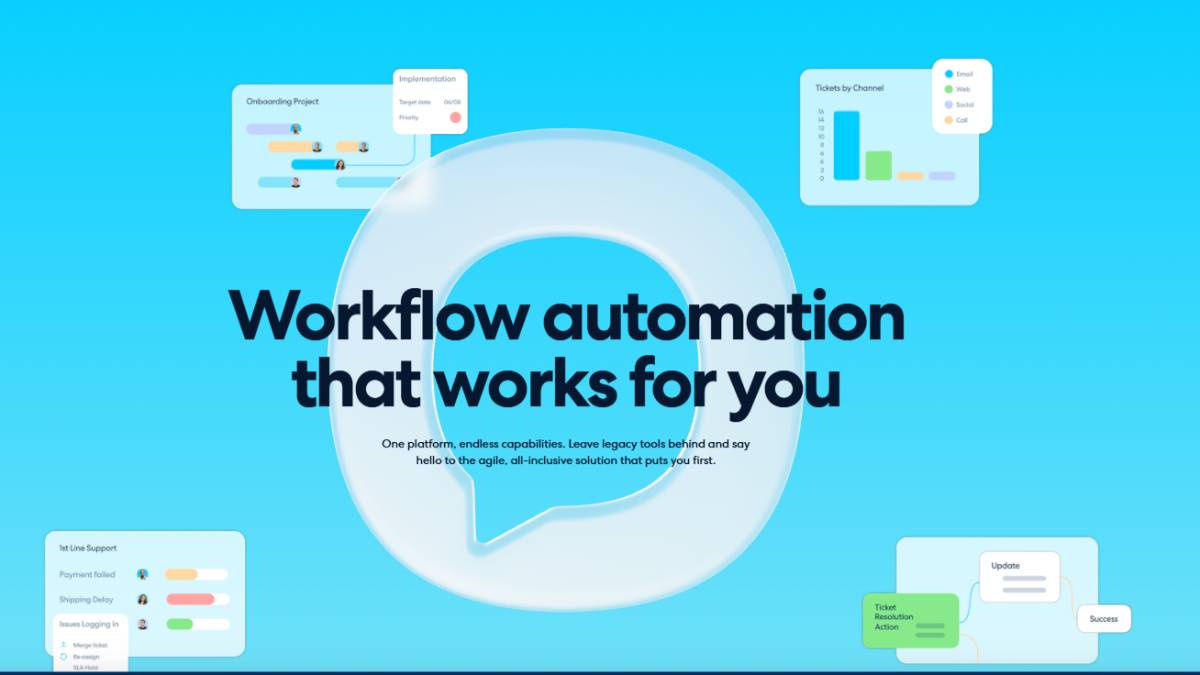
HaloPSA is emerging as an integrated platform for managed service providers seeking to modernize service delivery, automate operational workflows and strengthen business visibility. By combining service management, contracts, assets, projects, billing and reporting, the platform reflects a wider enterprise shift toward unified systems designed to improve efficiency, scalability and customer outcomes.
HaloPSA brings multiple professional services automation capabilities into a centralized environment, including service desk management, ticketing, contract management, asset tracking, project management, time recording, billing and reporting. The approach is designed to reduce reliance on disconnected tools and manual administrative processes.
The platform also supports integrations with external technology and business systems, enabling MSPs to connect service operations with broader IT and financial workflows. Automation is increasingly central to the platform's value proposition, helping teams streamline repetitive processes and improve operational consistency.
Its positioning reflects the growing demand for technology that gives MSP executives a consolidated view of customer activity, service performance, resources and profitability while supporting more scalable service-delivery models.
The managed services sector is becoming increasingly complex as providers support larger customer portfolios, multiple contracts, diverse technology environments and demanding service-level agreements. Historically, many MSPs relied on separate applications for ticketing, customer management, accounting, asset tracking and project administration.
This fragmented approach can create duplicated data, inconsistent workflows and limited visibility across departments. Professional services automation platforms have therefore become strategically important as MSPs seek to consolidate operational information and standardize service delivery.
HaloPSA fits into this broader transition by combining core PSA and service-management capabilities within a single platform. Its development also reflects the industry's movement toward cloud-based operations, automation and data-driven management.
For executives, the significance extends beyond IT support. A unified service-management platform can influence resource utilization, contract performance, billing accuracy, customer satisfaction and ultimately the profitability of an MSP's operating model.
The strategic value of PSA technology increasingly lies in connecting operational activity with financial and management intelligence. For MSP leaders, knowing how many tickets are open is only one part of the equation; understanding how service activity affects staffing requirements, contract performance and margins is equally important.
Integrated platforms can provide a more complete operational picture by connecting service tickets, contracts, assets, projects and billing information. This can help managers identify bottlenecks, monitor service commitments and make more informed resource decisions.
The industry's growing focus on artificial intelligence adds another dimension. AI-assisted reporting and automation can potentially help service organizations identify patterns, summarize operational information and surface areas requiring management attention.
For technology leaders, however, automation must be balanced with data governance, security and human oversight. The strongest platforms will likely be those that improve decision-making without compromising operational control.
For MSPs, integrated service-management software can help reduce administrative duplication, standardize workflows and improve visibility across customer operations. Executives can potentially gain better insight into utilization, service performance, contract obligations and revenue-generating activities.
Customers may benefit from more consistent support processes, improved communication and greater transparency around service requests and agreements.
For investors and technology decision-makers, the growing adoption of PSA platforms signals continued demand for software that connects operational efficiency with measurable financial outcomes.
Governance will also become increasingly important as service platforms accumulate sensitive customer, employee and operational information. Organizations adopting these systems should assess cybersecurity, access controls, data retention, integration risks and regulatory requirements alongside functionality and cost.
PSA platforms are likely to evolve toward deeper AI automation, predictive analytics, intelligent workflow orchestration and broader ecosystem integration. MSP leaders will increasingly expect software to move beyond ticket management and provide actionable business intelligence. The competitive advantage will belong to platforms that can combine automation, usability, security and financial visibility while helping service organizations scale without proportionally increasing administrative complexity.
Source: Crozdesk
Date: August 10, 2026


