



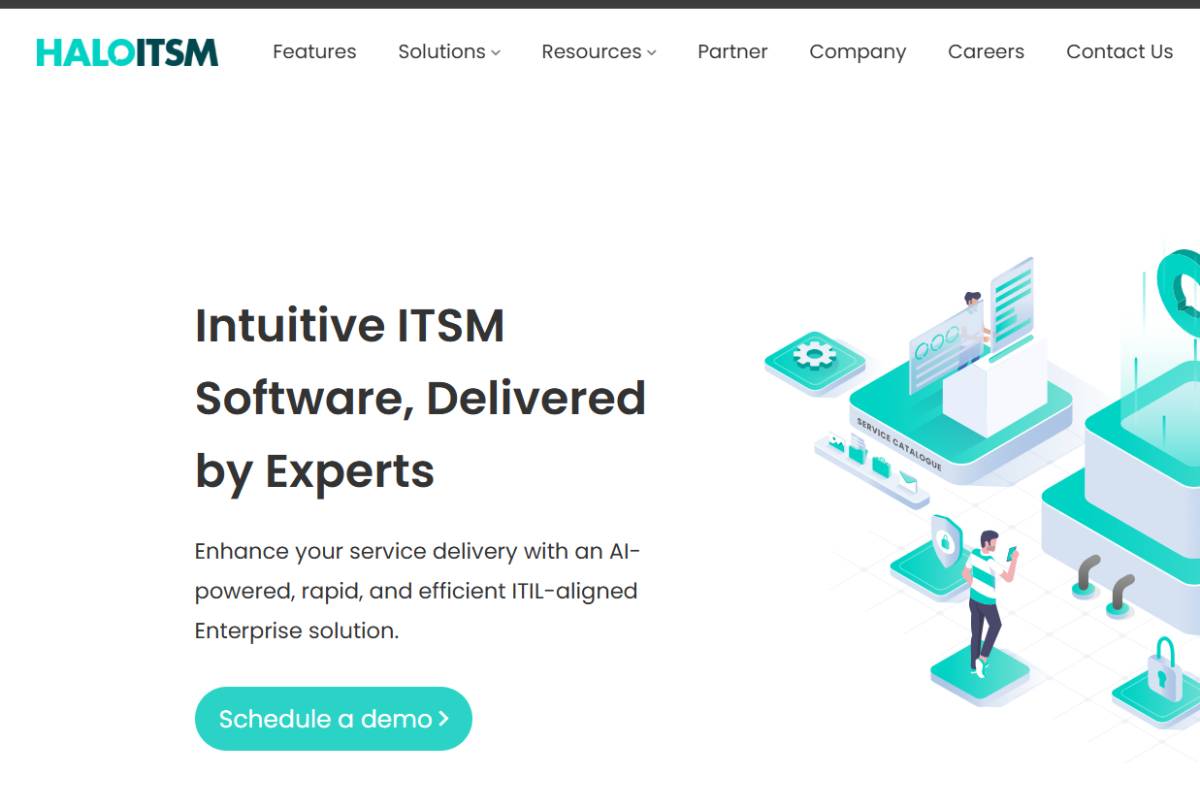
HaloITSM is emerging as a comprehensive IT service management platform designed to help organizations centralize service operations, automate workflows, and improve support delivery. Its integrated approach reflects the growing enterprise demand for scalable ITSM environments that can connect service desks, assets, users, and operational processes through a unified digital platform.
HaloITSM brings core IT service management capabilities into a centralized environment, supporting service desks, incident management, problem management, change management, asset management, and knowledge management. The platform is designed to help IT teams standardize processes while reducing manual administrative work.
Its automation oriented approach can support ticket routing, workflow management, notifications, approvals, and recurring service activities. By consolidating service information, organizations can improve visibility across IT operations and create more consistent support experiences.
The platform is particularly relevant for businesses seeking to modernize legacy service-desk environments while maintaining greater control over workflows, reporting, and operational performance.
The development comes as enterprises increasingly view IT service management as a strategic operational function rather than simply a technical support activity. Cloud adoption, hybrid work, cybersecurity requirements, distributed infrastructure, and expanding digital services are placing greater pressure on IT teams to deliver faster and more measurable support.
Modern ITSM platforms are therefore expected to provide more than ticket tracking. Organizations increasingly require automation, asset visibility, self-service capabilities, analytics, and integrations that connect IT operations with broader business processes.
HaloITSM fits within this wider transformation by providing a platform aimed at bringing multiple service-management functions together. For CIOs and IT leaders, this trend highlights the importance of selecting ITSM systems that can scale with organizational complexity while improving employee experience, operational visibility, and service consistency.
From an executive perspective, the value of an ITSM platform increasingly depends on how effectively it connects technology, people, and business processes. Industry analysts generally emphasize automation, integration, reporting, and user experience as important considerations when organizations evaluate modern service-management platforms.
HaloITSM's broad functional approach positions it for organizations seeking to consolidate multiple IT support activities rather than operate fragmented systems. The emphasis on configurable workflows can also help IT departments adapt processes to internal governance requirements.
For service-management leaders, the strategic question is not simply whether a platform can manage tickets, but whether it can improve the complete service lifecycle. Capabilities such as knowledge management, automation, asset tracking, and structured change processes can contribute to greater operational consistency and better
For businesses, adopting a centralized ITSM platform can create opportunities to improve service efficiency, standardize support processes, and strengthen operational accountability. Executives may also gain greater visibility into service performance, workload patterns, and recurring operational issues.
For IT departments, automation can reduce repetitive administrative tasks and allow technical teams to focus on higher-value activities. Improved asset and service visibility can also support stronger governance and technology planning.
From a policy perspective, organizations must evaluate ITSM deployments alongside requirements for data protection, access controls, auditability, vendor management, and regulatory compliance. The growing dependence on digital infrastructure makes effective service governance increasingly important for enterprise resilience.
The ITSM market is likely to continue shifting toward automation, integrated service management, analytics, and more intelligent support operations. Organizations evaluating HaloITSM and competing platforms will need to assess integration capabilities, scalability, security, customization, and total cost of ownership. As digital operations become more complex, ITSM platforms that combine operational control with user-centric service delivery could become increasingly important to enterprise technology strategies.
Source: Crozdesk
Date: August 11, 2026


