



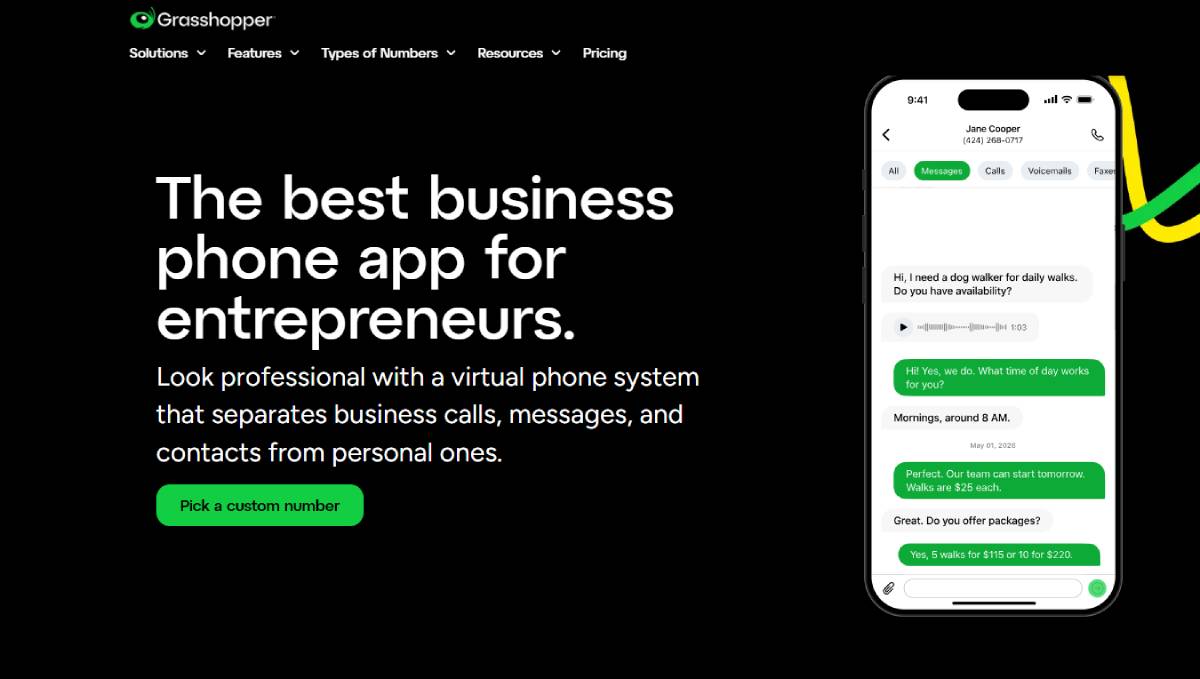
A significant transformation is underway in business communication as Grasshopper continues enhancing cloud-based phone solutions designed for entrepreneurs and small businesses. The platform reflects the growing demand for professional communication tools that enable flexible operations, remote connectivity, and improved customer engagement without the complexity of traditional enterprise phone systems.
Grasshopper provides virtual phone services that help small businesses establish professional communication channels through cloud-based calling, messaging, and business numbers. The platform enables entrepreneurs to separate personal and professional communications while supporting features such as call forwarding, voicemail management, and automated greetings.
As small and medium-sized businesses increasingly adopt remote-first operating models, digital communication platforms have become essential tools for maintaining customer relationships and operational efficiency. Grasshopper’s focus on simplified setup and accessible business phone solutions positions it within the expanding market for cloud communications, where organizations seek affordable alternatives to traditional phone infrastructure.
The evolution of cloud communication platforms reflects a broader shift in how businesses manage customer interactions and internal collaboration. Traditional office phone systems are increasingly being replaced by flexible digital solutions that support remote teams, mobile employees, and distributed business operations.
This development aligns with global trends toward unified communications, digital transformation, and subscription-based software services. Small businesses, in particular, are seeking enterprise-level communication capabilities without significant hardware investments or complex IT requirements.
The rise of remote work and digital entrepreneurship has accelerated demand for virtual phone systems that provide professional identity, reliability, and scalability. As customer expectations for fast and accessible communication continue increasing, cloud-based communication providers are becoming critical partners in helping businesses compete effectively in increasingly digital markets.
Industry analysts view cloud communication solutions as an important foundation for modern small business operations. Experts suggest that virtual phone platforms allow smaller organizations to improve customer experiences while maintaining flexibility and controlling technology costs.
Communication specialists highlight that businesses increasingly require tools that combine voice services, messaging capabilities, automation, and mobile accessibility. While no specific official statement accompanies this development, market observers emphasize that simplified cloud communication platforms are helping smaller companies access capabilities previously limited to larger enterprises.
Analysts also expect future communication solutions to integrate deeper artificial intelligence features, including automated call assistance, advanced analytics, intelligent routing, and personalized customer interactions. These advancements could further reshape how small businesses manage customer relationships and streamline daily operations.
For business leaders, cloud communication platforms provide opportunities to improve professionalism, customer responsiveness, and operational flexibility. Small businesses can establish dedicated communication systems without investing heavily in physical infrastructure or complex maintenance.
Investors continue watching the cloud communications sector as demand grows for scalable software solutions supporting modern workplaces. From a policy perspective, companies using digital communication platforms must consider data privacy, cybersecurity, and regulatory requirements surrounding customer communications. Strong security practices and responsible data management will remain essential as businesses increasingly rely on cloud-based communication technologies.
Looking ahead, cloud communication platforms are expected to evolve through artificial intelligence, automation, analytics, and deeper integration with business applications. Decision-makers should monitor how emerging technologies improve customer engagement, operational efficiency, and communication security. Organizations adopting flexible communication solutions will be better positioned to support remote work, enhance customer relationships, and adapt to changing business environments.
Source: Crozdesk
Date: August 5, 2026


