
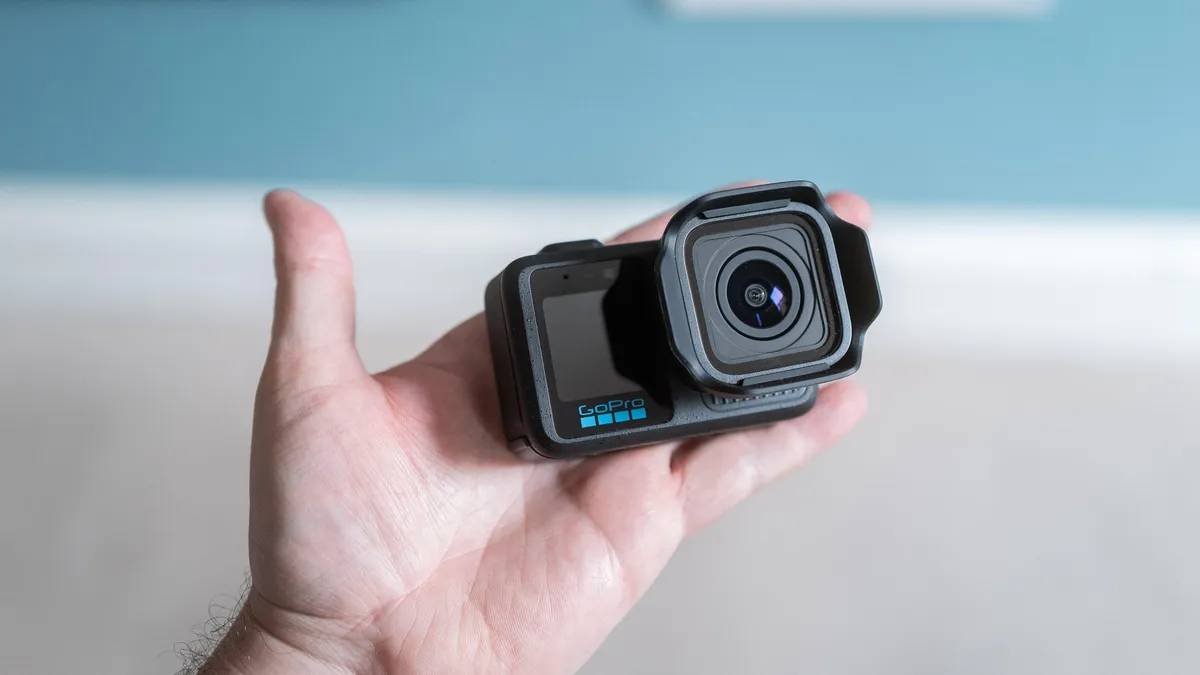
GoPro Enterprise Imaging Push Expands Rapidly

The Mission 1 Pro, developed by GoPro, introduces upgraded imaging capabilities aimed at bridging consumer and professional content production needs.

May 27, 2026
|

GoPro’s latest Mission 1 Pro action camera signals a renewed push toward professional-grade imaging workflows, targeting creators and enterprise users. The device reflects growing demand for high-performance, durable capture systems in sports, media production, and field operations, where reliability and portability are increasingly critical.

The Mission 1 Pro, developed by GoPro, introduces upgraded imaging capabilities aimed at bridging consumer and professional content production needs. The review highlights improvements in stabilization, low-light performance, and workflow integration designed for faster content turnaround.

The device is positioned as part of GoPro’s broader strategy to expand beyond traditional action sports into professional media, enterprise documentation, and creator economy ecosystems. Enhanced durability and streamlined connectivity features are intended to support high-intensity environments such as travel filmmaking, sports broadcasting, and industrial field capture.

Market positioning suggests increasing competition in the compact professional camera segment, where mobile-first production tools are gaining traction. The evolution of the Mission 1 Pro reflects a broader transformation in the imaging industry, where demand is shifting from traditional camera systems to compact, AI-enhanced, workflow-integrated devices. Companies like GoPro are increasingly competing not only with traditional camera manufacturers but also with smartphone ecosystems and computational photography platforms.

Over the past decade, the creator economy has driven strong demand for portable, high-quality video capture tools that can deliver broadcast-level output without complex production setups. This shift has been accelerated by streaming platforms, social media monetization, and remote content production workflows.

At the same time, enterprise users are adopting rugged imaging systems for training, inspection, safety documentation, and field reporting. This convergence of consumer creativity and enterprise utility is reshaping product design priorities across the imaging industry.

The Mission 1 Pro sits at this intersection of professionalization and portability. Industry analysts suggest the latest direction from GoPro reflects a strategic effort to defend market share in a rapidly commoditizing camera landscape.

Experts note that differentiation in the action camera segment is increasingly driven by software capabilities, AI-assisted stabilization, and ecosystem integration rather than hardware specifications alone. As smartphone cameras continue to improve, standalone camera manufacturers are under pressure to justify premium pricing through workflow advantages.

Media production specialists highlight that professionals increasingly prioritize end-to-end production efficiency capturing, editing, and distributing content seamlessly across platforms. Devices that reduce post-production time are gaining significant competitive advantage.

Some analysts also point out that GoPro’s success will depend on how effectively it integrates cloud services, subscription models, and AI-assisted editing tools into its hardware ecosystem.

For businesses in the content creation and media technology sectors, the Mission 1 Pro underscores the growing importance of integrated hardware-software ecosystems. Companies like GoPro are increasingly positioning themselves as end-to-end content solution providers rather than standalone device manufacturers.

For investors, the shift toward subscription-based services and AI-enhanced workflows could redefine revenue models in the imaging industry, moving away from one-time hardware sales toward recurring digital services.

From a broader industry perspective, competition between smartphone manufacturers and dedicated camera companies is likely to intensify, particularly as computational imaging continues to blur the line between mobile and professional content production tools.

Looking ahead, the success of the Mission 1 Pro will depend on GoPro’s ability to expand its ecosystem beyond hardware into software-driven content workflows. Decision-makers should monitor adoption trends among professional creators and enterprise users, as well as the company’s progress in integrating AI-assisted editing and cloud-based production tools. The broader imaging market is expected to continue converging toward unified, mobile-first production ecosystems.

Source: CNET
Date:
May 27, 2026

  • Featured tools
Copy Ai
Free

Copy AI is one of the most popular AI writing tools designed to help professionals create high-quality content quickly. Whether you are a product manager drafting feature descriptions or a marketer creating ad copy, Copy AI can save hours of work while maintaining creativity and tone.

#
Copywriting
Learn more
Kreateable AI
Free

Kreateable AI is a white-label, AI-driven design platform that enables logo generation, social media posts, ads, and more for businesses, agencies, and service providers.

#
Logo Generator
Learn more

Learn more about future of AI

Join 80,000+ Ai enthusiast getting weekly updates on exciting AI tools.
Thank you! Your submission has been received!
Oops! Something went wrong while submitting the form.

GoPro Enterprise Imaging Push Expands Rapidly

May 27, 2026

The Mission 1 Pro, developed by GoPro, introduces upgraded imaging capabilities aimed at bridging consumer and professional content production needs.

GoPro’s latest Mission 1 Pro action camera signals a renewed push toward professional-grade imaging workflows, targeting creators and enterprise users. The device reflects growing demand for high-performance, durable capture systems in sports, media production, and field operations, where reliability and portability are increasingly critical.

The Mission 1 Pro, developed by GoPro, introduces upgraded imaging capabilities aimed at bridging consumer and professional content production needs. The review highlights improvements in stabilization, low-light performance, and workflow integration designed for faster content turnaround.

The device is positioned as part of GoPro’s broader strategy to expand beyond traditional action sports into professional media, enterprise documentation, and creator economy ecosystems. Enhanced durability and streamlined connectivity features are intended to support high-intensity environments such as travel filmmaking, sports broadcasting, and industrial field capture.

Market positioning suggests increasing competition in the compact professional camera segment, where mobile-first production tools are gaining traction. The evolution of the Mission 1 Pro reflects a broader transformation in the imaging industry, where demand is shifting from traditional camera systems to compact, AI-enhanced, workflow-integrated devices. Companies like GoPro are increasingly competing not only with traditional camera manufacturers but also with smartphone ecosystems and computational photography platforms.

Over the past decade, the creator economy has driven strong demand for portable, high-quality video capture tools that can deliver broadcast-level output without complex production setups. This shift has been accelerated by streaming platforms, social media monetization, and remote content production workflows.

At the same time, enterprise users are adopting rugged imaging systems for training, inspection, safety documentation, and field reporting. This convergence of consumer creativity and enterprise utility is reshaping product design priorities across the imaging industry.

The Mission 1 Pro sits at this intersection of professionalization and portability. Industry analysts suggest the latest direction from GoPro reflects a strategic effort to defend market share in a rapidly commoditizing camera landscape.

Experts note that differentiation in the action camera segment is increasingly driven by software capabilities, AI-assisted stabilization, and ecosystem integration rather than hardware specifications alone. As smartphone cameras continue to improve, standalone camera manufacturers are under pressure to justify premium pricing through workflow advantages.

Media production specialists highlight that professionals increasingly prioritize end-to-end production efficiency capturing, editing, and distributing content seamlessly across platforms. Devices that reduce post-production time are gaining significant competitive advantage.

Some analysts also point out that GoPro’s success will depend on how effectively it integrates cloud services, subscription models, and AI-assisted editing tools into its hardware ecosystem.

For businesses in the content creation and media technology sectors, the Mission 1 Pro underscores the growing importance of integrated hardware-software ecosystems. Companies like GoPro are increasingly positioning themselves as end-to-end content solution providers rather than standalone device manufacturers.

For investors, the shift toward subscription-based services and AI-enhanced workflows could redefine revenue models in the imaging industry, moving away from one-time hardware sales toward recurring digital services.

From a broader industry perspective, competition between smartphone manufacturers and dedicated camera companies is likely to intensify, particularly as computational imaging continues to blur the line between mobile and professional content production tools.

Looking ahead, the success of the Mission 1 Pro will depend on GoPro’s ability to expand its ecosystem beyond hardware into software-driven content workflows. Decision-makers should monitor adoption trends among professional creators and enterprise users, as well as the company’s progress in integrating AI-assisted editing and cloud-based production tools. The broader imaging market is expected to continue converging toward unified, mobile-first production ecosystems.

Source: CNET
Date:
May 27, 2026

Promote Your Tool

Copy Embed Code

Similar Blogs

May 29, 2026
|

YouTube AI Personalization Redefines Scrolling

The new AI system introduces customized content feeds that respond to user prompts and behavior, dynamically adjusting recommendations beyond traditional algorithmic ranking.
Read more
May 29, 2026
|

Google Chrome AI Download Raises Questions

Reports indicate that certain Chrome installations may have quietly fetched a substantial AI model in the background as part of new browser capabilities tied to on-device intelligence.
Read more
May 29, 2026
|

Apple iOS 27 Transforms Siri AI Assistant

Apple’s iOS 27 is reportedly set to introduce a deeply upgraded version of Siri, integrating more advanced AI capabilities, improved contextual understanding, and tighter system-level functionality.
Read more
May 29, 2026
|

Affordable AI PCs Emerge Globally

The Snapdragon C processors are aimed at budget-friendly laptops optimized for basic productivity and AI-assisted tasks such as content summarization and lightweight generative applications.
Read more
May 29, 2026
|

Water Ready Drones Signal New Robotics Frontier

The HoverAir Aqua introduces waterproofing capabilities that allow stable flight and operation in wet conditions, including takeoff and landing near water surfaces. Early hands-on demonstrations suggest improvements in stability, automated tracking.
Read more
May 29, 2026
|

AI Filmmaking Enters Mainstream at Tribeca

The film, reportedly produced with a budget of just $2,000, leverages generative AI tools for scripting, visuals, and post-production workflows.
Read more