
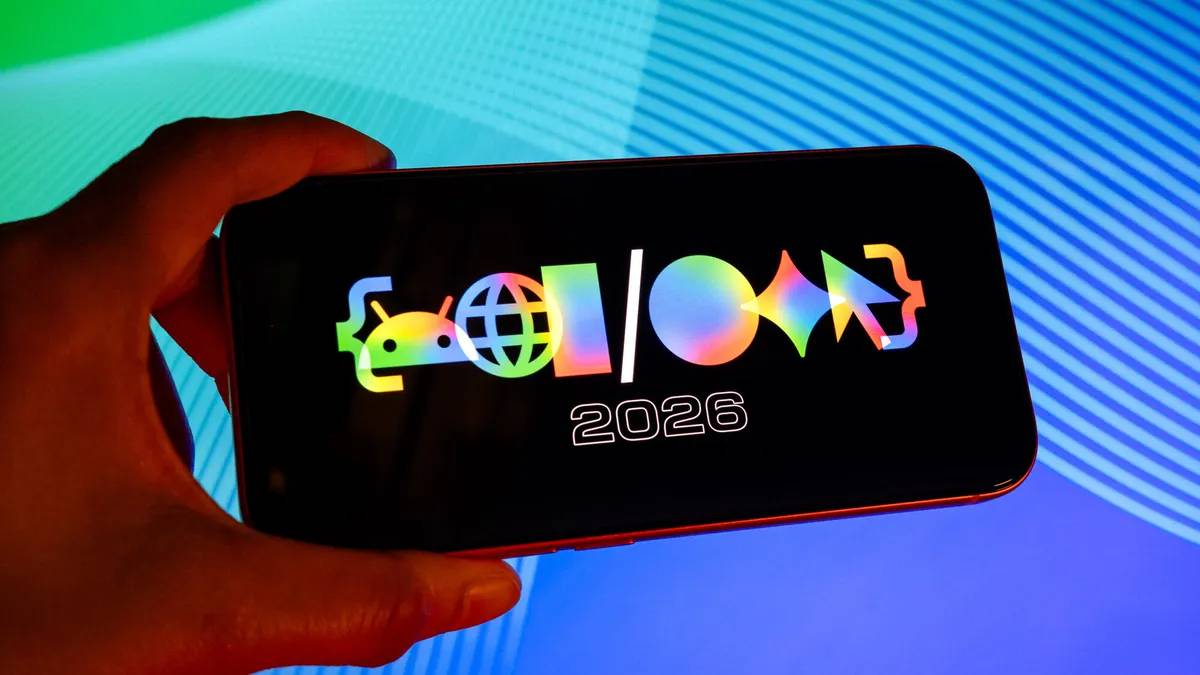
Google I/O 2026 Showcases Next-Gen AI Ecosystem

Google has confirmed details for its Google I/O 2026 event, including how audiences can stream the keynote and what to expect from the presentation.

May 15, 2026
|

A major industry event is set to take center stage as Google prepares to host its annual Google I/O 2026 keynote, outlining its roadmap for artificial intelligence, developer tools, and consumer ecosystem expansion. The announcement underscores the company’s continued push to define the next phase of AI-driven computing, with implications for global developers, enterprises, and digital platform markets.

Google has confirmed details for its Google I/O 2026 event, including how audiences can stream the keynote and what to expect from the presentation. The event is expected to highlight advancements across generative AI, Android ecosystem updates, cloud infrastructure, and developer tools.

The keynote is widely anticipated to focus on AI integration across Google’s product suite, including search, productivity applications, mobile platforms, and cloud services. Developers and enterprises are particularly watching for updates to Google’s AI models, including enhancements to multimodal systems and on-device processing capabilities.

The event also serves as a strategic platform for Google to compete more aggressively with rivals such as Microsoft, Apple, and OpenAI, all of which are rapidly advancing their AI ecosystems across consumer and enterprise markets.

The development aligns with a broader transformation across the global technology sector, where annual developer conferences have evolved into key geopolitical and economic signals for the direction of artificial intelligence and platform ecosystems.

Google I/O has historically served as a launchpad for major innovations across Android, Chrome, Google Cloud, and AI services. In recent years, however, the focus has increasingly shifted toward artificial intelligence, reflecting the industry-wide pivot toward generative AI as the core driver of future computing.

This shift comes amid intensifying competition in AI infrastructure, semiconductor capacity, and cloud computing dominance. Companies are investing heavily in foundation models, AI assistants, and developer APIs to lock in long-term ecosystem control.

The broader economic context is equally significant. AI is now viewed as a foundational layer across industries including healthcare, finance, education, logistics, and media. As a result, developer ecosystems like Google I/O have become critical indicators of future enterprise technology direction and investment cycles.

Geopolitically, the expansion of AI platforms is also tied to national strategies around digital sovereignty, data governance, and semiconductor independence. Governments are closely monitoring how major technology firms deploy AI across global markets.

Technology analysts expect Google I/O 2026 to emphasize deeper integration of AI across all layers of its ecosystem, from mobile operating systems to cloud infrastructure. Experts suggest that Google will likely highlight improvements in multimodal AI, real-time reasoning, and personalized digital assistants.

Industry observers note that developer engagement remains a key strategic asset for Google, as application ecosystems often determine long-term platform dominance. Analysts argue that enhanced AI tooling for developers could accelerate the creation of next-generation applications across mobile, web, and enterprise environments.

Market strategists also highlight that Google’s ability to integrate AI across search, advertising, and cloud services could significantly strengthen its competitive position against Microsoft and OpenAI-backed ecosystems.

At the same time, experts caution that regulatory scrutiny of AI systems is increasing globally. Concerns around data privacy, algorithmic transparency, and platform dominance are likely to shape both product design and policy discussions emerging from the event.

For businesses, Google I/O 2026 is expected to provide critical insights into how AI will reshape software development, digital advertising, and enterprise cloud adoption. Companies may need to adapt strategies around AI integration, data workflows, and digital product design to remain competitive.

Investors are likely to track announcements closely for signals regarding AI monetization, cloud growth, and developer ecosystem expansion. Technology firms positioned within AI infrastructure, semiconductor supply chains, and cloud services could see increased market attention.

For policymakers, the event underscores the growing influence of platform ecosystems in shaping global digital infrastructure. Regulatory attention may intensify around AI governance, competition policy, and data usage transparency as major technology firms expand their AI capabilities.

Google I/O 2026 is expected to set the tone for the next phase of AI platform competition, with developers and enterprises watching closely for strategic direction. The evolution of Google’s AI ecosystem will likely influence broader industry standards and competitive dynamics across global technology markets. The key question ahead is how effectively Google can translate AI innovation into sustained ecosystem dominance amid rising global competition.

Source: CNET
Date: May 15, 2026

  • Featured tools
Murf Ai
Free

Murf AI Review – Advanced AI Voice Generator for Realistic Voiceovers

#
Text to Speech
Learn more
Copy Ai
Free

Copy AI is one of the most popular AI writing tools designed to help professionals create high-quality content quickly. Whether you are a product manager drafting feature descriptions or a marketer creating ad copy, Copy AI can save hours of work while maintaining creativity and tone.

#
Copywriting
Learn more

Learn more about future of AI

Join 80,000+ Ai enthusiast getting weekly updates on exciting AI tools.
Thank you! Your submission has been received!
Oops! Something went wrong while submitting the form.

Google I/O 2026 Showcases Next-Gen AI Ecosystem

May 15, 2026

Google has confirmed details for its Google I/O 2026 event, including how audiences can stream the keynote and what to expect from the presentation.

A major industry event is set to take center stage as Google prepares to host its annual Google I/O 2026 keynote, outlining its roadmap for artificial intelligence, developer tools, and consumer ecosystem expansion. The announcement underscores the company’s continued push to define the next phase of AI-driven computing, with implications for global developers, enterprises, and digital platform markets.

Google has confirmed details for its Google I/O 2026 event, including how audiences can stream the keynote and what to expect from the presentation. The event is expected to highlight advancements across generative AI, Android ecosystem updates, cloud infrastructure, and developer tools.

The keynote is widely anticipated to focus on AI integration across Google’s product suite, including search, productivity applications, mobile platforms, and cloud services. Developers and enterprises are particularly watching for updates to Google’s AI models, including enhancements to multimodal systems and on-device processing capabilities.

The event also serves as a strategic platform for Google to compete more aggressively with rivals such as Microsoft, Apple, and OpenAI, all of which are rapidly advancing their AI ecosystems across consumer and enterprise markets.

The development aligns with a broader transformation across the global technology sector, where annual developer conferences have evolved into key geopolitical and economic signals for the direction of artificial intelligence and platform ecosystems.

Google I/O has historically served as a launchpad for major innovations across Android, Chrome, Google Cloud, and AI services. In recent years, however, the focus has increasingly shifted toward artificial intelligence, reflecting the industry-wide pivot toward generative AI as the core driver of future computing.

This shift comes amid intensifying competition in AI infrastructure, semiconductor capacity, and cloud computing dominance. Companies are investing heavily in foundation models, AI assistants, and developer APIs to lock in long-term ecosystem control.

The broader economic context is equally significant. AI is now viewed as a foundational layer across industries including healthcare, finance, education, logistics, and media. As a result, developer ecosystems like Google I/O have become critical indicators of future enterprise technology direction and investment cycles.

Geopolitically, the expansion of AI platforms is also tied to national strategies around digital sovereignty, data governance, and semiconductor independence. Governments are closely monitoring how major technology firms deploy AI across global markets.

Technology analysts expect Google I/O 2026 to emphasize deeper integration of AI across all layers of its ecosystem, from mobile operating systems to cloud infrastructure. Experts suggest that Google will likely highlight improvements in multimodal AI, real-time reasoning, and personalized digital assistants.

Industry observers note that developer engagement remains a key strategic asset for Google, as application ecosystems often determine long-term platform dominance. Analysts argue that enhanced AI tooling for developers could accelerate the creation of next-generation applications across mobile, web, and enterprise environments.

Market strategists also highlight that Google’s ability to integrate AI across search, advertising, and cloud services could significantly strengthen its competitive position against Microsoft and OpenAI-backed ecosystems.

At the same time, experts caution that regulatory scrutiny of AI systems is increasing globally. Concerns around data privacy, algorithmic transparency, and platform dominance are likely to shape both product design and policy discussions emerging from the event.

For businesses, Google I/O 2026 is expected to provide critical insights into how AI will reshape software development, digital advertising, and enterprise cloud adoption. Companies may need to adapt strategies around AI integration, data workflows, and digital product design to remain competitive.

Investors are likely to track announcements closely for signals regarding AI monetization, cloud growth, and developer ecosystem expansion. Technology firms positioned within AI infrastructure, semiconductor supply chains, and cloud services could see increased market attention.

For policymakers, the event underscores the growing influence of platform ecosystems in shaping global digital infrastructure. Regulatory attention may intensify around AI governance, competition policy, and data usage transparency as major technology firms expand their AI capabilities.

Google I/O 2026 is expected to set the tone for the next phase of AI platform competition, with developers and enterprises watching closely for strategic direction. The evolution of Google’s AI ecosystem will likely influence broader industry standards and competitive dynamics across global technology markets. The key question ahead is how effectively Google can translate AI innovation into sustained ecosystem dominance amid rising global competition.

Source: CNET
Date: May 15, 2026

Promote Your Tool

Copy Embed Code

Similar Blogs

June 10, 2026
|

Microsoft AI Claims Face Leadership Clarification

Microsoft AI executive Mustafa Suleyman has walked back previous remarks that implied AI systems could significantly reshape or replace large segments of white-collar employment in the near term.
Read more
June 10, 2026
|

Apple AI Overhaul Signals Smartphone Shift

Apple is restructuring its mobile software strategy around embedded artificial intelligence capabilities designed to operate across system functions rather than as standalone applications.
Read more
June 10, 2026
|

AI Chatbot Hack Exposes Instagram Accounts

Hackers reportedly exploited weaknesses in an AI-powered customer support chatbot linked to Instagram’s support infrastructure, tricking the system into facilitating unauthorized account access.
Read more
June 10, 2026
|

Apple’s Measured AI Strategy Pays Off

Apple’s AI strategy, showcased through recent WWDC updates and ongoing product integrations, emphasizes controlled deployment rather than rapid feature saturation.
Read more
June 10, 2026
|

GM Bets on Vehicle-to-Grid Energy Tech

General Motors is advancing plans to leverage its electric vehicle ecosystem as a distributed energy storage network through vehicle-to-grid technology.
Read more
June 10, 2026
|

Best Educational Consultants in the USA

The professionals and firms featured in this guide reflect the full breadth of what meaningful education consulting looks like in the United States today.
Read more