
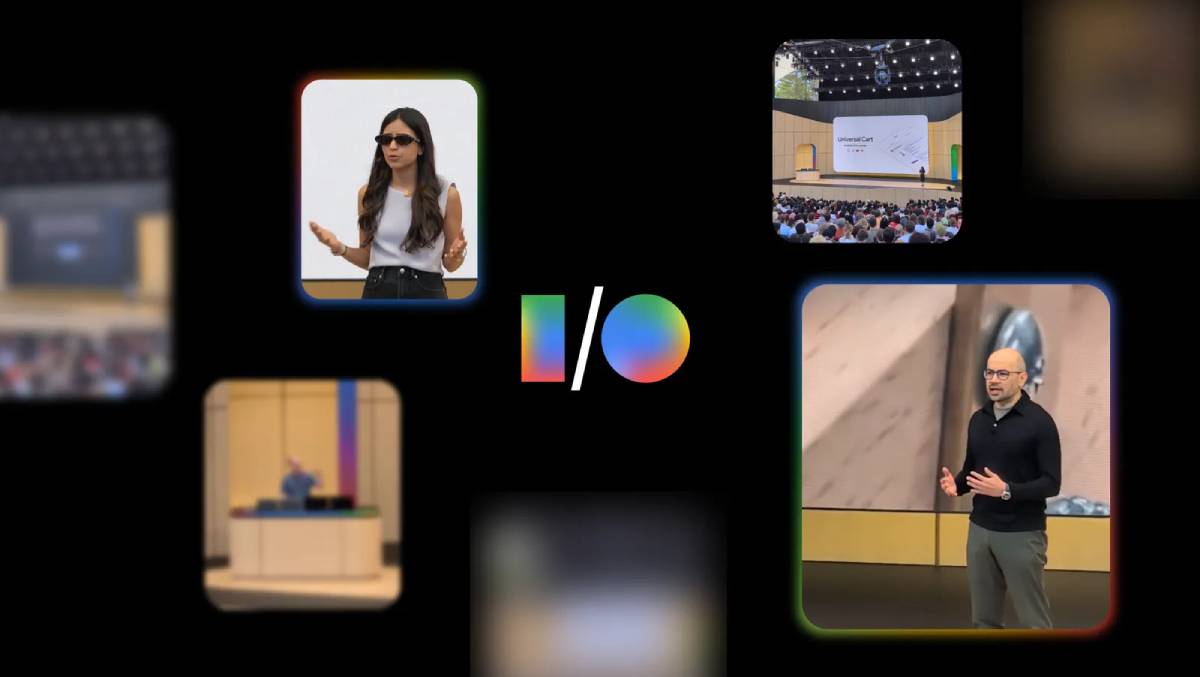
Google I/O 2026 AI Ecosystem Push

According to official event highlights published by Google, I/O 2026 featured 12 major product and platform moments centered on artificial intelligence integration across consumer and enterprise ecosystems.

May 29, 2026
|
Image Source: Google Blog

A major technology showcase unfolded at Google I/O 2026 as the company highlighted 12 key moments demonstrating its accelerating shift toward an AI-first ecosystem spanning search, mobile, developer tools, and cloud services. The announcements reinforce Google’s strategy to embed advanced artificial intelligence across its entire product stack, reshaping how users, developers, and enterprises interact with digital systems globally.

According to official event highlights published by Google, I/O 2026 featured 12 major product and platform moments centered on artificial intelligence integration across consumer and enterprise ecosystems.

Key themes included advancements in AI-powered search experiences, upgrades to developer tooling, expanded multimodal capabilities, and deeper integration of AI assistants across Android and productivity platforms. Google also showcased improvements in real-time reasoning systems, personalization engines, and contextual AI assistance designed to operate seamlessly across devices.

The event emphasized tighter integration between AI models and core Google services, reflecting a strategic shift toward unified intelligence systems across search, mobile operating systems, and cloud infrastructure. Developers were presented with expanded APIs and tooling aimed at enabling faster deployment of AI-native applications across industries.

Google I/O 2026 reflects a broader industry transformation in which artificial intelligence has become the foundational layer of modern computing ecosystems. Technology companies are increasingly repositioning their platforms around AI-driven interfaces that replace traditional search, navigation, and productivity workflows with conversational and predictive systems.

The development aligns with global trends where enterprises and consumers are rapidly adopting AI assistants for information retrieval, task automation, content generation, and decision support. This shift is reshaping competitive dynamics across the technology sector as companies race to establish leadership in AI infrastructure, model capabilities, and ecosystem integration.

Historically, Google has transitioned through multiple platform eras from desktop search to mobile-first computing, and now toward AI-native ecosystems. The company’s latest announcements signal a continuation of this evolution, with artificial intelligence positioned as the central organizing layer across its product portfolio.

The broader geopolitical and economic context is also significant. Governments and regulators worldwide are increasingly focused on AI governance, data privacy, algorithmic accountability, and digital market competition. As AI becomes deeply embedded in essential digital infrastructure, platform control and technological sovereignty are emerging as key strategic concerns for national economies.

Industry analysts suggest Google’s I/O 2026 announcements reflect an intensified competitive response to the rapid acceleration of generative AI adoption across the global technology sector. Experts argue that the integration of AI across search and operating systems represents a structural shift that could redefine how users access information online.

Technology strategists note that the convergence of AI models with core platform services may significantly enhance user engagement while also increasing ecosystem lock-in effects. Analysts believe this could strengthen Google’s position in search, mobile operating systems, and cloud computing, while intensifying competition with other major AI ecosystem providers.

Developer ecosystem experts highlight the importance of expanded APIs and tooling, arguing that enabling third-party innovation will be critical for scaling AI-native applications. However, some analysts caution that rapid AI integration also raises challenges related to transparency, data governance, and system reliability at scale.

For businesses, Google’s AI-first ecosystem strategy signals a major shift in how digital products and services will be built, distributed, and monetized. Companies may need to redesign applications around AI-native interfaces rather than traditional search and navigation models, fundamentally changing user engagement strategies.

Investors are closely monitoring large technology firms as AI integration becomes a key driver of long-term revenue growth across cloud computing, advertising, and software ecosystems. Analysts expect increased capital flows into AI infrastructure, developer platforms, and enterprise automation tools.

At the policy level, regulators are likely to intensify scrutiny of platform dominance, data usage practices, and AI governance frameworks. Governments are increasingly evaluating how AI-integrated ecosystems may influence market competition and consumer choice in digital services.

Businesses operating within the technology ecosystem may also face growing requirements around transparency, data protection, and responsible AI deployment standards. The next phase of competition in the technology sector is expected to center on AI ecosystem dominance, developer adoption, and cross-platform integration. Decision-makers will closely watch how rapidly AI-native applications scale across consumer and enterprise environments.

As artificial intelligence becomes the primary interface for digital interaction, companies like Google are positioning themselves at the center of a new computing paradigm defined by intelligent, adaptive, and deeply integrated systems.

Source: Google Blog
Date: May 29, 2026

  • Featured tools
Tome AI
Free

Tome AI is an AI-powered storytelling and presentation tool designed to help users create compelling narratives and presentations quickly and efficiently. It leverages advanced AI technologies to generate content, images, and animations based on user input.

#
Presentation
#
Startup Tools
Learn more
Hostinger Website Builder
Paid

Hostinger Website Builder is a drag-and-drop website creator bundled with hosting and AI-powered tools, designed for businesses, blogs and small shops with minimal technical effort.It makes launching a site fast and affordable, with templates, responsive design and built-in hosting all in one.

#
Productivity
#
Startup Tools
#
Ecommerce
Learn more

Learn more about future of AI

Join 80,000+ Ai enthusiast getting weekly updates on exciting AI tools.
Thank you! Your submission has been received!
Oops! Something went wrong while submitting the form.

Google I/O 2026 AI Ecosystem Push

May 29, 2026

According to official event highlights published by Google, I/O 2026 featured 12 major product and platform moments centered on artificial intelligence integration across consumer and enterprise ecosystems.

Image Source: Google Blog

A major technology showcase unfolded at Google I/O 2026 as the company highlighted 12 key moments demonstrating its accelerating shift toward an AI-first ecosystem spanning search, mobile, developer tools, and cloud services. The announcements reinforce Google’s strategy to embed advanced artificial intelligence across its entire product stack, reshaping how users, developers, and enterprises interact with digital systems globally.

According to official event highlights published by Google, I/O 2026 featured 12 major product and platform moments centered on artificial intelligence integration across consumer and enterprise ecosystems.

Key themes included advancements in AI-powered search experiences, upgrades to developer tooling, expanded multimodal capabilities, and deeper integration of AI assistants across Android and productivity platforms. Google also showcased improvements in real-time reasoning systems, personalization engines, and contextual AI assistance designed to operate seamlessly across devices.

The event emphasized tighter integration between AI models and core Google services, reflecting a strategic shift toward unified intelligence systems across search, mobile operating systems, and cloud infrastructure. Developers were presented with expanded APIs and tooling aimed at enabling faster deployment of AI-native applications across industries.

Google I/O 2026 reflects a broader industry transformation in which artificial intelligence has become the foundational layer of modern computing ecosystems. Technology companies are increasingly repositioning their platforms around AI-driven interfaces that replace traditional search, navigation, and productivity workflows with conversational and predictive systems.

The development aligns with global trends where enterprises and consumers are rapidly adopting AI assistants for information retrieval, task automation, content generation, and decision support. This shift is reshaping competitive dynamics across the technology sector as companies race to establish leadership in AI infrastructure, model capabilities, and ecosystem integration.

Historically, Google has transitioned through multiple platform eras from desktop search to mobile-first computing, and now toward AI-native ecosystems. The company’s latest announcements signal a continuation of this evolution, with artificial intelligence positioned as the central organizing layer across its product portfolio.

The broader geopolitical and economic context is also significant. Governments and regulators worldwide are increasingly focused on AI governance, data privacy, algorithmic accountability, and digital market competition. As AI becomes deeply embedded in essential digital infrastructure, platform control and technological sovereignty are emerging as key strategic concerns for national economies.

Industry analysts suggest Google’s I/O 2026 announcements reflect an intensified competitive response to the rapid acceleration of generative AI adoption across the global technology sector. Experts argue that the integration of AI across search and operating systems represents a structural shift that could redefine how users access information online.

Technology strategists note that the convergence of AI models with core platform services may significantly enhance user engagement while also increasing ecosystem lock-in effects. Analysts believe this could strengthen Google’s position in search, mobile operating systems, and cloud computing, while intensifying competition with other major AI ecosystem providers.

Developer ecosystem experts highlight the importance of expanded APIs and tooling, arguing that enabling third-party innovation will be critical for scaling AI-native applications. However, some analysts caution that rapid AI integration also raises challenges related to transparency, data governance, and system reliability at scale.

For businesses, Google’s AI-first ecosystem strategy signals a major shift in how digital products and services will be built, distributed, and monetized. Companies may need to redesign applications around AI-native interfaces rather than traditional search and navigation models, fundamentally changing user engagement strategies.

Investors are closely monitoring large technology firms as AI integration becomes a key driver of long-term revenue growth across cloud computing, advertising, and software ecosystems. Analysts expect increased capital flows into AI infrastructure, developer platforms, and enterprise automation tools.

At the policy level, regulators are likely to intensify scrutiny of platform dominance, data usage practices, and AI governance frameworks. Governments are increasingly evaluating how AI-integrated ecosystems may influence market competition and consumer choice in digital services.

Businesses operating within the technology ecosystem may also face growing requirements around transparency, data protection, and responsible AI deployment standards. The next phase of competition in the technology sector is expected to center on AI ecosystem dominance, developer adoption, and cross-platform integration. Decision-makers will closely watch how rapidly AI-native applications scale across consumer and enterprise environments.

As artificial intelligence becomes the primary interface for digital interaction, companies like Google are positioning themselves at the center of a new computing paradigm defined by intelligent, adaptive, and deeply integrated systems.

Source: Google Blog
Date: May 29, 2026

Promote Your Tool

Copy Embed Code

Similar Blogs

May 29, 2026
|

YouTube AI Personalization Redefines Scrolling

The new AI system introduces customized content feeds that respond to user prompts and behavior, dynamically adjusting recommendations beyond traditional algorithmic ranking.
Read more
May 29, 2026
|

Google Chrome AI Download Raises Questions

Reports indicate that certain Chrome installations may have quietly fetched a substantial AI model in the background as part of new browser capabilities tied to on-device intelligence.
Read more
May 29, 2026
|

Apple iOS 27 Transforms Siri AI Assistant

Apple’s iOS 27 is reportedly set to introduce a deeply upgraded version of Siri, integrating more advanced AI capabilities, improved contextual understanding, and tighter system-level functionality.
Read more
May 29, 2026
|

Affordable AI PCs Emerge Globally

The Snapdragon C processors are aimed at budget-friendly laptops optimized for basic productivity and AI-assisted tasks such as content summarization and lightweight generative applications.
Read more
May 29, 2026
|

Water Ready Drones Signal New Robotics Frontier

The HoverAir Aqua introduces waterproofing capabilities that allow stable flight and operation in wet conditions, including takeoff and landing near water surfaces. Early hands-on demonstrations suggest improvements in stability, automated tracking.
Read more
May 29, 2026
|

AI Filmmaking Enters Mainstream at Tribeca

The film, reportedly produced with a budget of just $2,000, leverages generative AI tools for scripting, visuals, and post-production workflows.
Read more