
Google Clarifies AI Ultra Subscription Strategy

Google reportedly addressed confusion surrounding multiple “AI Ultra” plans tied to its expanding Gemini AI ecosystem and productivity offerings.

May 26, 2026
|

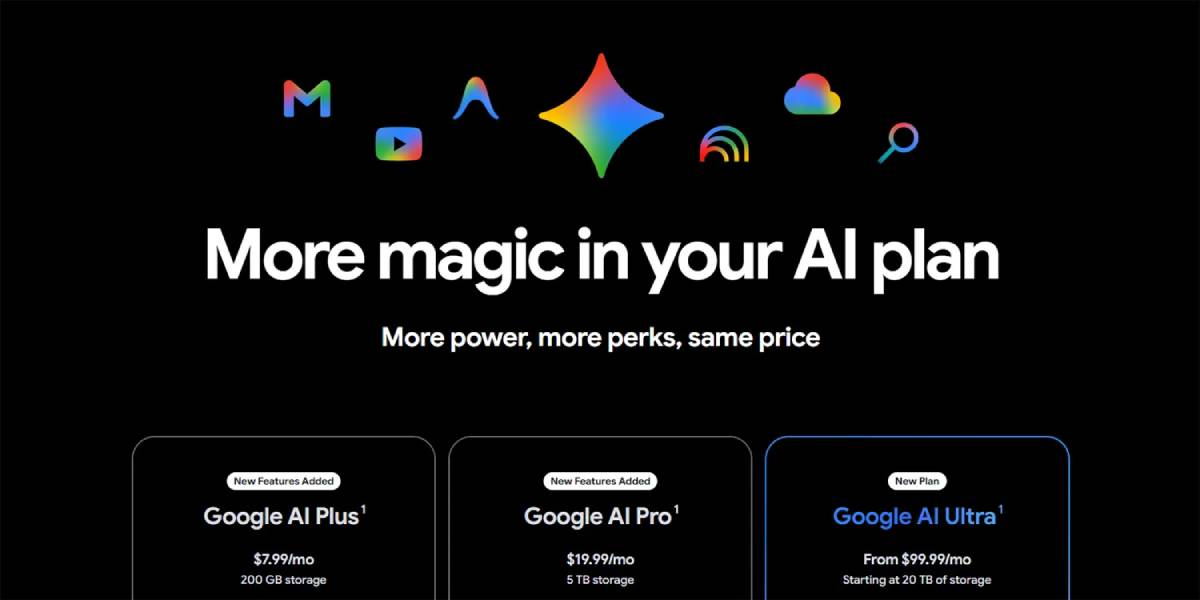
A notable shift in the commercial AI market emerged as Google clarified distinctions between its AI Ultra subscription offerings, aiming to reduce confusion around premium AI access tiers. The move highlights intensifying competition among technology firms to monetize advanced generative AI services across enterprise and consumer ecosystems.

Google reportedly addressed confusion surrounding multiple “AI Ultra” plans tied to its expanding Gemini AI ecosystem and productivity offerings. The clarification comes as the company continues refining subscription-based AI services for enterprise users, developers, and premium consumers.

The issue reflects broader market complexity as technology firms rapidly introduce layered AI pricing structures tied to model access, cloud integration, and productivity enhancements. Google’s move signals an effort to streamline positioning amid growing competition from OpenAI, Microsoft, and Anthropic.

The clarification also underscores how AI monetization strategies are evolving beyond experimentation into structured recurring-revenue models across cloud and productivity ecosystems.

The emergence of multiple AI subscription tiers across major technology companies reflects the rapid commercialization of generative AI infrastructure. Firms including Google, Microsoft, and OpenAI are increasingly segmenting AI offerings based on processing power, model sophistication, enterprise integrations, and usage limits.

Historically, software subscription models centered on storage, collaboration, or productivity tools. However, the AI era is introducing new monetization dynamics where access to advanced models, multimodal capabilities, and premium compute resources are becoming core differentiators.

This transition is occurring amid escalating capital expenditures in AI infrastructure, particularly around GPUs, cloud computing, and data center expansion. As a result, technology companies are under pressure to establish sustainable revenue streams capable of offsetting the immense operational costs of large-scale AI deployment.

Google’s clarification reflects broader industry challenges in communicating increasingly complex AI product ecosystems to both enterprise buyers and mainstream consumers. Industry analysts suggest that confusion around AI subscription tiers is becoming a recurring issue across the technology sector as companies race to commercialize generative AI at scale.

Experts note that Google is attempting to balance broad consumer accessibility with premium enterprise monetization strategies. Analysts argue that differentiating between AI plans is particularly challenging because value increasingly depends on intangible factors such as model quality, response speed, context windows, and multimodal capabilities.

Technology strategists also point out that subscription fragmentation could create friction for enterprise procurement teams evaluating AI integration costs. Clearer packaging and transparent feature segmentation are likely to become increasingly important as businesses standardize AI deployment across workflows.

Observers further note that competition among AI providers is shifting from pure technological performance toward ecosystem clarity, pricing transparency, and long-term enterprise trust. For enterprises, Google’s clarification highlights the growing complexity of AI procurement decisions. Businesses adopting generative AI platforms may need to evaluate subscription tiers not only on cost, but also on data governance, scalability, model access, and workflow compatibility.

For investors, the development reinforces expectations that subscription-based AI monetization will become a central revenue pillar for hyperscale technology firms. However, it also signals potential challenges in user adoption if product ecosystems become overly fragmented or difficult to navigate.

From a policy standpoint, regulators may increasingly examine transparency around AI service offerings, pricing structures, and data usage practices as advanced AI systems become embedded in enterprise and public-sector operations.

Looking ahead, AI subscription ecosystems are expected to become more sophisticated as providers introduce differentiated tiers for enterprise, developer, and consumer markets. Google will likely continue refining its AI product positioning as competition intensifies globally. Decision-makers should closely monitor pricing strategies, enterprise adoption patterns, and evolving AI infrastructure costs, which are expected to shape the next phase of commercial competition in the generative AI industry.

Source: Industry media reports on Google AI Ultra plan clarification
Date: May 26, 2026

  • Featured tools
Tome AI
Free

Tome AI is an AI-powered storytelling and presentation tool designed to help users create compelling narratives and presentations quickly and efficiently. It leverages advanced AI technologies to generate content, images, and animations based on user input.

#
Presentation
#
Startup Tools
Learn more
Wonder AI
Free

Wonder AI is a versatile AI-powered creative platform that generates text, images, and audio with minimal input, designed for fast storytelling, visual creation, and audio content generation

#
Art Generator
Learn more

Learn more about future of AI

Join 80,000+ Ai enthusiast getting weekly updates on exciting AI tools.
Thank you! Your submission has been received!
Oops! Something went wrong while submitting the form.

Google Clarifies AI Ultra Subscription Strategy

May 26, 2026

Google reportedly addressed confusion surrounding multiple “AI Ultra” plans tied to its expanding Gemini AI ecosystem and productivity offerings.

A notable shift in the commercial AI market emerged as Google clarified distinctions between its AI Ultra subscription offerings, aiming to reduce confusion around premium AI access tiers. The move highlights intensifying competition among technology firms to monetize advanced generative AI services across enterprise and consumer ecosystems.

Google reportedly addressed confusion surrounding multiple “AI Ultra” plans tied to its expanding Gemini AI ecosystem and productivity offerings. The clarification comes as the company continues refining subscription-based AI services for enterprise users, developers, and premium consumers.

The issue reflects broader market complexity as technology firms rapidly introduce layered AI pricing structures tied to model access, cloud integration, and productivity enhancements. Google’s move signals an effort to streamline positioning amid growing competition from OpenAI, Microsoft, and Anthropic.

The clarification also underscores how AI monetization strategies are evolving beyond experimentation into structured recurring-revenue models across cloud and productivity ecosystems.

The emergence of multiple AI subscription tiers across major technology companies reflects the rapid commercialization of generative AI infrastructure. Firms including Google, Microsoft, and OpenAI are increasingly segmenting AI offerings based on processing power, model sophistication, enterprise integrations, and usage limits.

Historically, software subscription models centered on storage, collaboration, or productivity tools. However, the AI era is introducing new monetization dynamics where access to advanced models, multimodal capabilities, and premium compute resources are becoming core differentiators.

This transition is occurring amid escalating capital expenditures in AI infrastructure, particularly around GPUs, cloud computing, and data center expansion. As a result, technology companies are under pressure to establish sustainable revenue streams capable of offsetting the immense operational costs of large-scale AI deployment.

Google’s clarification reflects broader industry challenges in communicating increasingly complex AI product ecosystems to both enterprise buyers and mainstream consumers. Industry analysts suggest that confusion around AI subscription tiers is becoming a recurring issue across the technology sector as companies race to commercialize generative AI at scale.

Experts note that Google is attempting to balance broad consumer accessibility with premium enterprise monetization strategies. Analysts argue that differentiating between AI plans is particularly challenging because value increasingly depends on intangible factors such as model quality, response speed, context windows, and multimodal capabilities.

Technology strategists also point out that subscription fragmentation could create friction for enterprise procurement teams evaluating AI integration costs. Clearer packaging and transparent feature segmentation are likely to become increasingly important as businesses standardize AI deployment across workflows.

Observers further note that competition among AI providers is shifting from pure technological performance toward ecosystem clarity, pricing transparency, and long-term enterprise trust. For enterprises, Google’s clarification highlights the growing complexity of AI procurement decisions. Businesses adopting generative AI platforms may need to evaluate subscription tiers not only on cost, but also on data governance, scalability, model access, and workflow compatibility.

For investors, the development reinforces expectations that subscription-based AI monetization will become a central revenue pillar for hyperscale technology firms. However, it also signals potential challenges in user adoption if product ecosystems become overly fragmented or difficult to navigate.

From a policy standpoint, regulators may increasingly examine transparency around AI service offerings, pricing structures, and data usage practices as advanced AI systems become embedded in enterprise and public-sector operations.

Looking ahead, AI subscription ecosystems are expected to become more sophisticated as providers introduce differentiated tiers for enterprise, developer, and consumer markets. Google will likely continue refining its AI product positioning as competition intensifies globally. Decision-makers should closely monitor pricing strategies, enterprise adoption patterns, and evolving AI infrastructure costs, which are expected to shape the next phase of commercial competition in the generative AI industry.

Source: Industry media reports on Google AI Ultra plan clarification
Date: May 26, 2026

Promote Your Tool

Copy Embed Code

Similar Blogs

June 22, 2026
|

Switzerland Tests Digital Sovereignty Limits

The analysis examines Switzerland’s dependence on major global technology providers across cloud computing, productivity software, search infrastructure, and digital communications.
Read more
June 22, 2026
|

Switzerland Faces Larger Emissions Gap

The report indicates that Switzerland’s actual emissions gap defined as the difference between current emission levels and targeted climate reduction pathways may be significantly larger than previously disclosed in official assessments.
Read more
June 22, 2026
|

Switzerland AI Jobs Surge Amid Digital Demand

A new labor market analysis indicates a record level of AI-related job postings and employment growth in Switzerland. Demand spans roles in machine learning engineering, data science.
Read more
June 22, 2026
|

Global Leaders Scrutinize AI Risks

The Geneva counter-summit brought together policymakers, academics, and technology governance experts to evaluate the risks associated with rapidly advancing artificial intelligence systems.
Read more
June 22, 2026
|

AI Reliability Crisis Deepens Amid Errors

The KPMG report, intended to analyze the benefits and risks of artificial intelligence adoption, reportedly included factual inconsistencies attributed to AI-generated content.
Read more
June 22, 2026
|

Skene Raises €800K for Agents

Skene has raised €800,000 in pre-seed funding to advance its AI-driven “code-reading agents” designed to help software products automatically teach users how to use them.
Read more