
Google AI Health Strategy Embraces Collaboration

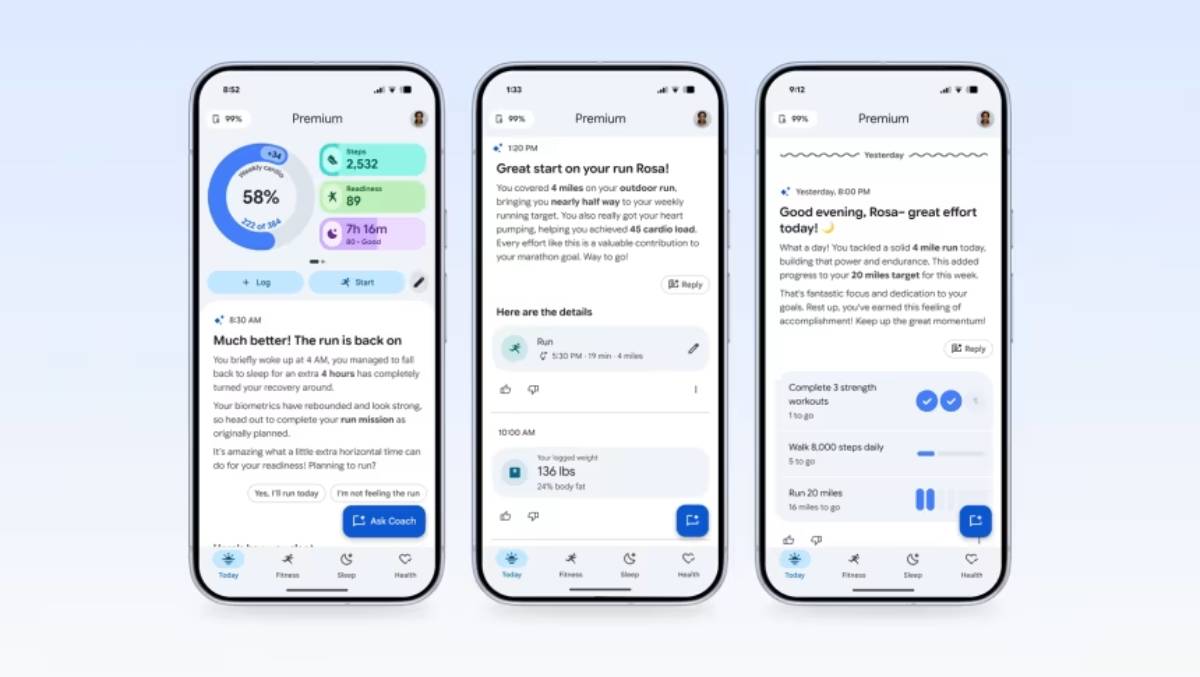
Google’s evolving health AI strategy centers on expanding its integration across wearable and mobile ecosystems rather than competing in isolation.

May 8, 2026
|
Image Source: CNN

A major development unfolded as Google advances its AI-driven health strategy by signaling a more collaborative approach with ecosystem rivals, including Apple. The shift highlights a strategic pivot in the AI health race, where interoperability and data integration are becoming central to competitive advantage, reshaping digital health markets and wearable ecosystems globally.

Google’s evolving health AI strategy centers on expanding its integration across wearable and mobile ecosystems rather than competing in isolation. The company is increasingly aligning its health data initiatives, including Fitbit-derived insights, with broader platform compatibility across rival ecosystems.

Engagement with Apple signals a pragmatic shift toward interoperability in health data systems, particularly as regulatory pressure builds around consumer health portability. The move reflects intensifying competition in AI-powered preventive healthcare, where real-time biometric analysis, personalized recommendations, and longitudinal health tracking are becoming core differentiators.

The development also underscores growing convergence between consumer tech giants and healthcare analytics platforms in shaping next-generation digital health infrastructure. The AI health sector has rapidly evolved into one of the most strategically contested domains in technology, merging consumer devices, clinical analytics, and machine learning models. Companies like Google and Apple have built large-scale health ecosystems through wearables, cloud platforms, and AI-driven insights.

Historically, digital health ecosystems have been siloed, limiting cross-platform data portability. However, regulatory momentum in the United States and Europe is pushing toward greater interoperability and patient-controlled data frameworks. This is accelerating collaboration even among direct competitors.

The shift also reflects a broader trend in AI markets where competitive advantage is increasingly defined by data access breadth rather than proprietary isolation. In healthcare, this becomes especially significant due to the scale of longitudinal data required to train accurate predictive models.

Industry analysts suggest that collaboration between major tech firms in health AI reflects a strategic acknowledgment that no single company can dominate the entire healthcare data ecosystem. The complexity of regulatory compliance, combined with fragmented healthcare systems globally, makes interoperability essential.

Health technology specialists note that AI-driven healthcare requires diverse datasets across devices, demographics, and geographies to improve predictive accuracy. This pushes companies toward partnerships even with competitors.

Executives across the digital health sector have emphasized that trust, data governance, and privacy compliance will define the next phase of AI healthcare expansion. The emphasis is shifting from device competition to ecosystem orchestration, where value is created through integrated health intelligence layers rather than standalone hardware or software offerings.

For businesses, the shift signals a move toward ecosystem-driven competition in digital health, where collaboration may outweigh exclusivity. Companies in wearables, insurance, and telehealth may need to adapt to interoperable data environments.

Investors are likely to reassess valuations in health-tech firms based on ecosystem positioning rather than device dominance alone. Regulatory bodies may also accelerate standards around health data portability, privacy, and AI transparency.

For executives, the key implication is that competitive advantage in AI health will depend on access to cross-platform datasets and the ability to integrate across rival ecosystems without friction or regulatory exposure.

The next phase will focus on how effectively AI health platforms integrate across competing ecosystems while maintaining regulatory compliance. Attention will center on whether deeper Apple–Google interoperability expands or remains limited to specific use cases. Key uncertainties include data governance frameworks, consumer privacy safeguards, and the pace of healthcare regulatory alignment across major markets. The competitive landscape is shifting from hardware dominance to data ecosystem orchestration.

Source: CNN (Tech – AI Health Coverage)
Date: May 8, 2026

  • Featured tools
Murf Ai
Free

Murf AI Review – Advanced AI Voice Generator for Realistic Voiceovers

#
Text to Speech
Learn more
Beautiful AI
Free

Beautiful AI is an AI-powered presentation platform that automates slide design and formatting, enabling users to create polished, on-brand presentations quickly.

#
Presentation
Learn more

Learn more about future of AI

Join 80,000+ Ai enthusiast getting weekly updates on exciting AI tools.
Thank you! Your submission has been received!
Oops! Something went wrong while submitting the form.

Google AI Health Strategy Embraces Collaboration

May 8, 2026

Google’s evolving health AI strategy centers on expanding its integration across wearable and mobile ecosystems rather than competing in isolation.

Image Source: CNN

A major development unfolded as Google advances its AI-driven health strategy by signaling a more collaborative approach with ecosystem rivals, including Apple. The shift highlights a strategic pivot in the AI health race, where interoperability and data integration are becoming central to competitive advantage, reshaping digital health markets and wearable ecosystems globally.

Google’s evolving health AI strategy centers on expanding its integration across wearable and mobile ecosystems rather than competing in isolation. The company is increasingly aligning its health data initiatives, including Fitbit-derived insights, with broader platform compatibility across rival ecosystems.

Engagement with Apple signals a pragmatic shift toward interoperability in health data systems, particularly as regulatory pressure builds around consumer health portability. The move reflects intensifying competition in AI-powered preventive healthcare, where real-time biometric analysis, personalized recommendations, and longitudinal health tracking are becoming core differentiators.

The development also underscores growing convergence between consumer tech giants and healthcare analytics platforms in shaping next-generation digital health infrastructure. The AI health sector has rapidly evolved into one of the most strategically contested domains in technology, merging consumer devices, clinical analytics, and machine learning models. Companies like Google and Apple have built large-scale health ecosystems through wearables, cloud platforms, and AI-driven insights.

Historically, digital health ecosystems have been siloed, limiting cross-platform data portability. However, regulatory momentum in the United States and Europe is pushing toward greater interoperability and patient-controlled data frameworks. This is accelerating collaboration even among direct competitors.

The shift also reflects a broader trend in AI markets where competitive advantage is increasingly defined by data access breadth rather than proprietary isolation. In healthcare, this becomes especially significant due to the scale of longitudinal data required to train accurate predictive models.

Industry analysts suggest that collaboration between major tech firms in health AI reflects a strategic acknowledgment that no single company can dominate the entire healthcare data ecosystem. The complexity of regulatory compliance, combined with fragmented healthcare systems globally, makes interoperability essential.

Health technology specialists note that AI-driven healthcare requires diverse datasets across devices, demographics, and geographies to improve predictive accuracy. This pushes companies toward partnerships even with competitors.

Executives across the digital health sector have emphasized that trust, data governance, and privacy compliance will define the next phase of AI healthcare expansion. The emphasis is shifting from device competition to ecosystem orchestration, where value is created through integrated health intelligence layers rather than standalone hardware or software offerings.

For businesses, the shift signals a move toward ecosystem-driven competition in digital health, where collaboration may outweigh exclusivity. Companies in wearables, insurance, and telehealth may need to adapt to interoperable data environments.

Investors are likely to reassess valuations in health-tech firms based on ecosystem positioning rather than device dominance alone. Regulatory bodies may also accelerate standards around health data portability, privacy, and AI transparency.

For executives, the key implication is that competitive advantage in AI health will depend on access to cross-platform datasets and the ability to integrate across rival ecosystems without friction or regulatory exposure.

The next phase will focus on how effectively AI health platforms integrate across competing ecosystems while maintaining regulatory compliance. Attention will center on whether deeper Apple–Google interoperability expands or remains limited to specific use cases. Key uncertainties include data governance frameworks, consumer privacy safeguards, and the pace of healthcare regulatory alignment across major markets. The competitive landscape is shifting from hardware dominance to data ecosystem orchestration.

Source: CNN (Tech – AI Health Coverage)
Date: May 8, 2026

Promote Your Tool

Copy Embed Code

Similar Blogs

May 8, 2026
|

Google Rebrands Fitbit App Integration

The Fitbit app is being phased into a new identity under Google’s broader health and fitness ecosystem, accompanied by updated features designed to enhance user tracking, analytics.
Read more
May 8, 2026
|

AI Tools Boost Workforce Productivity

AI-powered tools are being widely adopted to streamline everyday work tasks such as scheduling, email drafting, research, and workflow organization.
Read more
May 8, 2026
|

Global Tech Faces RAMageddon Crisis

Technology companies across hardware, cloud computing, and artificial intelligence sectors are reporting rising concerns over a shortage of RAM (random-access memory).
Read more
May 8, 2026
|

Huawei Launches Ultra-Thin Premium Tablet

Huawei has launched its latest premium tablet, positioned as a direct competitor to Apple’s high-end iPad Pro series.
Read more
May 8, 2026
|

Cloudflare AI Shift Cuts Workforce

Cloudflare has announced plans to cut approximately 20% of its workforce, equating to more than 1,100 jobs, as it restructures operations around AI-driven efficiency models.
Read more
May 8, 2026
|

OpenAI Advances Cybersecurity AI Race

OpenAI has reportedly rolled out a new AI model tailored for cybersecurity applications, aimed at strengthening threat detection, vulnerability analysis, and automated defense mechanisms.
Read more