
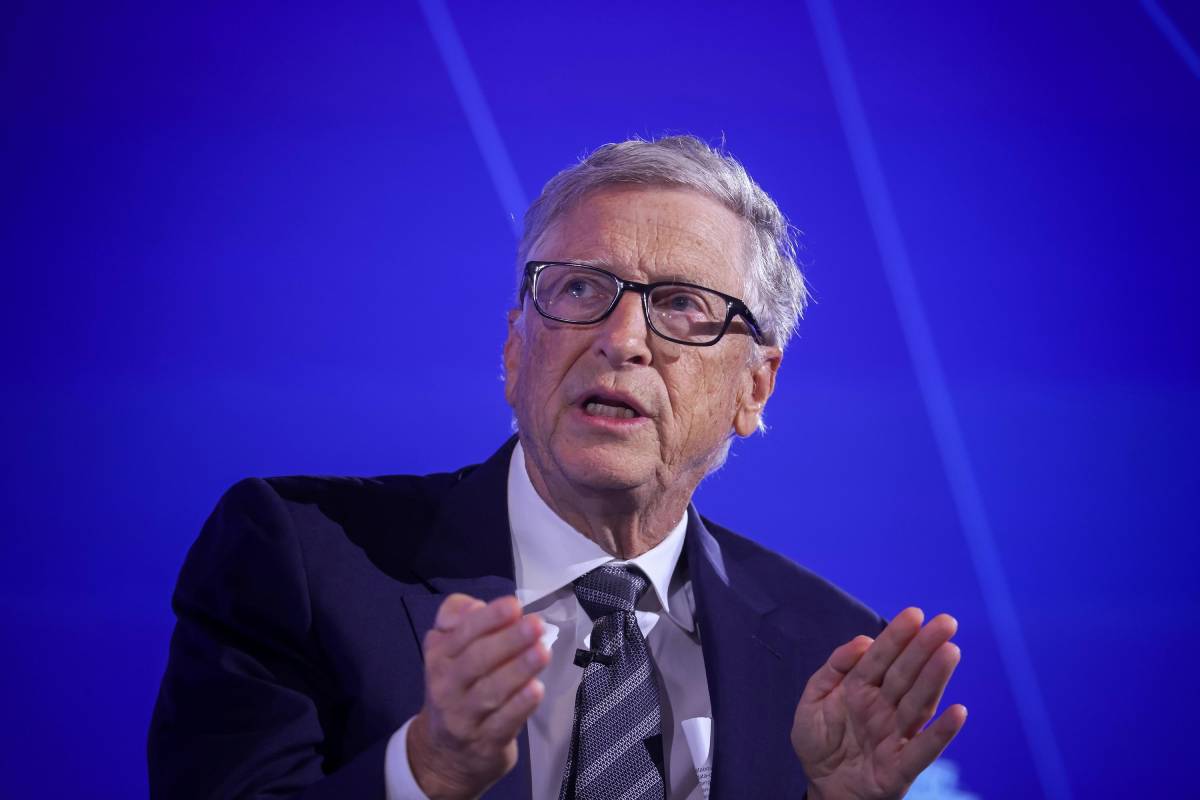
Global Optics Dented as Gates Skips India AI Summit

The summit, positioned as a flagship gathering for India’s AI ecosystem, was expected to feature Bill Gates as a central speaker. His absence, reportedly communicated shortly before the event, created confusion among delegates and partners.

February 24, 2026
|

A high profile India AI summit faced reputational strain after Bill Gates failed to deliver his scheduled keynote, with reports citing last minute cancellation and organisational disarray. The development has raised questions over event governance and India’s positioning as a credible global hub for artificial intelligence leadership.

The summit, positioned as a flagship gathering for India’s AI ecosystem, was expected to feature Bill Gates as a central speaker. His absence, reportedly communicated shortly before the event, created confusion among delegates and partners.

Organisers faced criticism over logistical lapses, coordination gaps, and inadequate contingency planning. Attendees reported scheduling inconsistencies and communication breakdowns during the proceedings.

The event was intended to spotlight India’s AI ambitions, attract foreign investment, and strengthen public private collaboration. Instead, the disruption shifted attention toward governance standards and execution capabilities.

The incident also triggered scrutiny across diplomatic and corporate circles, particularly given the summit’s international visibility.

India has been aggressively positioning itself as a global AI powerhouse, aligning policy frameworks with its broader digital transformation agenda. Under the banner of national AI missions and semiconductor initiatives, policymakers have sought to court global technology leaders and investors.

The participation of influential figures such as Bill Gates carries symbolic and strategic weight. As co founder of Microsoft and a leading global philanthropist through the Bill & Melinda Gates Foundation, Gates represents both technological credibility and development focused innovation.

In recent years, India has hosted multiple high level tech summits to reinforce its global standing, especially as AI becomes central to geopolitical competition between major economies. Against this backdrop, execution missteps risk diluting messaging at a time when nations are competing to attract AI capital, talent, and partnerships.

Industry analysts note that high visibility cancellations can quickly overshadow policy announcements. Event management experts argue that large scale international summits require multilayered coordination, especially when global figures are involved.

Technology strategists suggest the setback underscores the importance of institutional reliability in shaping investor confidence. In a competitive AI landscape, credibility is often as critical as capability.

While organisers reportedly expressed regret over the disruption, business leaders have emphasized the need for tighter communication protocols and stronger contingency frameworks. Corporate executives attending the summit highlighted that perception management matters significantly when courting multinational stakeholders.

Policy observers add that India’s AI narrative remains intact, but consistent delivery will be essential to reinforce trust among global partners. For businesses and investors, the episode serves as a reminder that ecosystem maturity extends beyond innovation to governance and execution. International corporations evaluating India as an AI destination will assess not only market scale but also institutional reliability.

Government stakeholders may need to recalibrate event oversight mechanisms and public private coordination models. Investors could demand clearer communication channels and stronger event management standards for future global engagements.

For domestic startups, the focus may shift toward reinforcing operational credibility to match technological ambition. Reputational risk, particularly in frontier sectors like AI, can influence capital flows and strategic partnerships.

Attention now turns to how organisers and policymakers respond. Swift corrective measures, transparent communication, and stronger institutional coordination will be critical ahead of future global AI forums.

India’s AI trajectory remains robust, but execution discipline will determine how effectively it converts ambition into sustained international confidence. For decision makers, credibility will be the ultimate differentiator.

Source: Yahoo News
Date: February 2026

  • Featured tools
Surfer AI
Free

Surfer AI is an AI-powered content creation assistant built into the Surfer SEO platform, designed to generate SEO-optimized articles from prompts, leveraging data from search results to inform tone, structure, and relevance.

#
SEO
Learn more
Wonder AI
Free

Wonder AI is a versatile AI-powered creative platform that generates text, images, and audio with minimal input, designed for fast storytelling, visual creation, and audio content generation

#
Art Generator
Learn more

Learn more about future of AI

Join 80,000+ Ai enthusiast getting weekly updates on exciting AI tools.
Thank you! Your submission has been received!
Oops! Something went wrong while submitting the form.

Global Optics Dented as Gates Skips India AI Summit

February 24, 2026

The summit, positioned as a flagship gathering for India’s AI ecosystem, was expected to feature Bill Gates as a central speaker. His absence, reportedly communicated shortly before the event, created confusion among delegates and partners.

A high profile India AI summit faced reputational strain after Bill Gates failed to deliver his scheduled keynote, with reports citing last minute cancellation and organisational disarray. The development has raised questions over event governance and India’s positioning as a credible global hub for artificial intelligence leadership.

The summit, positioned as a flagship gathering for India’s AI ecosystem, was expected to feature Bill Gates as a central speaker. His absence, reportedly communicated shortly before the event, created confusion among delegates and partners.

Organisers faced criticism over logistical lapses, coordination gaps, and inadequate contingency planning. Attendees reported scheduling inconsistencies and communication breakdowns during the proceedings.

The event was intended to spotlight India’s AI ambitions, attract foreign investment, and strengthen public private collaboration. Instead, the disruption shifted attention toward governance standards and execution capabilities.

The incident also triggered scrutiny across diplomatic and corporate circles, particularly given the summit’s international visibility.

India has been aggressively positioning itself as a global AI powerhouse, aligning policy frameworks with its broader digital transformation agenda. Under the banner of national AI missions and semiconductor initiatives, policymakers have sought to court global technology leaders and investors.

The participation of influential figures such as Bill Gates carries symbolic and strategic weight. As co founder of Microsoft and a leading global philanthropist through the Bill & Melinda Gates Foundation, Gates represents both technological credibility and development focused innovation.

In recent years, India has hosted multiple high level tech summits to reinforce its global standing, especially as AI becomes central to geopolitical competition between major economies. Against this backdrop, execution missteps risk diluting messaging at a time when nations are competing to attract AI capital, talent, and partnerships.

Industry analysts note that high visibility cancellations can quickly overshadow policy announcements. Event management experts argue that large scale international summits require multilayered coordination, especially when global figures are involved.

Technology strategists suggest the setback underscores the importance of institutional reliability in shaping investor confidence. In a competitive AI landscape, credibility is often as critical as capability.

While organisers reportedly expressed regret over the disruption, business leaders have emphasized the need for tighter communication protocols and stronger contingency frameworks. Corporate executives attending the summit highlighted that perception management matters significantly when courting multinational stakeholders.

Policy observers add that India’s AI narrative remains intact, but consistent delivery will be essential to reinforce trust among global partners. For businesses and investors, the episode serves as a reminder that ecosystem maturity extends beyond innovation to governance and execution. International corporations evaluating India as an AI destination will assess not only market scale but also institutional reliability.

Government stakeholders may need to recalibrate event oversight mechanisms and public private coordination models. Investors could demand clearer communication channels and stronger event management standards for future global engagements.

For domestic startups, the focus may shift toward reinforcing operational credibility to match technological ambition. Reputational risk, particularly in frontier sectors like AI, can influence capital flows and strategic partnerships.

Attention now turns to how organisers and policymakers respond. Swift corrective measures, transparent communication, and stronger institutional coordination will be critical ahead of future global AI forums.

India’s AI trajectory remains robust, but execution discipline will determine how effectively it converts ambition into sustained international confidence. For decision makers, credibility will be the ultimate differentiator.

Source: Yahoo News
Date: February 2026

Promote Your Tool

Copy Embed Code

Similar Blogs

February 24, 2026
|

Jamie Dimon Calms Markets, Downplays AI Disruption Risks

Dimon addressed concerns at a corporate briefing, emphasizing JPMorgan’s proactive adoption of AI for efficiency, compliance, and customer services.
Read more
February 24, 2026
|

Asian Markets Steady After Wall Street Rout in AI Exposed Stocks

Markets across Asia traded unevenly following a sharp US selloff in technology and legacy IT stocks exposed to AI disruption. Wall Street investors rotated out of companies perceived as vulnerable to automation.
Read more
February 24, 2026
|

Crypto Markets Slide as AI Jitters Trigger Sharp IBM Selloff

Cryptocurrency markets recorded deeper declines amid a broader tech-led selloff, reflecting risk-off sentiment among global investors. IBM shares plunged 11%, highlighting heightened sensitivity to earnings expectations.
Read more
February 24, 2026
|

Indian IT Stocks Extend Losses as AI Fears Trigger Global Repricing

Shares of major Indian IT services firms extended losses following global volatility in AI-linked equities.
Read more
February 24, 2026
|

AI Coding Platforms Threaten Freemium App Model Economics

Advances in generative AI coding assistants now allow users to create simple, task-specific applications through natural language prompts, reducing reliance on standalone freemium utilities.
Read more
February 24, 2026
|

AI Powered Body Scans Expand Across Health and Retail

AI-driven body scanning platforms are increasingly being deployed in gyms, wellness centers, medical clinics, and retail environments.
Read more