



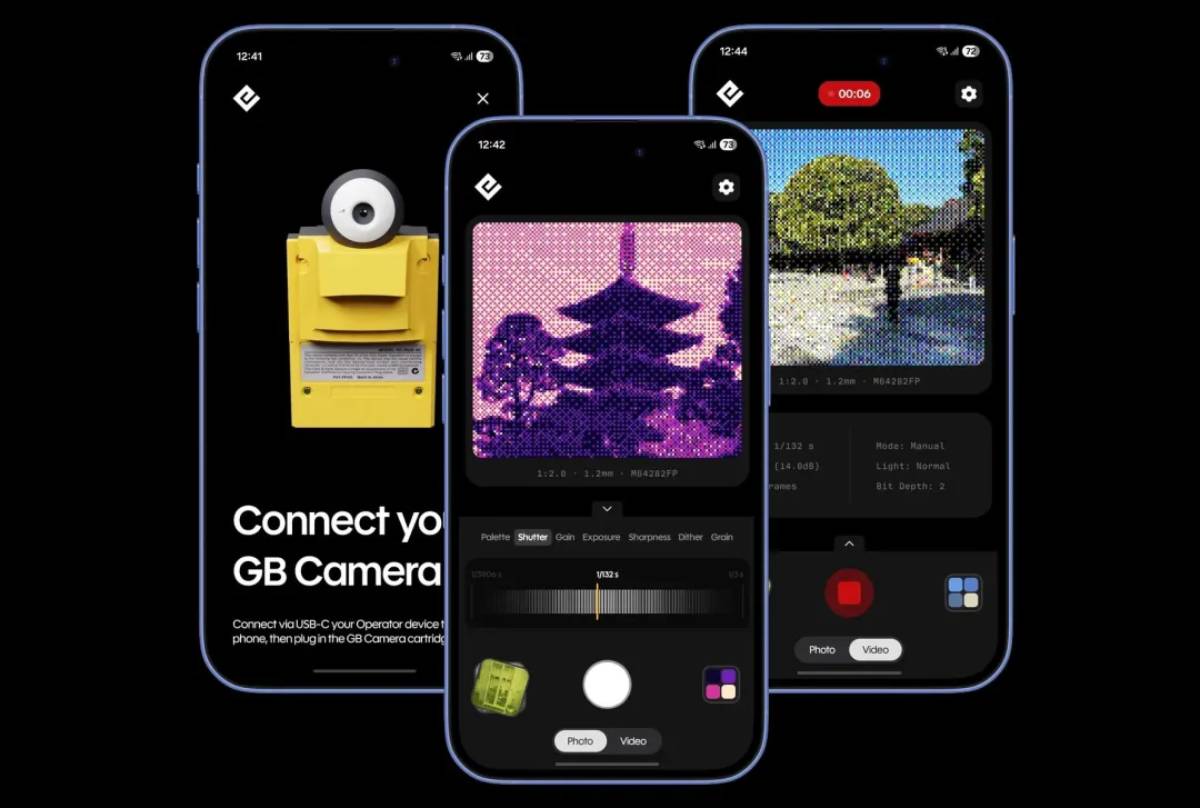
A niche retro hardware innovation is gaining new commercial relevance as the classic Game Boy Camera is now compatible with modern smartphones through third-party integration tools. The development bridges legacy gaming hardware with mobile imaging workflows, signaling new opportunities in creator tech, retro computing markets, and cross-platform hardware ecosystems.
The integration is enabled through hardware and software solutions developed by Epilogue, including its Epilogue ecosystem and the GB Operator, which allows Game Boy cartridges and accessories to interface with modern systems.
Users can now connect the Game Boy Camera to smartphones via intermediary software, enabling image transfer, editing, and sharing across mobile platforms. The rollout builds on increasing consumer interest in retro gaming hardware repurposed for modern creative use cases. While not an official Nintendo integration, the move expands functionality for legacy devices originally launched decades ago.
The original Game Boy Camera launched in 1998 as an experimental imaging add-on for the Game Boy platform by Nintendo. At the time, it represented one of the earliest consumer digital imaging tools in handheld gaming, albeit with extremely limited resolution and functionality.
In recent years, retro hardware has experienced a resurgence driven by nostalgia-driven consumer demand and creator economy experimentation. Devices like the Game Boy Camera have shifted from novelty items to cultural artifacts, often repurposed in digital art, social media aesthetics, and experimental photography.
Simultaneously, the hardware adaptation industry has matured, with companies like Epilogue building bridges between legacy cartridges and modern operating systems. This reflects a broader trend where obsolete gaming hardware is being re-engineered into functional creative tools rather than remaining collector-only artifacts.
Industry analysts view this integration as part of a growing “retro-to-modern conversion” wave in consumer tech. The trend is particularly strong among Gen Z and millennial creators who value analog aesthetics combined with digital distribution speed.
Hardware ecosystem strategists suggest that Epilogue’s approach effectively creates a secondary lifecycle for legacy devices, extending their relevance far beyond original product cycles. This also aligns with broader gaming industry behavior where companies monetize nostalgia through remakes, accessories, and interoperability tools.
While Nintendo has not formally endorsed third-party integration, observers note that such ecosystems indirectly reinforce brand value by keeping legacy hardware culturally active. Engineers familiar with retro hardware adaptation highlight that the biggest breakthrough is not the imaging quality itself, but the seamless data transfer pipeline into modern mobile environments.
For consumer tech companies, the development signals an emerging micro-market around retro hardware interoperability. This opens revenue streams in accessory manufacturing, software bridges, and creator-focused tooling.
For investors, niche hardware ecosystems demonstrate that long-tail consumer electronics can retain monetizable value decades after discontinuation. This may encourage startups to target “hardware revival layers” rather than new device categories.
On the policy side, interoperability frameworks may gain attention as third-party hardware increasingly interfaces with modern mobile platforms. For creators, the shift lowers barriers to using vintage hardware in digital workflows, potentially reshaping aesthetic-driven content markets across social platforms.
The next phase is likely expansion into broader device compatibility, including improved mobile apps and deeper integration with editing ecosystems. If adoption grows, similar retro hardware bridges could emerge for other legacy gaming accessories. However, sustainability depends on developer support and platform stability, as well as consumer willingness to engage with niche hardware workflows. The key question is whether this remains a novelty trend or evolves into a structured retro-tech sub-economy.
Source: The Verge
Date: June 19, 2026


