
G7 Disrupts Geneva Trade Fair

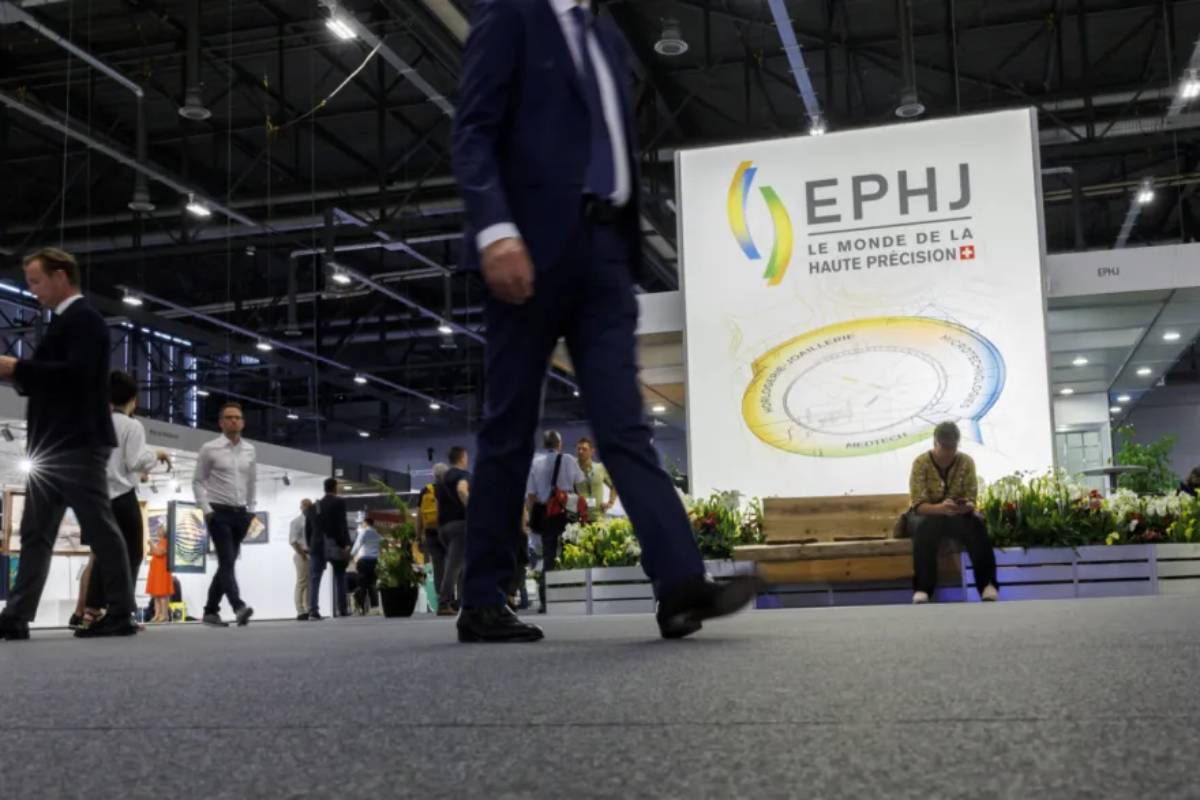
The EPHJ trade fair, which brings together stakeholders from the watchmaking, microtechnology, and precision engineering sectors, experienced lower-than-expected attendance this year.

June 25, 2026
|
Image Source:  Swissinfo

Attendance at Geneva’s EPHJ trade fair, a key global event for high-precision industries, has been affected due to disruptions linked to the G7 Summit. The overlap has created logistical constraints and reduced visitor flow, highlighting how major geopolitical events can indirectly influence international trade exhibitions and business engagement.

The EPHJ trade fair, which brings together stakeholders from the watchmaking, microtechnology, and precision engineering sectors, experienced lower-than-expected attendance this year. Organizers attributed the decline partly to security restrictions, travel disruptions, and scheduling conflicts caused by the concurrent G7 Summit.

The summit led to heightened security measures and logistical pressure in and around Geneva, affecting hotel availability, transportation routes, and access to the exhibition venue. As a result, some international delegates and exhibitors reportedly faced difficulties in attending or adjusting travel plans.

Despite these challenges, the event continued with participation from key industry players, though overall visitor numbers were impacted. Organizers and local authorities coordinated to minimize disruption, but acknowledged the unavoidable overlap between two major international events.

The development aligns with a broader trend across global markets where major political summits increasingly intersect with international business events, creating both visibility opportunities and operational challenges. Geneva, as a global diplomatic and financial hub, frequently hosts overlapping high-profile events.

The EPHJ trade fair is a significant platform for Switzerland’s precision engineering sector, an industry closely tied to global supply chains in aerospace, medical devices, and luxury watchmaking. Attendance levels are an important indicator of international business engagement and export confidence.

Historically, Switzerland has benefited from its central role in hosting global conferences and trade fairs. However, simultaneous large-scale events can strain infrastructure and logistics, particularly in cities with limited capacity for concurrent high-security operations.

In recent years, the convergence of geopolitical events and commercial exhibitions has become more common, reflecting the increasing density of global economic and diplomatic calendars.

Industry analysts note that overlapping major events often create short-term disruptions but can also elevate international visibility for host cities. However, they caution that logistical friction can reduce business efficiency at sector-specific trade fairs.

Trade fair organizers emphasize that while attendance fluctuations are expected in such scenarios, the long-term value of the event remains strong due to its specialized industry focus and established global reputation.

Economic observers highlight that precision manufacturing and microtechnology sectors rely heavily on face-to-face networking, making attendance disruptions more impactful compared to other industries.

Logistics experts point out that simultaneous high-security events can strain urban infrastructure, affecting transport efficiency, accommodation capacity, and access management for international visitors.

Diplomatic analysts suggest that Geneva’s continued selection as a venue for global summits reinforces its strategic importance, even if it occasionally creates operational trade-offs for commercial events.

For businesses, reduced attendance may limit networking opportunities, deal-making potential, and supplier engagement at critical industry events. Companies may need to increasingly adopt hybrid participation models.

For event organizers, the situation underscores the importance of coordination with public authorities when scheduling international fairs in major diplomatic hubs. For policymakers, the overlap highlights the need to balance geopolitical hosting priorities with economic activity in key commercial sectors.

For investors and industry stakeholders, short-term disruptions are unlikely to affect long-term sector fundamentals but may influence event planning strategies in the future. Future editions of major trade fairs in Geneva may require closer alignment with international diplomatic calendars to minimize operational conflicts. Hybrid event formats and enhanced digital participation could help mitigate similar disruptions.

Decision-makers should monitor how cities hosting both diplomatic and commercial events adapt infrastructure and scheduling strategies to maintain economic efficiency while supporting global engagement.

Source: Swissinfo
Date: June 25, 2026

  • Featured tools
Murf Ai
Free

Murf AI Review – Advanced AI Voice Generator for Realistic Voiceovers

#
Text to Speech
Learn more
Ai Fiesta
Paid

AI Fiesta is an all-in-one productivity platform that gives users access to multiple leading AI models through a single interface. It includes features like prompt enhancement, image generation, audio transcription and side-by-side model comparison.

#
Copywriting
#
Art Generator
Learn more

Learn more about future of AI

Join 80,000+ Ai enthusiast getting weekly updates on exciting AI tools.
Thank you! Your submission has been received!
Oops! Something went wrong while submitting the form.

G7 Disrupts Geneva Trade Fair

June 25, 2026

The EPHJ trade fair, which brings together stakeholders from the watchmaking, microtechnology, and precision engineering sectors, experienced lower-than-expected attendance this year.

Image Source:  Swissinfo

Attendance at Geneva’s EPHJ trade fair, a key global event for high-precision industries, has been affected due to disruptions linked to the G7 Summit. The overlap has created logistical constraints and reduced visitor flow, highlighting how major geopolitical events can indirectly influence international trade exhibitions and business engagement.

The EPHJ trade fair, which brings together stakeholders from the watchmaking, microtechnology, and precision engineering sectors, experienced lower-than-expected attendance this year. Organizers attributed the decline partly to security restrictions, travel disruptions, and scheduling conflicts caused by the concurrent G7 Summit.

The summit led to heightened security measures and logistical pressure in and around Geneva, affecting hotel availability, transportation routes, and access to the exhibition venue. As a result, some international delegates and exhibitors reportedly faced difficulties in attending or adjusting travel plans.

Despite these challenges, the event continued with participation from key industry players, though overall visitor numbers were impacted. Organizers and local authorities coordinated to minimize disruption, but acknowledged the unavoidable overlap between two major international events.

The development aligns with a broader trend across global markets where major political summits increasingly intersect with international business events, creating both visibility opportunities and operational challenges. Geneva, as a global diplomatic and financial hub, frequently hosts overlapping high-profile events.

The EPHJ trade fair is a significant platform for Switzerland’s precision engineering sector, an industry closely tied to global supply chains in aerospace, medical devices, and luxury watchmaking. Attendance levels are an important indicator of international business engagement and export confidence.

Historically, Switzerland has benefited from its central role in hosting global conferences and trade fairs. However, simultaneous large-scale events can strain infrastructure and logistics, particularly in cities with limited capacity for concurrent high-security operations.

In recent years, the convergence of geopolitical events and commercial exhibitions has become more common, reflecting the increasing density of global economic and diplomatic calendars.

Industry analysts note that overlapping major events often create short-term disruptions but can also elevate international visibility for host cities. However, they caution that logistical friction can reduce business efficiency at sector-specific trade fairs.

Trade fair organizers emphasize that while attendance fluctuations are expected in such scenarios, the long-term value of the event remains strong due to its specialized industry focus and established global reputation.

Economic observers highlight that precision manufacturing and microtechnology sectors rely heavily on face-to-face networking, making attendance disruptions more impactful compared to other industries.

Logistics experts point out that simultaneous high-security events can strain urban infrastructure, affecting transport efficiency, accommodation capacity, and access management for international visitors.

Diplomatic analysts suggest that Geneva’s continued selection as a venue for global summits reinforces its strategic importance, even if it occasionally creates operational trade-offs for commercial events.

For businesses, reduced attendance may limit networking opportunities, deal-making potential, and supplier engagement at critical industry events. Companies may need to increasingly adopt hybrid participation models.

For event organizers, the situation underscores the importance of coordination with public authorities when scheduling international fairs in major diplomatic hubs. For policymakers, the overlap highlights the need to balance geopolitical hosting priorities with economic activity in key commercial sectors.

For investors and industry stakeholders, short-term disruptions are unlikely to affect long-term sector fundamentals but may influence event planning strategies in the future. Future editions of major trade fairs in Geneva may require closer alignment with international diplomatic calendars to minimize operational conflicts. Hybrid event formats and enhanced digital participation could help mitigate similar disruptions.

Decision-makers should monitor how cities hosting both diplomatic and commercial events adapt infrastructure and scheduling strategies to maintain economic efficiency while supporting global engagement.

Source: Swissinfo
Date: June 25, 2026

Promote Your Tool

Copy Embed Code

Similar Blogs

June 25, 2026
|

OQ Tech Boosts Satellite Position

The European financing package will support OQ Technology’s expansion of its low Earth orbit (LEO) satellite constellation aimed at providing direct-to-device connectivity.
Read more
June 25, 2026
|

Women Led Startups Show Funding Gap

The startup ecosystem has seen a steady increase in women-founded and women-led companies, particularly in sectors such as digital services, healthtech, fintech, and sustainability-driven innovation.
Read more
June 25, 2026
|

AI Healthcare Unlocks Transformation Potential

AI applications in healthcare are expanding across multiple domains, including clinical decision support, medical imaging, drug discovery, and patient management systems.
Read more
June 25, 2026
|

Helical Raises $10M for AI Drug Lab

The funding round will enable Helical to scale its virtual AI lab infrastructure, which simulates complex biological processes for drug discovery.
Read more
June 25, 2026
|

Digital Healthtech Faces Investor Pressure

The guidance highlights that digital health startups must now demonstrate stronger clinical validation, data security standards, and measurable patient outcomes to secure investor confidence.
Read more
June 25, 2026
|

Luxembourg Space Strategy Turns Decade

Over the past ten years, Luxembourg has systematically developed its space sector through targeted investments, policy frameworks, and partnerships with private space companies.
Read more