
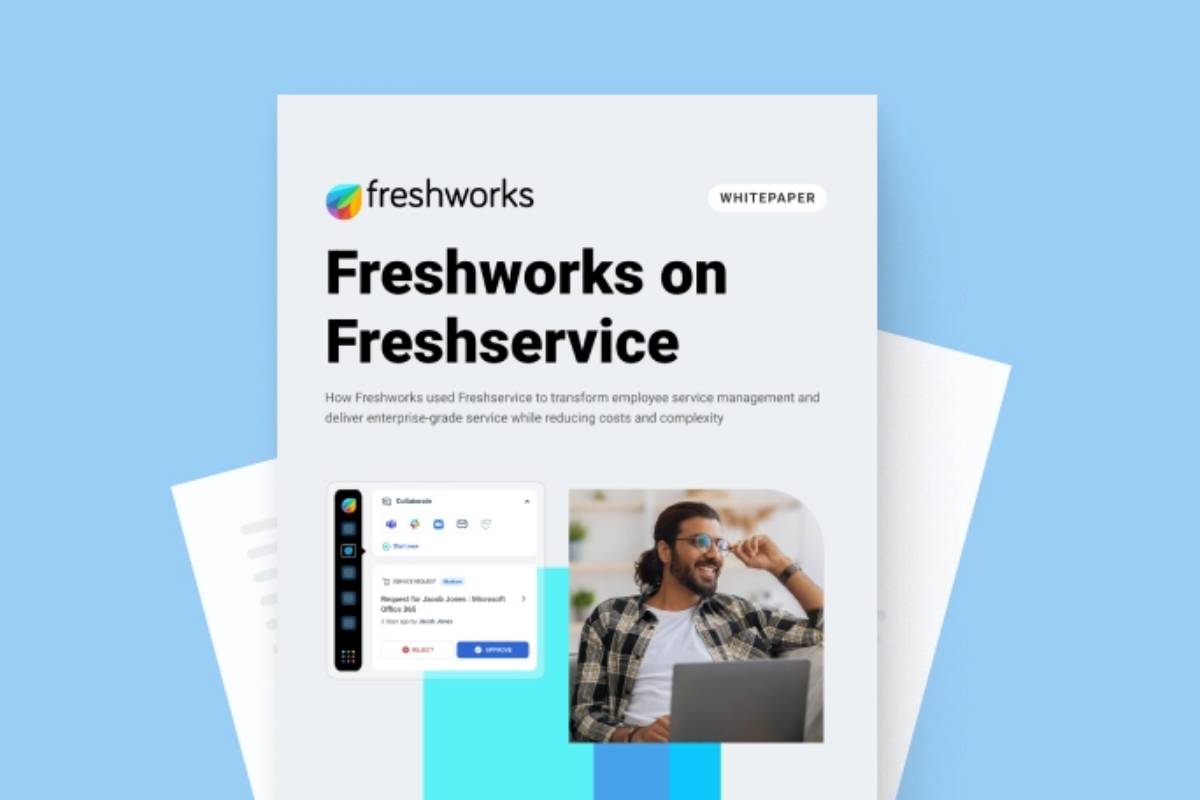
Freshworks Advances Practical Enterprise AI Automation

Industry analysis indicates that Freshworks is positioning its AI service management offerings around automation, usability, and operational productivity instead of highly complex enterprise transformation narratives.

May 27, 2026
|

A shift toward more operationally focused enterprise AI strategies is gaining momentum as Freshworks signals a practical approach to AI-powered service management. The development reflects growing demand among businesses for artificial intelligence solutions that deliver measurable efficiency gains rather than experimental or hype-driven deployments.

Industry analysis indicates that Freshworks is positioning its AI service management offerings around automation, usability, and operational productivity instead of highly complex enterprise transformation narratives.

The company’s approach reportedly emphasizes practical deployment models designed to improve customer support, IT operations, workflow management, and employee service functions. Analysts suggest the strategy aligns with growing enterprise demand for AI systems that can integrate into existing operations without requiring costly infrastructure overhauls.

The discussion also highlights a broader market transition in which enterprises increasingly prioritize return on investment, implementation speed, and workflow efficiency over speculative AI experimentation and large-scale theoretical transformation promises.

The evolution of AI service management reflects wider changes occurring across the enterprise technology landscape. Following the rapid rise of generative AI, businesses initially focused heavily on experimentation and broad innovation initiatives. However, many organizations are now entering a more mature phase centered on operational efficiency, scalability, and cost control.

Enterprise leaders are increasingly seeking AI tools capable of solving specific workflow challenges, reducing repetitive tasks, improving customer response times, and supporting employee productivity. This shift has created growing demand for AI platforms that can be implemented quickly and integrated into existing enterprise software ecosystems.

The development also reflects broader pressures facing corporate technology buyers. Economic uncertainty, rising infrastructure costs, and increased scrutiny around AI spending are pushing businesses to prioritize practical applications with measurable business outcomes.

Analysts note that enterprise software vendors are therefore repositioning AI not as a futuristic concept, but as a tool for incremental operational improvement and sustainable automation.

Technology analysts suggest the strategy associated with Freshworks reflects an important shift in enterprise AI adoption patterns. Experts argue that organizations are becoming more selective about where AI delivers tangible operational value.

Industry observers note that many enterprises experienced “AI fatigue” after aggressive experimentation phases produced unclear financial returns. As a result, businesses are increasingly favoring AI solutions tied directly to customer support efficiency, service automation, ticket management, and workforce productivity metrics.

Analysts also point out that practical AI deployment models may help mid-sized businesses adopt automation technologies without the complexity or cost structures associated with large-scale AI transformation projects.

Some experts further suggest that the future success of enterprise AI vendors will depend less on model size or technological novelty and more on ease of implementation, workflow compatibility, governance capabilities, and measurable cost savings for enterprise clients.

For businesses, the trend toward practical AI service management could accelerate adoption across customer service, IT support, and internal operations. Companies may increasingly favor modular AI systems that improve efficiency without requiring major organizational restructuring.

For investors, the development signals a potential market shift toward enterprise software firms capable of demonstrating real-world productivity gains and sustainable monetization strategies rather than purely speculative AI positioning.

From a policy perspective, the growing integration of AI into workplace management systems may raise questions around workforce displacement, employee monitoring, and data governance. Regulators may face increasing pressure to establish standards for transparency, accountability, and ethical deployment in enterprise automation environments.

Looking ahead, enterprise AI markets are expected to move further toward practical, operations-focused deployment models. Decision-makers should monitor how companies measure AI productivity gains, manage implementation costs, and balance automation with workforce adaptation. As businesses become more disciplined in evaluating AI investments, vendors capable of delivering scalable, cost-effective operational improvements are likely to gain a stronger competitive position in the next phase of enterprise technology adoption.

Source: Forrester
Date:
May 27, 2026

  • Featured tools
Scalenut AI
Free

Scalenut AI is an all-in-one SEO content platform that combines AI-driven writing, keyword research, competitor insights, and optimization tools to help you plan, create, and rank content.

#
SEO
Learn more
Ai Fiesta
Paid

AI Fiesta is an all-in-one productivity platform that gives users access to multiple leading AI models through a single interface. It includes features like prompt enhancement, image generation, audio transcription and side-by-side model comparison.

#
Copywriting
#
Art Generator
Learn more

Learn more about future of AI

Join 80,000+ Ai enthusiast getting weekly updates on exciting AI tools.
Thank you! Your submission has been received!
Oops! Something went wrong while submitting the form.

Freshworks Advances Practical Enterprise AI Automation

May 27, 2026

Industry analysis indicates that Freshworks is positioning its AI service management offerings around automation, usability, and operational productivity instead of highly complex enterprise transformation narratives.

A shift toward more operationally focused enterprise AI strategies is gaining momentum as Freshworks signals a practical approach to AI-powered service management. The development reflects growing demand among businesses for artificial intelligence solutions that deliver measurable efficiency gains rather than experimental or hype-driven deployments.

Industry analysis indicates that Freshworks is positioning its AI service management offerings around automation, usability, and operational productivity instead of highly complex enterprise transformation narratives.

The company’s approach reportedly emphasizes practical deployment models designed to improve customer support, IT operations, workflow management, and employee service functions. Analysts suggest the strategy aligns with growing enterprise demand for AI systems that can integrate into existing operations without requiring costly infrastructure overhauls.

The discussion also highlights a broader market transition in which enterprises increasingly prioritize return on investment, implementation speed, and workflow efficiency over speculative AI experimentation and large-scale theoretical transformation promises.

The evolution of AI service management reflects wider changes occurring across the enterprise technology landscape. Following the rapid rise of generative AI, businesses initially focused heavily on experimentation and broad innovation initiatives. However, many organizations are now entering a more mature phase centered on operational efficiency, scalability, and cost control.

Enterprise leaders are increasingly seeking AI tools capable of solving specific workflow challenges, reducing repetitive tasks, improving customer response times, and supporting employee productivity. This shift has created growing demand for AI platforms that can be implemented quickly and integrated into existing enterprise software ecosystems.

The development also reflects broader pressures facing corporate technology buyers. Economic uncertainty, rising infrastructure costs, and increased scrutiny around AI spending are pushing businesses to prioritize practical applications with measurable business outcomes.

Analysts note that enterprise software vendors are therefore repositioning AI not as a futuristic concept, but as a tool for incremental operational improvement and sustainable automation.

Technology analysts suggest the strategy associated with Freshworks reflects an important shift in enterprise AI adoption patterns. Experts argue that organizations are becoming more selective about where AI delivers tangible operational value.

Industry observers note that many enterprises experienced “AI fatigue” after aggressive experimentation phases produced unclear financial returns. As a result, businesses are increasingly favoring AI solutions tied directly to customer support efficiency, service automation, ticket management, and workforce productivity metrics.

Analysts also point out that practical AI deployment models may help mid-sized businesses adopt automation technologies without the complexity or cost structures associated with large-scale AI transformation projects.

Some experts further suggest that the future success of enterprise AI vendors will depend less on model size or technological novelty and more on ease of implementation, workflow compatibility, governance capabilities, and measurable cost savings for enterprise clients.

For businesses, the trend toward practical AI service management could accelerate adoption across customer service, IT support, and internal operations. Companies may increasingly favor modular AI systems that improve efficiency without requiring major organizational restructuring.

For investors, the development signals a potential market shift toward enterprise software firms capable of demonstrating real-world productivity gains and sustainable monetization strategies rather than purely speculative AI positioning.

From a policy perspective, the growing integration of AI into workplace management systems may raise questions around workforce displacement, employee monitoring, and data governance. Regulators may face increasing pressure to establish standards for transparency, accountability, and ethical deployment in enterprise automation environments.

Looking ahead, enterprise AI markets are expected to move further toward practical, operations-focused deployment models. Decision-makers should monitor how companies measure AI productivity gains, manage implementation costs, and balance automation with workforce adaptation. As businesses become more disciplined in evaluating AI investments, vendors capable of delivering scalable, cost-effective operational improvements are likely to gain a stronger competitive position in the next phase of enterprise technology adoption.

Source: Forrester
Date:
May 27, 2026

Promote Your Tool

Copy Embed Code

Similar Blogs

June 22, 2026
|

Switzerland Tests Digital Sovereignty Limits

The analysis examines Switzerland’s dependence on major global technology providers across cloud computing, productivity software, search infrastructure, and digital communications.
Read more
June 22, 2026
|

Switzerland Faces Larger Emissions Gap

The report indicates that Switzerland’s actual emissions gap defined as the difference between current emission levels and targeted climate reduction pathways may be significantly larger than previously disclosed in official assessments.
Read more
June 22, 2026
|

Switzerland AI Jobs Surge Amid Digital Demand

A new labor market analysis indicates a record level of AI-related job postings and employment growth in Switzerland. Demand spans roles in machine learning engineering, data science.
Read more
June 22, 2026
|

Global Leaders Scrutinize AI Risks

The Geneva counter-summit brought together policymakers, academics, and technology governance experts to evaluate the risks associated with rapidly advancing artificial intelligence systems.
Read more
June 22, 2026
|

AI Reliability Crisis Deepens Amid Errors

The KPMG report, intended to analyze the benefits and risks of artificial intelligence adoption, reportedly included factual inconsistencies attributed to AI-generated content.
Read more
June 22, 2026
|

Skene Raises €800K for Agents

Skene has raised €800,000 in pre-seed funding to advance its AI-driven “code-reading agents” designed to help software products automatically teach users how to use them.
Read more