
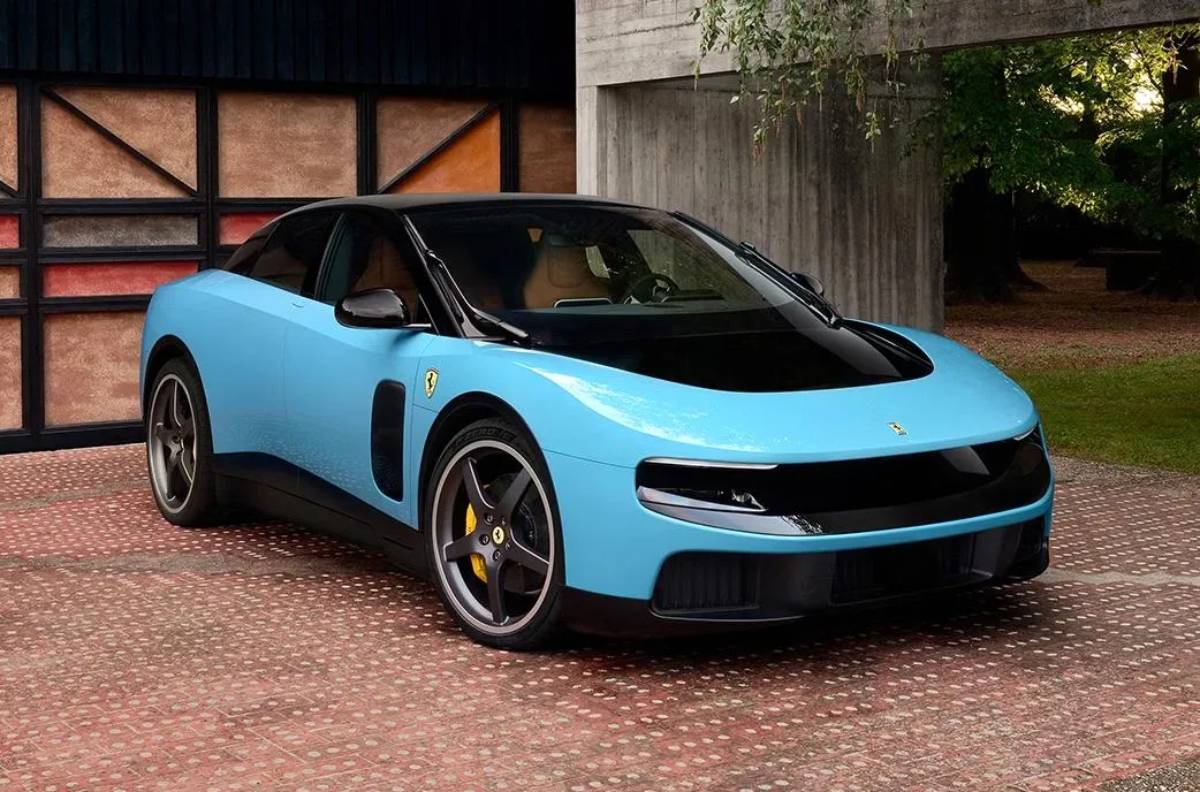
Ferrari Debuts First Electric EV Collaboration

The vehicle, internally referenced in industry reporting as a next-generation EV concept, is expected to reflect Ferrari’s performance heritage while integrating advanced electrification systems.

May 26, 2026
|
Image Source: The Verge

Ferrari is reportedly advancing its first electric vehicle program, marking a pivotal expansion beyond its traditional internal combustion engine dominance. The project involves collaboration with Jony Ive and Marc Newson through their design collective LoveFrom.

The vehicle, internally referenced in industry reporting as a next-generation EV concept, is expected to reflect Ferrari’s performance heritage while integrating advanced electrification systems. The development comes amid tightening emissions regulations in Europe and increasing pressure on luxury automakers to transition toward sustainable mobility platforms without compromising brand identity or performance benchmarks.

The shift by Ferrari toward electrification reflects a broader transformation across the global automotive industry, where legacy performance brands are being compelled to rethink engineering fundamentals. Regulatory frameworks in the European Union and key Asian markets are accelerating the phase-out of combustion engines, particularly in premium segments.

Historically, Ferrari has built its identity on high-revving engines, motorsport heritage, and mechanical exclusivity. However, competitors such as Porsche and Lamborghini are already investing heavily in hybrid and electric architectures, forcing Ferrari to accelerate its transition roadmap.

The involvement of Jony Ive signals a strong emphasis on design-led differentiation, suggesting that Ferrari aims to position its EV not merely as a technological shift but as a cultural and aesthetic evolution. This aligns with a wider industry trend where luxury automakers are merging software, design, and electrification into unified brand experiences.

Industry analysts suggest that Ferrari’s entry into the EV segment represents one of the most closely watched transitions in the luxury automotive space. While official technical specifications remain limited, experts note that brand perception will play a critical role in determining the success of Ferrari’s electric lineup.

Design strategists argue that collaboration with Jony Ive and LoveFrom could help Ferrari bridge the gap between traditional automotive craftsmanship and modern digital-first product design philosophies. Analysts also highlight that electric platforms offer both opportunity and risk for heritage brands, as they remove the mechanical elements that historically defined brand identity.

Market observers further suggest that Ferrari’s EV strategy may set benchmarks for other ultra-luxury manufacturers, where exclusivity, design language, and experiential value could outweigh traditional engine performance metrics in consumer decision-making.

For global automakers, the move by Ferrari underscores the accelerating convergence of luxury branding and electrification. It signals that even the most heritage-driven manufacturers must adapt to regulatory and market pressures.

For investors, the transition introduces both upside potential and execution risk, particularly around preserving brand equity in an electrified product line. Suppliers in battery technology, software integration, and lightweight materials may also benefit from increased demand.

From a policy perspective, Ferrari’s shift aligns with broader emissions reduction mandates across major automotive markets. Regulators are likely to view such transitions as validation of long-term decarbonization strategies, particularly in high-performance vehicle segments.

Looking ahead, attention will focus on Ferrari’s ability to balance performance identity with electric propulsion systems. The collaboration with Jony Ive suggests a strong design-led differentiation strategy, but execution will be critical. Key uncertainties include range performance, driving dynamics, and customer acceptance among traditional Ferrari buyers. The unveiling of the EV will serve as a defining moment in the brand’s transition into the electric mobility era.

Source: The Verge
Date: May 26, 2026

  • Featured tools
Alli AI
Free

Alli AI is an all-in-one, AI-powered SEO automation platform that streamlines on-page optimization, site auditing, speed improvements, schema generation, internal linking, and ranking insights.

#
SEO
Learn more
Hostinger Website Builder
Paid

Hostinger Website Builder is a drag-and-drop website creator bundled with hosting and AI-powered tools, designed for businesses, blogs and small shops with minimal technical effort.It makes launching a site fast and affordable, with templates, responsive design and built-in hosting all in one.

#
Productivity
#
Startup Tools
#
Ecommerce
Learn more

Learn more about future of AI

Join 80,000+ Ai enthusiast getting weekly updates on exciting AI tools.
Thank you! Your submission has been received!
Oops! Something went wrong while submitting the form.

Ferrari Debuts First Electric EV Collaboration

May 26, 2026

The vehicle, internally referenced in industry reporting as a next-generation EV concept, is expected to reflect Ferrari’s performance heritage while integrating advanced electrification systems.

Image Source: The Verge

Ferrari is reportedly advancing its first electric vehicle program, marking a pivotal expansion beyond its traditional internal combustion engine dominance. The project involves collaboration with Jony Ive and Marc Newson through their design collective LoveFrom.

The vehicle, internally referenced in industry reporting as a next-generation EV concept, is expected to reflect Ferrari’s performance heritage while integrating advanced electrification systems. The development comes amid tightening emissions regulations in Europe and increasing pressure on luxury automakers to transition toward sustainable mobility platforms without compromising brand identity or performance benchmarks.

The shift by Ferrari toward electrification reflects a broader transformation across the global automotive industry, where legacy performance brands are being compelled to rethink engineering fundamentals. Regulatory frameworks in the European Union and key Asian markets are accelerating the phase-out of combustion engines, particularly in premium segments.

Historically, Ferrari has built its identity on high-revving engines, motorsport heritage, and mechanical exclusivity. However, competitors such as Porsche and Lamborghini are already investing heavily in hybrid and electric architectures, forcing Ferrari to accelerate its transition roadmap.

The involvement of Jony Ive signals a strong emphasis on design-led differentiation, suggesting that Ferrari aims to position its EV not merely as a technological shift but as a cultural and aesthetic evolution. This aligns with a wider industry trend where luxury automakers are merging software, design, and electrification into unified brand experiences.

Industry analysts suggest that Ferrari’s entry into the EV segment represents one of the most closely watched transitions in the luxury automotive space. While official technical specifications remain limited, experts note that brand perception will play a critical role in determining the success of Ferrari’s electric lineup.

Design strategists argue that collaboration with Jony Ive and LoveFrom could help Ferrari bridge the gap between traditional automotive craftsmanship and modern digital-first product design philosophies. Analysts also highlight that electric platforms offer both opportunity and risk for heritage brands, as they remove the mechanical elements that historically defined brand identity.

Market observers further suggest that Ferrari’s EV strategy may set benchmarks for other ultra-luxury manufacturers, where exclusivity, design language, and experiential value could outweigh traditional engine performance metrics in consumer decision-making.

For global automakers, the move by Ferrari underscores the accelerating convergence of luxury branding and electrification. It signals that even the most heritage-driven manufacturers must adapt to regulatory and market pressures.

For investors, the transition introduces both upside potential and execution risk, particularly around preserving brand equity in an electrified product line. Suppliers in battery technology, software integration, and lightweight materials may also benefit from increased demand.

From a policy perspective, Ferrari’s shift aligns with broader emissions reduction mandates across major automotive markets. Regulators are likely to view such transitions as validation of long-term decarbonization strategies, particularly in high-performance vehicle segments.

Looking ahead, attention will focus on Ferrari’s ability to balance performance identity with electric propulsion systems. The collaboration with Jony Ive suggests a strong design-led differentiation strategy, but execution will be critical. Key uncertainties include range performance, driving dynamics, and customer acceptance among traditional Ferrari buyers. The unveiling of the EV will serve as a defining moment in the brand’s transition into the electric mobility era.

Source: The Verge
Date: May 26, 2026

Promote Your Tool

Copy Embed Code

Similar Blogs

June 22, 2026
|

Switzerland Tests Digital Sovereignty Limits

The analysis examines Switzerland’s dependence on major global technology providers across cloud computing, productivity software, search infrastructure, and digital communications.
Read more
June 22, 2026
|

Switzerland Faces Larger Emissions Gap

The report indicates that Switzerland’s actual emissions gap defined as the difference between current emission levels and targeted climate reduction pathways may be significantly larger than previously disclosed in official assessments.
Read more
June 22, 2026
|

Switzerland AI Jobs Surge Amid Digital Demand

A new labor market analysis indicates a record level of AI-related job postings and employment growth in Switzerland. Demand spans roles in machine learning engineering, data science.
Read more
June 22, 2026
|

Global Leaders Scrutinize AI Risks

The Geneva counter-summit brought together policymakers, academics, and technology governance experts to evaluate the risks associated with rapidly advancing artificial intelligence systems.
Read more
June 22, 2026
|

AI Reliability Crisis Deepens Amid Errors

The KPMG report, intended to analyze the benefits and risks of artificial intelligence adoption, reportedly included factual inconsistencies attributed to AI-generated content.
Read more
June 22, 2026
|

Skene Raises €800K for Agents

Skene has raised €800,000 in pre-seed funding to advance its AI-driven “code-reading agents” designed to help software products automatically teach users how to use them.
Read more