
Faraday Future Launches Embodied AI Platform

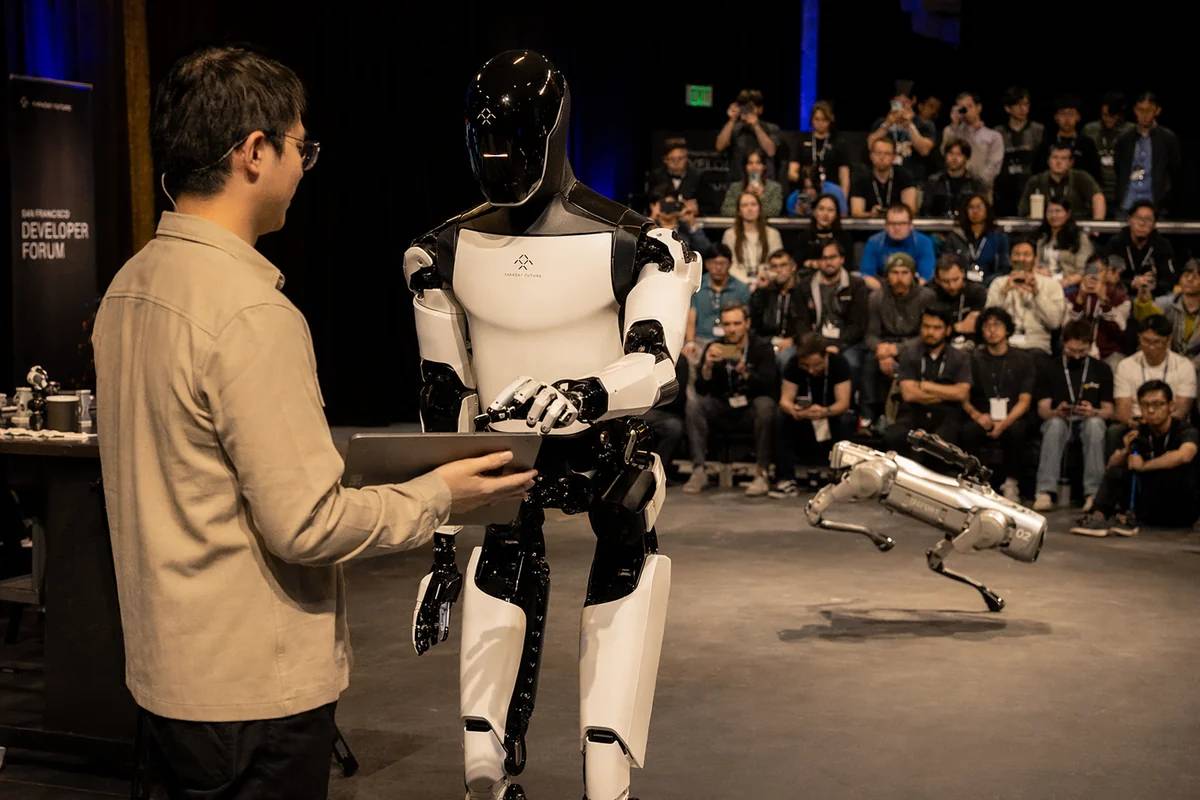
Faraday Future announced the launch of its embodied AI (EAI) developer platform, designed to support developers building AI-native applications for robotics and intelligent systems.

April 28, 2026
|

Faraday Future has introduced a new embodied AI developer platform aimed at advancing AI-native robotics and education. The initiative signals a strategic expansion beyond electric vehicles into intelligent systems, with implications for mobility, automation, and the emerging intersection of AI robotics, and developer ecosystems.

Faraday Future announced the launch of its embodied AI (EAI) developer platform, designed to support developers building AI-native applications for robotics and intelligent systems. The company has also designated 2026 as the inaugural year of EAI robotics education, signaling a long-term commitment to ecosystem development.

The platform aims to integrate AI, software, and hardware capabilities, enabling developers to create applications that interact with physical environments. Faraday Future is positioning this initiative as an extension of its broader technology strategy, leveraging its experience in intelligent mobility.

The move highlights the company’s effort to diversify beyond electric vehicles and participate in the rapidly evolving AI and robotics landscape. The development aligns with a broader trend across global markets where embodied AI systems that integrate intelligence with physical action is gaining traction. Unlike traditional software-based AI, embodied AI operates in real-world environments, powering robotics, autonomous systems, and smart devices.

Major technology companies and startups are increasingly investing in this space, recognizing its potential to transform industries such as manufacturing, logistics, healthcare, and mobility. The convergence of AI and robotics is also being supported by advances in sensors, compute power, and machine learning models.

Faraday Future’s entry into this domain reflects a strategic pivot seen across the automotive sector, where companies are evolving into broader mobility and technology platforms. This shift is driven by the need to capture value beyond vehicle manufacturing and participate in next-generation intelligent ecosystems.

Industry analysts view the launch as a signal that traditional automotive players are expanding into adjacent technology domains to remain competitive. By introducing a developer platform, Faraday Future is attempting to build an ecosystem rather than just products.

Experts suggest that success in embodied AI will depend on the ability to integrate hardware, software, and developer communities effectively. Platforms that enable experimentation and rapid prototyping could accelerate innovation in robotics applications.

From a strategic perspective, positioning 2026 as a foundational year for robotics education indicates an effort to shape the talent pipeline and influence industry standards early. Analysts also note that such initiatives could enhance brand positioning, even as the company continues to navigate challenges in its core EV business.

For businesses, the move underscores the growing importance of robotics and embodied AI as drivers of future productivity and automation. Companies across sectors may need to explore how intelligent systems can be integrated into operations.

Investors could view the initiative as part of a broader trend toward platform-based strategies in AI and robotics, though execution risks remain. Meanwhile, policymakers may need to consider frameworks for robotics education, workforce transition, and safety standards.

For global executives, the development highlights a shift where competitive advantage increasingly depends on ecosystem participation rather than standalone products. Looking ahead, the platform’s adoption by developers and integration into real-world applications will be key indicators of success. Stakeholders will also monitor how effectively Faraday Future builds partnerships and scales its ecosystem.

Decision-makers should watch the evolution of embodied AI as a critical frontier in technology. As robotics and AI converge, early ecosystem builders could play a defining role in shaping the next phase of industrial and digital transformation.

Source: Faraday Future Press Release
Date: April 2026

  • Featured tools
Alli AI
Free

Alli AI is an all-in-one, AI-powered SEO automation platform that streamlines on-page optimization, site auditing, speed improvements, schema generation, internal linking, and ranking insights.

#
SEO
Learn more
Writesonic AI
Free

Writesonic AI is a versatile AI writing platform designed for marketers, entrepreneurs, and content creators. It helps users create blog posts, ad copies, product descriptions, social media posts, and more with ease. With advanced AI models and user-friendly tools, Writesonic streamlines content production and saves time for busy professionals.

#
Copywriting
Learn more

Learn more about future of AI

Join 80,000+ Ai enthusiast getting weekly updates on exciting AI tools.
Thank you! Your submission has been received!
Oops! Something went wrong while submitting the form.

Faraday Future Launches Embodied AI Platform

April 28, 2026

Faraday Future announced the launch of its embodied AI (EAI) developer platform, designed to support developers building AI-native applications for robotics and intelligent systems.

Faraday Future has introduced a new embodied AI developer platform aimed at advancing AI-native robotics and education. The initiative signals a strategic expansion beyond electric vehicles into intelligent systems, with implications for mobility, automation, and the emerging intersection of AI robotics, and developer ecosystems.

Faraday Future announced the launch of its embodied AI (EAI) developer platform, designed to support developers building AI-native applications for robotics and intelligent systems. The company has also designated 2026 as the inaugural year of EAI robotics education, signaling a long-term commitment to ecosystem development.

The platform aims to integrate AI, software, and hardware capabilities, enabling developers to create applications that interact with physical environments. Faraday Future is positioning this initiative as an extension of its broader technology strategy, leveraging its experience in intelligent mobility.

The move highlights the company’s effort to diversify beyond electric vehicles and participate in the rapidly evolving AI and robotics landscape. The development aligns with a broader trend across global markets where embodied AI systems that integrate intelligence with physical action is gaining traction. Unlike traditional software-based AI, embodied AI operates in real-world environments, powering robotics, autonomous systems, and smart devices.

Major technology companies and startups are increasingly investing in this space, recognizing its potential to transform industries such as manufacturing, logistics, healthcare, and mobility. The convergence of AI and robotics is also being supported by advances in sensors, compute power, and machine learning models.

Faraday Future’s entry into this domain reflects a strategic pivot seen across the automotive sector, where companies are evolving into broader mobility and technology platforms. This shift is driven by the need to capture value beyond vehicle manufacturing and participate in next-generation intelligent ecosystems.

Industry analysts view the launch as a signal that traditional automotive players are expanding into adjacent technology domains to remain competitive. By introducing a developer platform, Faraday Future is attempting to build an ecosystem rather than just products.

Experts suggest that success in embodied AI will depend on the ability to integrate hardware, software, and developer communities effectively. Platforms that enable experimentation and rapid prototyping could accelerate innovation in robotics applications.

From a strategic perspective, positioning 2026 as a foundational year for robotics education indicates an effort to shape the talent pipeline and influence industry standards early. Analysts also note that such initiatives could enhance brand positioning, even as the company continues to navigate challenges in its core EV business.

For businesses, the move underscores the growing importance of robotics and embodied AI as drivers of future productivity and automation. Companies across sectors may need to explore how intelligent systems can be integrated into operations.

Investors could view the initiative as part of a broader trend toward platform-based strategies in AI and robotics, though execution risks remain. Meanwhile, policymakers may need to consider frameworks for robotics education, workforce transition, and safety standards.

For global executives, the development highlights a shift where competitive advantage increasingly depends on ecosystem participation rather than standalone products. Looking ahead, the platform’s adoption by developers and integration into real-world applications will be key indicators of success. Stakeholders will also monitor how effectively Faraday Future builds partnerships and scales its ecosystem.

Decision-makers should watch the evolution of embodied AI as a critical frontier in technology. As robotics and AI converge, early ecosystem builders could play a defining role in shaping the next phase of industrial and digital transformation.

Source: Faraday Future Press Release
Date: April 2026

Promote Your Tool

Copy Embed Code

Similar Blogs

June 24, 2026
|

Denmark Launches €7M AI Lab

The Danish government has committed €7 million to establish a national AI Lab focused on accelerating real-world AI adoption.
Read more
June 24, 2026
|

Avrea Emerges With CI/CD Bet

Avrea has raised $4.7 million in pre-seed funding to modernize continuous integration and continuous deployment (CI/CD) systems for environments dominated by AI-generated code.
Read more
June 24, 2026
|

Atech Backs Lovable Hardware Moment

Atech is advocating a new approach to hardware development where AI tools streamline design, prototyping, and iteration cycles.
Read more
June 24, 2026
|

A16z Backs Endra Engineering Automation

Endra’s $50 million Series A round, led by Andreessen Horowitz, marks one of the largest early-stage investments in AI-driven engineering design tools in Europe.
Read more
June 24, 2026
|

Netcompany Expands Smart Airport Play

Netcompany’s acquisition of full control over Smarter Airports marks a strategic expansion into intelligent aviation infrastructure systems. The platform, integrated with AIRHART technology, is already being deployed at major hubs.
Read more
June 24, 2026
|

Swiss VC Market Enters Maturity Phase

The Swiss venture landscape is showing increased exit momentum through acquisitions and secondary sales, indicating healthier liquidity cycles for early-stage investors.
Read more