
Family Tree Platforms Drive Genealogy Innovation

Family Echo has gained attention as a free, web-based genealogy platform that enables users to build, edit, and share family trees without requiring complex software installations.

July 29, 2026
|

Digital genealogy platforms are reshaping how families document and preserve their heritage, as services such as Family Echo simplify the creation of interactive family trees. The growing demand for cloud-based ancestry tools reflects broader digital transformation trends in personal data management, education, and historical preservation, benefiting consumers, educators, and genealogy researchers worldwide.

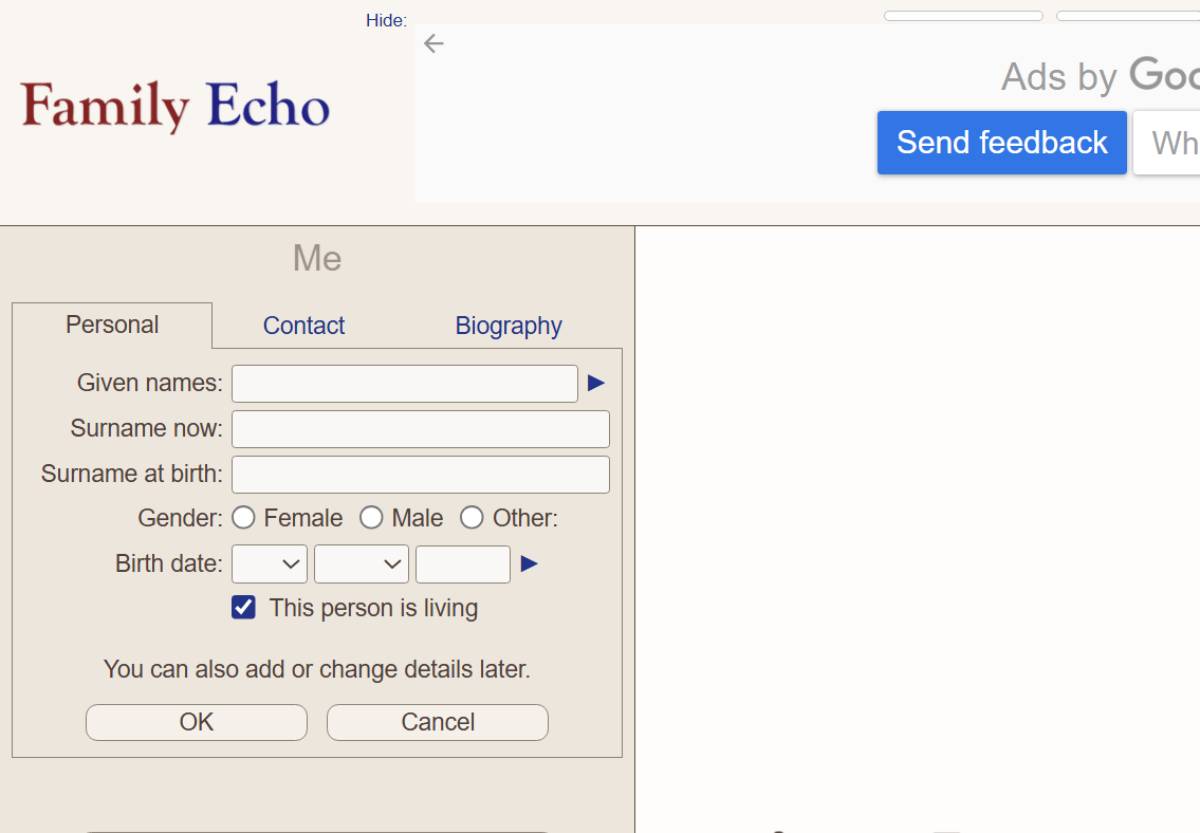
Family Echo has gained attention as a free, web-based genealogy platform that enables users to build, edit, and share family trees without requiring complex software installations. The platform supports collaborative editing, relationship visualization, and cloud accessibility, making family history management more accessible for users of all experience levels.

Its lightweight design and browser-based approach distinguish it from many subscription-based genealogy services. As interest in ancestry research continues to grow globally, digital genealogy platforms are increasingly emphasizing ease of use, privacy controls, and collaborative features. This evolution reflects broader consumer demand for intuitive cloud applications that preserve personal and historical information.

The digital genealogy industry has experienced significant expansion over the past decade, driven by rising consumer interest in ancestry, DNA testing, and online historical archives. Families increasingly seek digital solutions that allow multiple generations to document relationships, preserve cultural heritage, and share historical records across geographical boundaries.

Cloud computing has transformed genealogy software by eliminating installation barriers and enabling real-time collaboration. Alongside commercial genealogy platforms, lightweight web-based services have emerged as attractive alternatives for users seeking free or privacy-focused solutions. Growing digitization of public records, combined with advances in search technologies, has further accelerated genealogy adoption worldwide.

For educational institutions and historians, these platforms also support research initiatives by making family history documentation more organized and accessible. The trend reflects a broader movement toward digitizing personal records while encouraging long-term preservation of historical information.

Technology analysts view browser-based genealogy applications as part of the wider shift toward accessible cloud productivity tools. Rather than competing solely on data volume, many platforms now differentiate themselves through user experience, collaboration capabilities, and privacy protections.

Industry observers note that consumers increasingly expect software requiring minimal setup while maintaining secure storage of sensitive family information. Experts also emphasize that genealogy platforms benefit from interoperability with archival databases, allowing users to enrich family records through publicly available historical sources.

Digital transformation specialists argue that genealogy software represents an important niche within personal knowledge management. Future innovation is expected to focus on AI-assisted record organization, automated relationship mapping, multilingual support, and enhanced data visualization, helping users build increasingly comprehensive family histories while maintaining ownership and control over their information.

For technology providers, the continued growth of digital genealogy creates opportunities in cloud services, archival digitization, AI-powered document analysis, and educational software. Companies offering intuitive, privacy-conscious platforms may gain competitive advantages as consumer demand expands globally.

Educational organizations, museums, and historical societies could increasingly integrate digital genealogy into research and public engagement initiatives. Policymakers may also strengthen regulations surrounding digital identity, historical records, and personal data protection as genealogy platforms collect sensitive family information. Businesses operating in this space will need to balance accessibility with strong cybersecurity, regulatory compliance, and transparent privacy practices.

The genealogy technology sector is expected to continue evolving as AI, cloud infrastructure, and digitized public archives improve the speed and accuracy of family history research. Decision-makers should monitor innovations in automated record matching, privacy regulations, and cross-platform integration. As digital preservation becomes increasingly important, genealogy platforms are likely to play a growing role in safeguarding personal heritage for future generations.

Source: AlternativeTo
Date: July 21, 2026

  • Featured tools
Hostinger Website Builder
Paid

Hostinger Website Builder is a drag-and-drop website creator bundled with hosting and AI-powered tools, designed for businesses, blogs and small shops with minimal technical effort.It makes launching a site fast and affordable, with templates, responsive design and built-in hosting all in one.

#
Productivity
#
Startup Tools
#
Ecommerce
Learn more
Alli AI
Free

Alli AI is an all-in-one, AI-powered SEO automation platform that streamlines on-page optimization, site auditing, speed improvements, schema generation, internal linking, and ranking insights.

#
SEO
Learn more

Learn more about future of AI

Join 80,000+ Ai enthusiast getting weekly updates on exciting AI tools.
Thank you! Your submission has been received!
Oops! Something went wrong while submitting the form.

Family Tree Platforms Drive Genealogy Innovation

July 29, 2026

Family Echo has gained attention as a free, web-based genealogy platform that enables users to build, edit, and share family trees without requiring complex software installations.

Digital genealogy platforms are reshaping how families document and preserve their heritage, as services such as Family Echo simplify the creation of interactive family trees. The growing demand for cloud-based ancestry tools reflects broader digital transformation trends in personal data management, education, and historical preservation, benefiting consumers, educators, and genealogy researchers worldwide.

Family Echo has gained attention as a free, web-based genealogy platform that enables users to build, edit, and share family trees without requiring complex software installations. The platform supports collaborative editing, relationship visualization, and cloud accessibility, making family history management more accessible for users of all experience levels.

Its lightweight design and browser-based approach distinguish it from many subscription-based genealogy services. As interest in ancestry research continues to grow globally, digital genealogy platforms are increasingly emphasizing ease of use, privacy controls, and collaborative features. This evolution reflects broader consumer demand for intuitive cloud applications that preserve personal and historical information.

The digital genealogy industry has experienced significant expansion over the past decade, driven by rising consumer interest in ancestry, DNA testing, and online historical archives. Families increasingly seek digital solutions that allow multiple generations to document relationships, preserve cultural heritage, and share historical records across geographical boundaries.

Cloud computing has transformed genealogy software by eliminating installation barriers and enabling real-time collaboration. Alongside commercial genealogy platforms, lightweight web-based services have emerged as attractive alternatives for users seeking free or privacy-focused solutions. Growing digitization of public records, combined with advances in search technologies, has further accelerated genealogy adoption worldwide.

For educational institutions and historians, these platforms also support research initiatives by making family history documentation more organized and accessible. The trend reflects a broader movement toward digitizing personal records while encouraging long-term preservation of historical information.

Technology analysts view browser-based genealogy applications as part of the wider shift toward accessible cloud productivity tools. Rather than competing solely on data volume, many platforms now differentiate themselves through user experience, collaboration capabilities, and privacy protections.

Industry observers note that consumers increasingly expect software requiring minimal setup while maintaining secure storage of sensitive family information. Experts also emphasize that genealogy platforms benefit from interoperability with archival databases, allowing users to enrich family records through publicly available historical sources.

Digital transformation specialists argue that genealogy software represents an important niche within personal knowledge management. Future innovation is expected to focus on AI-assisted record organization, automated relationship mapping, multilingual support, and enhanced data visualization, helping users build increasingly comprehensive family histories while maintaining ownership and control over their information.

For technology providers, the continued growth of digital genealogy creates opportunities in cloud services, archival digitization, AI-powered document analysis, and educational software. Companies offering intuitive, privacy-conscious platforms may gain competitive advantages as consumer demand expands globally.

Educational organizations, museums, and historical societies could increasingly integrate digital genealogy into research and public engagement initiatives. Policymakers may also strengthen regulations surrounding digital identity, historical records, and personal data protection as genealogy platforms collect sensitive family information. Businesses operating in this space will need to balance accessibility with strong cybersecurity, regulatory compliance, and transparent privacy practices.

The genealogy technology sector is expected to continue evolving as AI, cloud infrastructure, and digitized public archives improve the speed and accuracy of family history research. Decision-makers should monitor innovations in automated record matching, privacy regulations, and cross-platform integration. As digital preservation becomes increasingly important, genealogy platforms are likely to play a growing role in safeguarding personal heritage for future generations.

Source: AlternativeTo
Date: July 21, 2026

Promote Your Tool

Copy Embed Code

Similar Blogs

July 29, 2026
|

EmulationStation Enhances Retro Gaming Experience

EmulationStation is a front-end interface designed to organize and present video game emulation libraries through a streamlined user experience.
Read more
July 29, 2026
|

Tomoson Expands Influencer Marketing Collaboration

Tomoson operates as an influencer marketing platform designed to help brands collaborate with content creators and manage promotional campaigns.
Read more
July 29, 2026
|

ZeroBin.net Advances Secure Data Sharing

ZeroBin.net operates as a privacy-oriented platform that allows users to share encrypted information through temporary digital channels.
Read more
July 29, 2026
|

Gaia Expands Digital Knowledge Access

Gaia operates within the broader category of digital platforms focused on information discovery, organization, and knowledge accessibility.
Read more
July 29, 2026
|

MailDrop Expands Privacy Email Solutions

MailDrop operates as a temporary email service designed to help users create disposable email addresses for online registrations and digital interactions.
Read more
July 29, 2026
|

MacX YouTube Downloader Enhances Video Management

MacX YouTube Downloader is a multimedia software solution designed to support video downloading, conversion, and management from online platforms.
Read more