
Fakespot Enhances AI Review Trust

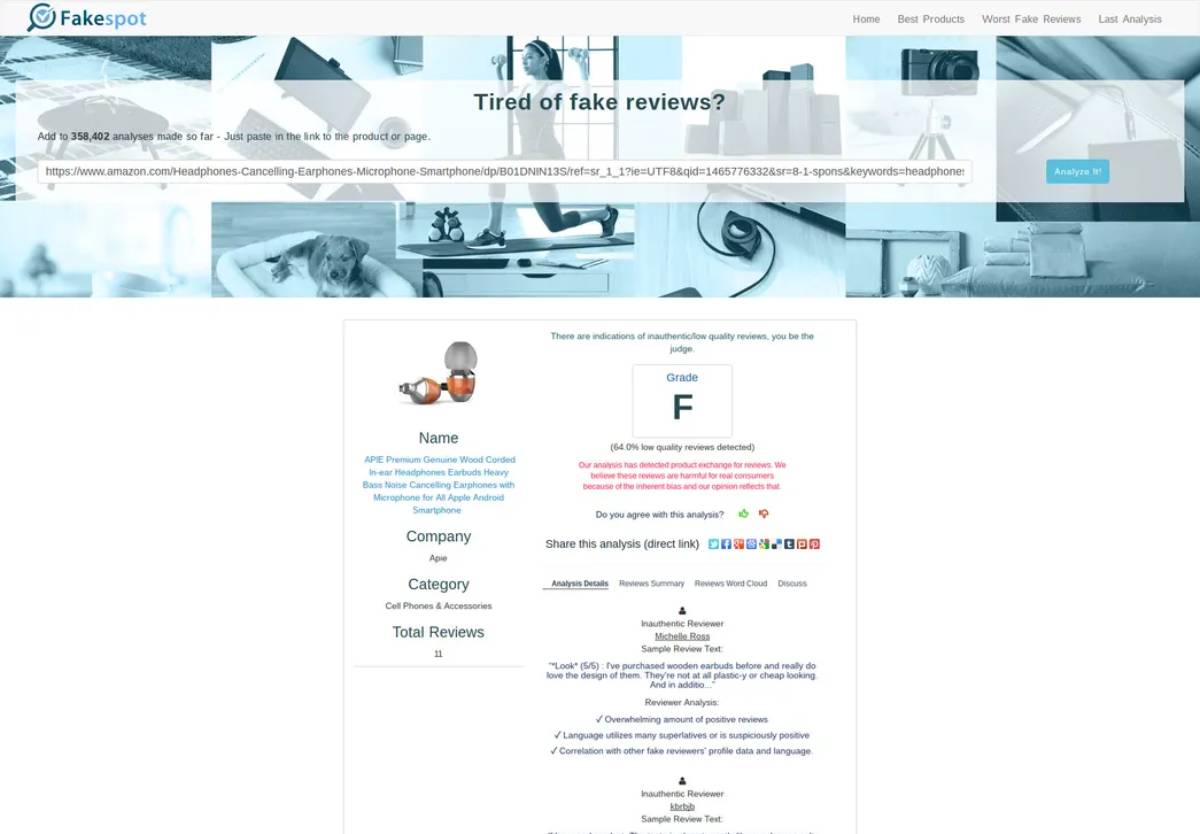
Fakespot introduced an automated approach to evaluating online product reviews by analyzing patterns that may indicate misleading or low-quality feedback.

July 29, 2026
|

A growing focus on digital trust and transparent online commerce is highlighting the role of AI-driven review analysis platforms like Fakespot. By helping users identify unreliable product reviews and assess purchasing information, the technology reflects a wider shift toward smarter consumer decision-making in global e-commerce markets.

Fakespot introduced an automated approach to evaluating online product reviews by analyzing patterns that may indicate misleading or low-quality feedback. The platform helped consumers better understand review reliability across major shopping platforms and make more informed purchasing decisions.

The development emerged as online marketplaces faced increasing challenges around fake reviews, manipulated ratings, and consumer confidence. Retailers, technology companies, and shoppers became key stakeholders in the growing conversation around digital authenticity.

As artificial intelligence continues advancing, review analysis tools represent a broader movement toward automated trust systems designed to improve transparency across online transactions and digital marketplaces.

The expansion of global e-commerce has transformed consumer behavior, with online reviews becoming one of the most influential factors in purchasing decisions. However, the rapid growth of digital marketplaces has also created challenges, including fake reviews, incentivized ratings, and unreliable product feedback.

Historically, consumers relied on personal recommendations and traditional brand reputation. Today, algorithms and AI technologies increasingly influence how people evaluate products and services. Platforms like Fakespot emerged during this transition by using data analysis techniques to identify suspicious review patterns and provide additional confidence to buyers.

The broader industry trend reflects increasing demand for digital accountability. As online commerce becomes more competitive, businesses are under greater pressure to maintain authentic customer engagement and protect consumer trust through transparent practices and responsible technology adoption.

Technology analysts view AI-powered review verification as an important development in improving online marketplace credibility. Experts suggest that consumer trust has become a strategic asset for digital businesses, particularly as customers face overwhelming amounts of information before making purchasing decisions.

Industry observers note that automated review analysis can help reduce uncertainty by identifying patterns that may not be visible to individual users. However, analysts also emphasize the importance of balancing automation with human oversight to ensure accurate evaluations.

Retail and technology leaders continue exploring advanced AI solutions to strengthen marketplace integrity. The evolution of tools like Fakespot demonstrates how artificial intelligence is moving beyond productivity applications into areas focused on transparency, consumer protection, and responsible digital experiences.

For businesses, reliable review systems are becoming essential for maintaining customer confidence and protecting brand reputation. Companies operating online marketplaces may need to invest in stronger verification technologies to reduce fraudulent activity and improve consumer experiences.

Investors are increasingly evaluating how digital platforms manage trust, safety, and user engagement as competitive advantages. Organizations that prioritize transparency may gain stronger customer loyalty in crowded markets.

From a policy perspective, the growth of AI-based review analysis highlights the need for clearer standards around online advertising, consumer protection, and marketplace accountability. Regulators worldwide are paying closer attention to how businesses manage digital authenticity and prevent deceptive practices.

The future of online commerce will likely depend on more advanced AI systems capable of detecting manipulation, verifying authenticity, and improving digital trust. As consumers demand greater transparency, businesses will need to adopt stronger review management strategies. Fakespot represents an important step in the broader evolution toward safer, more reliable, and data-driven online shopping environments.

Source: AlternativeTo
Date: July 23, 2026

  • Featured tools
Hostinger Horizons
Freemium

Hostinger Horizons is an AI-powered platform that allows users to build and deploy custom web applications without writing code. It packs hosting, domain management and backend integration into a unified tool for rapid app creation.

#
Startup Tools
#
Coding
#
Project Management
Learn more
Scalenut AI
Free

Scalenut AI is an all-in-one SEO content platform that combines AI-driven writing, keyword research, competitor insights, and optimization tools to help you plan, create, and rank content.

#
SEO
Learn more

Learn more about future of AI

Join 80,000+ Ai enthusiast getting weekly updates on exciting AI tools.
Thank you! Your submission has been received!
Oops! Something went wrong while submitting the form.

Fakespot Enhances AI Review Trust

July 29, 2026

Fakespot introduced an automated approach to evaluating online product reviews by analyzing patterns that may indicate misleading or low-quality feedback.

A growing focus on digital trust and transparent online commerce is highlighting the role of AI-driven review analysis platforms like Fakespot. By helping users identify unreliable product reviews and assess purchasing information, the technology reflects a wider shift toward smarter consumer decision-making in global e-commerce markets.

Fakespot introduced an automated approach to evaluating online product reviews by analyzing patterns that may indicate misleading or low-quality feedback. The platform helped consumers better understand review reliability across major shopping platforms and make more informed purchasing decisions.

The development emerged as online marketplaces faced increasing challenges around fake reviews, manipulated ratings, and consumer confidence. Retailers, technology companies, and shoppers became key stakeholders in the growing conversation around digital authenticity.

As artificial intelligence continues advancing, review analysis tools represent a broader movement toward automated trust systems designed to improve transparency across online transactions and digital marketplaces.

The expansion of global e-commerce has transformed consumer behavior, with online reviews becoming one of the most influential factors in purchasing decisions. However, the rapid growth of digital marketplaces has also created challenges, including fake reviews, incentivized ratings, and unreliable product feedback.

Historically, consumers relied on personal recommendations and traditional brand reputation. Today, algorithms and AI technologies increasingly influence how people evaluate products and services. Platforms like Fakespot emerged during this transition by using data analysis techniques to identify suspicious review patterns and provide additional confidence to buyers.

The broader industry trend reflects increasing demand for digital accountability. As online commerce becomes more competitive, businesses are under greater pressure to maintain authentic customer engagement and protect consumer trust through transparent practices and responsible technology adoption.

Technology analysts view AI-powered review verification as an important development in improving online marketplace credibility. Experts suggest that consumer trust has become a strategic asset for digital businesses, particularly as customers face overwhelming amounts of information before making purchasing decisions.

Industry observers note that automated review analysis can help reduce uncertainty by identifying patterns that may not be visible to individual users. However, analysts also emphasize the importance of balancing automation with human oversight to ensure accurate evaluations.

Retail and technology leaders continue exploring advanced AI solutions to strengthen marketplace integrity. The evolution of tools like Fakespot demonstrates how artificial intelligence is moving beyond productivity applications into areas focused on transparency, consumer protection, and responsible digital experiences.

For businesses, reliable review systems are becoming essential for maintaining customer confidence and protecting brand reputation. Companies operating online marketplaces may need to invest in stronger verification technologies to reduce fraudulent activity and improve consumer experiences.

Investors are increasingly evaluating how digital platforms manage trust, safety, and user engagement as competitive advantages. Organizations that prioritize transparency may gain stronger customer loyalty in crowded markets.

From a policy perspective, the growth of AI-based review analysis highlights the need for clearer standards around online advertising, consumer protection, and marketplace accountability. Regulators worldwide are paying closer attention to how businesses manage digital authenticity and prevent deceptive practices.

The future of online commerce will likely depend on more advanced AI systems capable of detecting manipulation, verifying authenticity, and improving digital trust. As consumers demand greater transparency, businesses will need to adopt stronger review management strategies. Fakespot represents an important step in the broader evolution toward safer, more reliable, and data-driven online shopping environments.

Source: AlternativeTo
Date: July 23, 2026

Promote Your Tool

Copy Embed Code

Similar Blogs

August 13, 2026
|

Retail Inventory Software Drives Smarter Stock

Modern retail inventory platforms are designed to centralize information about products, stock levels, purchases and sales across physical and digital channels.
Read more
August 13, 2026
|

Coevera Advances AI-Driven Sales Management

Coevera combines visual sales pipeline management with automation, reporting and AI-assisted capabilities designed for modern sales organizations. Its platform enables teams to organize opportunities, monitor deal progression and centralize customer information.
Read more
August 13, 2026
|

Pipeline CRM Strengthens Sales Pipeline Management

Pipeline CRM provides tools designed to help sales teams manage contacts, leads, opportunities and customer interactions within a centralized environment. Its core focus is on making the sales pipeline easier to visualize and manage.
Read more
August 13, 2026
|

ContractWorks Advances Digital Contract Management

ContractWorks provides organizations with tools for storing, organizing and managing contracts in a centralized digital repository.
Read more
August 13, 2026
|

AlienVault USM Strengthens Cybersecurity Monitoring

AlienVault USM combines multiple security functions within a unified monitoring framework, including intrusion detection, vulnerability assessment, asset discovery, behavioral monitoring and security event management.
Read more
August 13, 2026
|

Plate IQ Advances Automated Payables Management

Plate IQ focuses on automating accounts payable workflows, helping organizations capture invoice information, organize financial data and manage supplier payments through a centralized digital environment.
Read more