
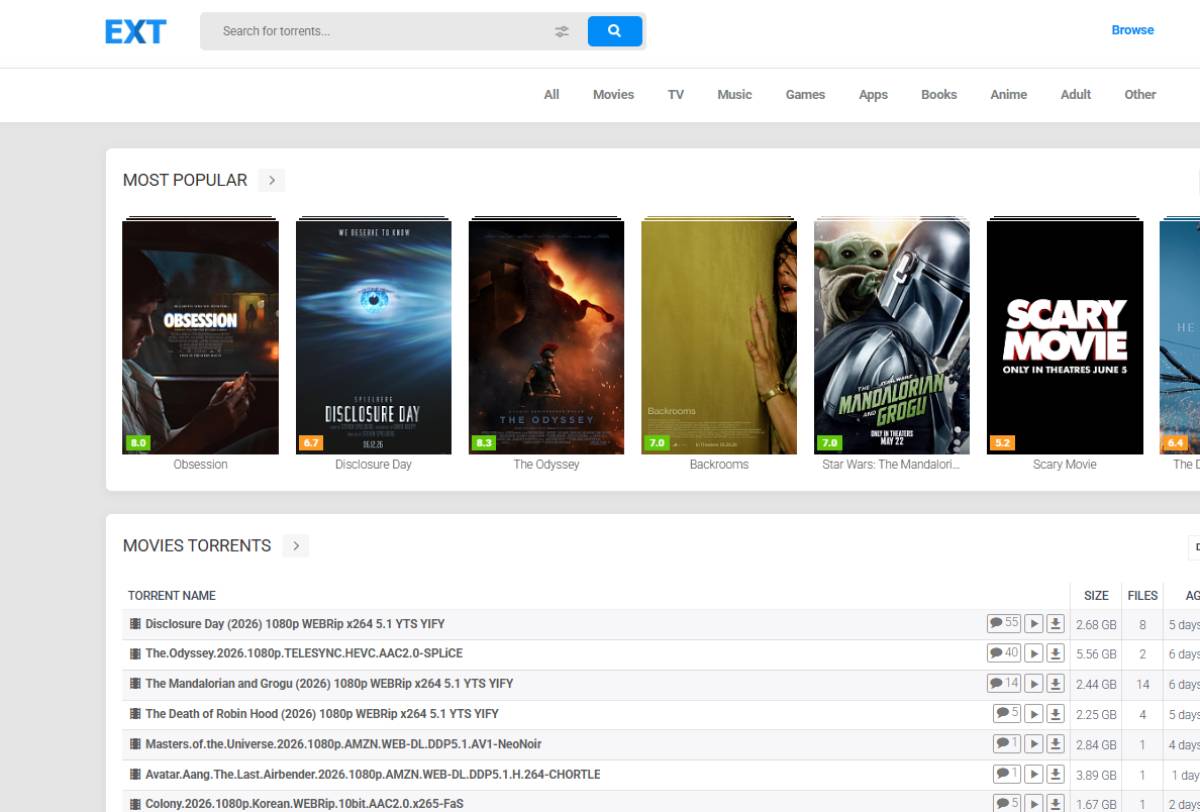
EXT Torrents Expands File Discovery

EXT Torrents remains part of the broader conversation around peer-to-peer file discovery platforms that utilize BitTorrent technology for decentralized file sharing.

July 27, 2026
|

A notable development in the peer-to-peer technology landscape highlights the continued visibility of decentralized file discovery platforms, underscoring the evolving relationship between digital distribution, copyright governance, and internet infrastructure. The discussion surrounding EXT Torrents reflects broader industry attention on how decentralized technologies continue influencing digital content ecosystems and regulatory priorities.

EXT Torrents remains part of the broader conversation around peer-to-peer file discovery platforms that utilize BitTorrent technology for decentralized file sharing. Rather than relying on centralized hosting, such platforms facilitate discovery of torrent metadata while users exchange files through distributed networks. Continued attention to these platforms illustrates the enduring relevance of decentralized technologies despite the dominance of cloud services and subscription-based streaming.

At the same time, governments, technology companies, and rights holders continue strengthening enforcement efforts and promoting lawful digital distribution models. The evolving landscape highlights ongoing tensions between open internet technologies, intellectual property protection, and user demand for efficient digital content access.

BitTorrent technology has long served as one of the internet's most widely recognized decentralized file distribution protocols, supporting efficient transfer of large datasets across distributed networks. Beyond consumer applications, peer-to-peer technologies are used for legitimate purposes such as software distribution, open-source projects, academic research, and large-scale data delivery. However, torrent indexing platforms have also remained central to ongoing discussions surrounding copyright enforcement and digital rights management.

Over the past decade, increasing investment in streaming platforms and licensed digital marketplaces has reshaped consumer behavior while prompting stronger international cooperation on intellectual property protection. Despite these shifts, decentralized networking technologies continue attracting attention because of their scalability, resilience, and efficiency. The broader industry increasingly focuses on balancing technological innovation with responsible governance and compliance with applicable legal frameworks.

Technology analysts observe that decentralized distribution technologies continue offering valuable architectural advantages for legitimate large-scale data sharing while simultaneously presenting governance challenges for policymakers and digital rights organizations. Experts emphasize that peer-to-peer protocols themselves remain neutral technologies, with their impact determined by how they are implemented and used. Industry observers also note that enterprises increasingly adopt decentralized networking concepts in areas including software delivery, blockchain infrastructure, and distributed computing.

Meanwhile, copyright specialists stress the importance of respecting intellectual property laws and promoting authorized digital distribution channels. Although no major corporate announcement accompanies the platform's continued visibility, analysts believe future innovation will increasingly prioritize transparency, cybersecurity, and compliance alongside improvements in decentralized network performance and scalability.

For businesses, the evolution of decentralized distribution technologies presents opportunities to improve software deployment, enterprise content delivery, and resilient network architectures. Investors continue monitoring innovations related to distributed computing, decentralized infrastructure, and next-generation internet technologies.

At the policy level, regulators are expected to maintain focus on strengthening copyright protection, consumer education, cybersecurity standards, and responsible digital platform governance. Technology companies operating in decentralized ecosystems may increasingly invest in compliance mechanisms, identity verification, and transparent operational practices to balance innovation with legal and regulatory expectations across global markets.

Looking ahead, decentralized networking technologies are expected to continue evolving across enterprise software, cloud infrastructure, and digital content distribution. Decision-makers should monitor developments in copyright policy, cybersecurity regulation, and distributed systems innovation that may shape future platform strategies. Organizations successfully combining technological efficiency with responsible governance and legal compliance are likely to remain best positioned as decentralized internet infrastructure continues to mature.

Source: AlternativeTo
Date: July 23, 2026

  • Featured tools
Alli AI
Free

Alli AI is an all-in-one, AI-powered SEO automation platform that streamlines on-page optimization, site auditing, speed improvements, schema generation, internal linking, and ranking insights.

#
SEO
Learn more
Hostinger Website Builder
Paid

Hostinger Website Builder is a drag-and-drop website creator bundled with hosting and AI-powered tools, designed for businesses, blogs and small shops with minimal technical effort.It makes launching a site fast and affordable, with templates, responsive design and built-in hosting all in one.

#
Productivity
#
Startup Tools
#
Ecommerce
Learn more

Learn more about future of AI

Join 80,000+ Ai enthusiast getting weekly updates on exciting AI tools.
Thank you! Your submission has been received!
Oops! Something went wrong while submitting the form.

EXT Torrents Expands File Discovery

July 27, 2026

EXT Torrents remains part of the broader conversation around peer-to-peer file discovery platforms that utilize BitTorrent technology for decentralized file sharing.

A notable development in the peer-to-peer technology landscape highlights the continued visibility of decentralized file discovery platforms, underscoring the evolving relationship between digital distribution, copyright governance, and internet infrastructure. The discussion surrounding EXT Torrents reflects broader industry attention on how decentralized technologies continue influencing digital content ecosystems and regulatory priorities.

EXT Torrents remains part of the broader conversation around peer-to-peer file discovery platforms that utilize BitTorrent technology for decentralized file sharing. Rather than relying on centralized hosting, such platforms facilitate discovery of torrent metadata while users exchange files through distributed networks. Continued attention to these platforms illustrates the enduring relevance of decentralized technologies despite the dominance of cloud services and subscription-based streaming.

At the same time, governments, technology companies, and rights holders continue strengthening enforcement efforts and promoting lawful digital distribution models. The evolving landscape highlights ongoing tensions between open internet technologies, intellectual property protection, and user demand for efficient digital content access.

BitTorrent technology has long served as one of the internet's most widely recognized decentralized file distribution protocols, supporting efficient transfer of large datasets across distributed networks. Beyond consumer applications, peer-to-peer technologies are used for legitimate purposes such as software distribution, open-source projects, academic research, and large-scale data delivery. However, torrent indexing platforms have also remained central to ongoing discussions surrounding copyright enforcement and digital rights management.

Over the past decade, increasing investment in streaming platforms and licensed digital marketplaces has reshaped consumer behavior while prompting stronger international cooperation on intellectual property protection. Despite these shifts, decentralized networking technologies continue attracting attention because of their scalability, resilience, and efficiency. The broader industry increasingly focuses on balancing technological innovation with responsible governance and compliance with applicable legal frameworks.

Technology analysts observe that decentralized distribution technologies continue offering valuable architectural advantages for legitimate large-scale data sharing while simultaneously presenting governance challenges for policymakers and digital rights organizations. Experts emphasize that peer-to-peer protocols themselves remain neutral technologies, with their impact determined by how they are implemented and used. Industry observers also note that enterprises increasingly adopt decentralized networking concepts in areas including software delivery, blockchain infrastructure, and distributed computing.

Meanwhile, copyright specialists stress the importance of respecting intellectual property laws and promoting authorized digital distribution channels. Although no major corporate announcement accompanies the platform's continued visibility, analysts believe future innovation will increasingly prioritize transparency, cybersecurity, and compliance alongside improvements in decentralized network performance and scalability.

For businesses, the evolution of decentralized distribution technologies presents opportunities to improve software deployment, enterprise content delivery, and resilient network architectures. Investors continue monitoring innovations related to distributed computing, decentralized infrastructure, and next-generation internet technologies.

At the policy level, regulators are expected to maintain focus on strengthening copyright protection, consumer education, cybersecurity standards, and responsible digital platform governance. Technology companies operating in decentralized ecosystems may increasingly invest in compliance mechanisms, identity verification, and transparent operational practices to balance innovation with legal and regulatory expectations across global markets.

Looking ahead, decentralized networking technologies are expected to continue evolving across enterprise software, cloud infrastructure, and digital content distribution. Decision-makers should monitor developments in copyright policy, cybersecurity regulation, and distributed systems innovation that may shape future platform strategies. Organizations successfully combining technological efficiency with responsible governance and legal compliance are likely to remain best positioned as decentralized internet infrastructure continues to mature.

Source: AlternativeTo
Date: July 23, 2026

Promote Your Tool

Copy Embed Code

Similar Blogs

July 27, 2026
|

A Soft Murmur Enhances Digital Wellness

A Soft Murmur has gained recognition as an ambient sound application that allows users to create customized background audio environments.
Read more
July 27, 2026
|

No$GBA Advances DS Emulation Technology

No$GBA has played a significant role in the evolution of Nintendo DS and Game Boy Advance emulation, providing users with tools to run legacy games on compatible systems.
Read more
July 27, 2026
|

TubeRipper Expands Flexible Media Tools

TubeRipper has gained attention as part of the expanding ecosystem of digital media utility applications designed to simplify content management.
Read more
July 27, 2026
|

Youlean Loudness Meter Enhances Audio Standards

Youlean Loudness Meter has emerged as a widely recognized solution for audio professionals requiring detailed loudness analysis and compliance monitoring.
Read more
July 27, 2026
|

FSSQUAD Expands Digital File Sharing

FSSQUAD has gained attention as part of the expanding ecosystem of online file-sharing services designed to improve content accessibility and transfer efficiency.
Read more
July 27, 2026
|

123MoviesTV.cc Highlights Streaming Regulation Shift

123MoviesTV.cc represents a category of online streaming platforms that has gained attention amid the expanding global demand for digital entertainment access.
Read more