



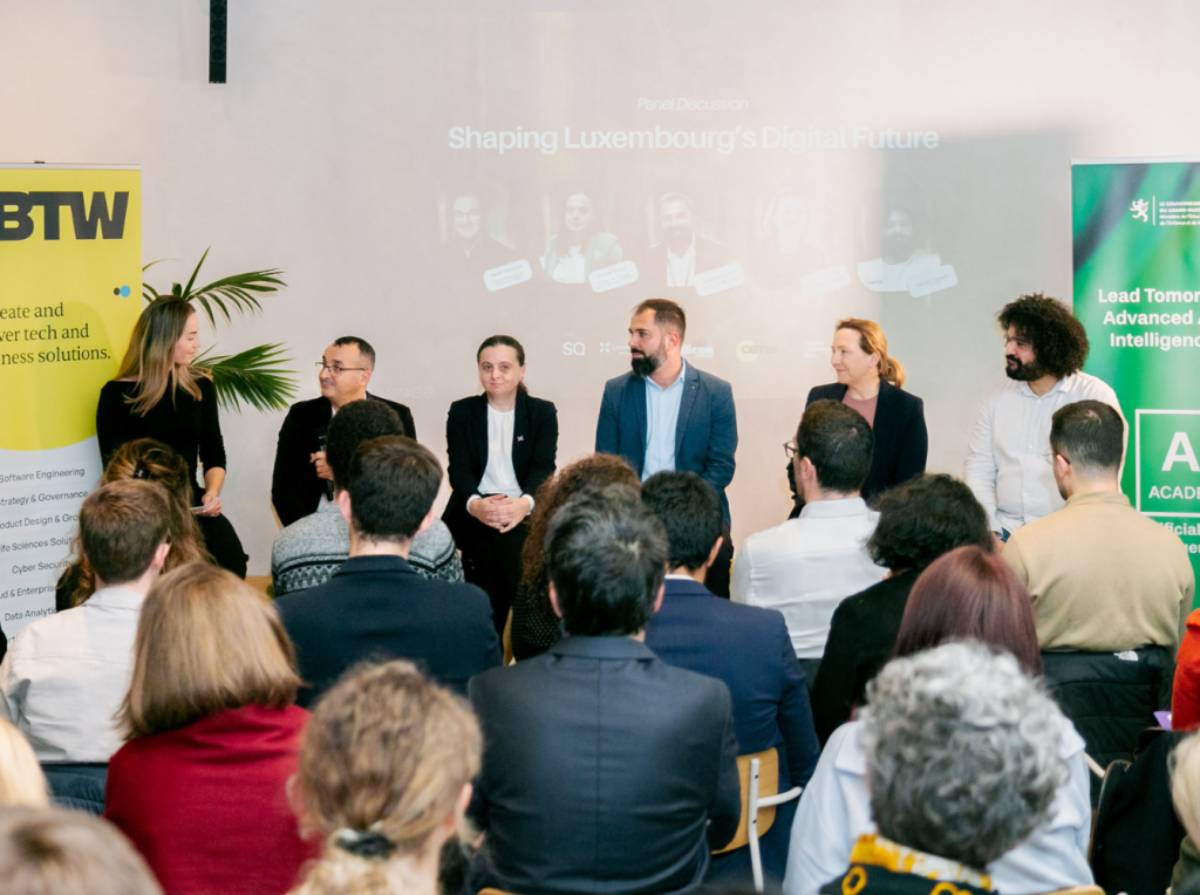
Artificial intelligence took centre stage at a Silicon Luxembourg event where founders, technology experts, investors, and business leaders examined the rapid evolution of AI and its implications for European competitiveness. Discussions highlighted how enterprises are moving beyond experimentation toward large-scale AI deployment, signalling a strategic shift in innovation, productivity, and digital transformation.
The Silicon Luxembourg event brought together key stakeholders from the region's technology ecosystem to assess the current state of artificial intelligence and its growing impact across industries. Panel discussions focused on enterprise AI adoption, startup innovation, responsible AI development, regulatory challenges, and the expanding role of generative AI in business operations.
Participants explored how organisations can move from pilot projects to scalable AI implementation while balancing governance, cybersecurity, workforce readiness, and ethical considerations. Speakers also discussed opportunities for startups developing AI-native products and highlighted the importance of collaboration between governments, academia, investors, and private industry to accelerate Europe's AI capabilities.
The event reinforced Luxembourg's ambition to strengthen its position within Europe's fast-growing AI ecosystem. Artificial intelligence has rapidly become one of the defining technologies shaping the global economy. Businesses across finance, healthcare, manufacturing, logistics, cybersecurity, education, and professional services are increasingly integrating AI into core operations to improve productivity, automate workflows, and generate competitive advantages.
Europe has simultaneously intensified efforts to strengthen its AI ecosystem through research investment, regulatory frameworks, digital infrastructure, and public-private partnerships. The emergence of generative AI has accelerated enterprise adoption while also raising important questions around governance, transparency, intellectual property, cybersecurity, and workforce transformation.
Luxembourg has positioned itself as an emerging innovation hub by supporting AI startups, expanding digital infrastructure, and encouraging collaboration between research institutions and industry. Events bringing together founders, investors, policymakers, and technology leaders have become increasingly important platforms for sharing knowledge and identifying opportunities for regional economic growth.
The discussions reflect a broader recognition that AI will become central to long-term business competitiveness. Technology experts widely agree that the conversation around artificial intelligence has shifted from theoretical potential to practical implementation. Organisations are increasingly focused on integrating AI into existing workflows, measuring business value, and ensuring responsible deployment across complex operational environments.
Industry analysts note that companies achieving the greatest returns are combining technological investment with workforce training, governance frameworks, and strong leadership commitment. They also caution that successful AI adoption requires organisational transformation rather than simply deploying new software tools.
Experts further emphasise that Europe's competitive advantage may depend on developing trustworthy AI systems that balance innovation with regulatory compliance and ethical standards. Collaboration between startups, established enterprises, governments, and research institutions is increasingly viewed as essential for accelerating commercial adoption while maintaining public confidence.
The discussions highlighted that responsible AI governance will likely become as important as technological capability in determining long-term market leadership. For business leaders, the event underscored that AI adoption is becoming a strategic necessity rather than an optional technology investment. Companies that successfully integrate AI into operations may improve efficiency, customer engagement, innovation, and decision-making while strengthening long-term competitiveness.
For investors, continued AI adoption presents significant opportunities across enterprise software, infrastructure, cybersecurity, automation, and data services. Policymakers, meanwhile, face the challenge of encouraging innovation while ensuring regulatory certainty, ethical oversight, and digital resilience.
The discussions reinforce Europe's objective of developing a competitive AI ecosystem capable of supporting economic growth without compromising trust, security, or responsible technological development.
Artificial intelligence is expected to remain a defining priority for businesses, investors, and governments over the coming years. Decision-makers will closely monitor enterprise adoption rates, regulatory developments, infrastructure investment, and emerging AI startups across Europe. As organisations move from experimentation to large-scale implementation, those capable of combining innovation with responsible governance are likely to establish lasting competitive advantages in the global digital economy.
Source: Silicon Luxembourg
Date: July 2026


