
Employee Engagement Software Reshapes Workforce Strategy

Employee engagement platforms bring multiple workforce-experience functions into centralized digital environments.

August 10, 2026
|

Employee engagement software is becoming a strategic component of modern workforce management as organizations seek stronger communication, employee recognition and workplace participation. The expanding technology category reflects a broader shift toward data-driven employee experiences, giving HR leaders and executives new tools to measure sentiment, strengthen connection and improve workforce performance.

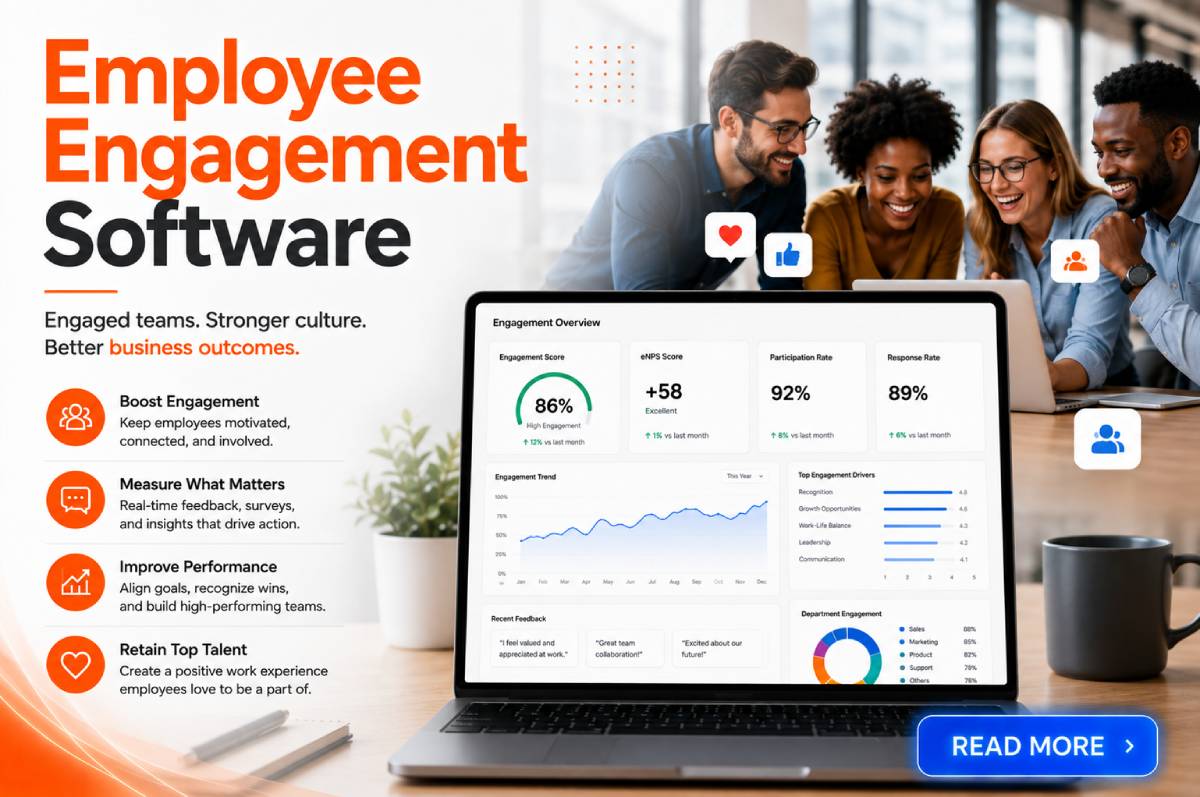
Employee engagement platforms bring multiple workforce-experience functions into centralized digital environments. Common capabilities include employee surveys, feedback collection, recognition programs, pulse checks, communication tools, performance insights and engagement analytics.

The technology is increasingly designed to provide HR teams with continuous visibility rather than relying exclusively on periodic employee surveys. Real-time feedback can help organizations identify workplace concerns, recognize positive trends and respond to changing employee expectations.

For enterprises managing distributed and hybrid workforces, these capabilities can also support communication across locations and departments. Integration with existing HR systems is becoming increasingly important as companies seek to connect engagement information with broader workforce and business-performance data.

The development aligns with a broader transformation in workforce strategy. Hybrid work, distributed teams, changing employee expectations and increased competition for skilled talent have made employee experience a more visible executive priority.

Traditional annual engagement surveys can provide useful information but may offer limited visibility into rapidly changing workforce sentiment. Digital engagement platforms address this challenge by enabling organizations to gather feedback more frequently and identify emerging patterns.

The technology also reflects the growing use of analytics within human resources. Organizations are increasingly seeking measurable indicators that can inform decisions around retention, culture, leadership effectiveness and workplace communication.

For global companies, the challenge is particularly complex. Employees may operate across different countries, cultures and working arrangements, requiring organizations to maintain consistent engagement strategies while responding to local expectations. Employee engagement software is therefore becoming part of a wider effort to make workforce management more responsive, measurable and strategic.

HR technology analysts increasingly emphasize that employee engagement should be treated as an ongoing management process rather than an occasional measurement exercise. Digital platforms can help organizations create continuous feedback loops between employees, managers and HR leadership.

From an executive perspective, the value of engagement technology depends heavily on how organizations act on the information collected. Surveys and analytics alone cannot improve employee experience unless leadership teams translate findings into visible organizational changes.

The growing importance of analytics is also changing expectations for HR departments. Executives increasingly want workforce insights that can be connected to broader organizational outcomes, including retention, productivity, absenteeism and employee development.

Technology leaders are therefore evaluating engagement platforms on factors such as integration, analytics capabilities, ease of adoption, privacy controls and scalability. The strongest solutions are likely to be those that combine employee-friendly experiences with actionable information for managers and senior leadership.

For businesses, employee engagement software can improve visibility into workforce sentiment and help HR teams identify issues before they become larger organizational problems. Recognition and communication tools can also support stronger connections across distributed teams.

For executives and investors, engagement technology represents part of the broader HR technology market focused on retention, productivity and workforce optimization. Organizations should evaluate whether platforms produce actionable insights rather than simply increasing the volume of employee data.

Employees may benefit from easier channels for feedback, recognition and communication. However, privacy and responsible data management remain important considerations, particularly when engagement information is linked to individual employees.

For policymakers and regulators, the growing use of workforce analytics increases the importance of transparency, employee privacy and responsible handling of workplace data.

Employee engagement software is likely to become increasingly integrated with broader HR and workforce-management ecosystems. Future development will likely focus on AI-assisted sentiment analysis, personalized employee experiences, predictive workforce insights and deeper HR-system integration. Decision-makers should watch how organizations balance automation and analytics with privacy and human judgment. The strategic advantage will increasingly belong to companies that convert employee feedback into measurable improvements in workplace experience and business performance.

Source: Crozdesk
Date: August 10, 2026

  • Featured tools
Symphony Ayasdi AI
Free

SymphonyAI Sensa is an AI-powered surveillance and financial crime detection platform that surfaces hidden risk behavior through explainable, AI-driven analytics.

#
Finance
Learn more
Twistly AI
Paid

Twistly AI is a PowerPoint add-in that allows users to generate full slide decks, improve existing presentations, and convert various content types into polished slides directly within Microsoft PowerPoint.It streamlines presentation creation using AI-powered text analysis, image generation and content conversion.

#
Presentation
Learn more

Learn more about future of AI

Join 80,000+ Ai enthusiast getting weekly updates on exciting AI tools.
Thank you! Your submission has been received!
Oops! Something went wrong while submitting the form.

Employee Engagement Software Reshapes Workforce Strategy

August 10, 2026

Employee engagement platforms bring multiple workforce-experience functions into centralized digital environments.

Employee engagement software is becoming a strategic component of modern workforce management as organizations seek stronger communication, employee recognition and workplace participation. The expanding technology category reflects a broader shift toward data-driven employee experiences, giving HR leaders and executives new tools to measure sentiment, strengthen connection and improve workforce performance.

Employee engagement platforms bring multiple workforce-experience functions into centralized digital environments. Common capabilities include employee surveys, feedback collection, recognition programs, pulse checks, communication tools, performance insights and engagement analytics.

The technology is increasingly designed to provide HR teams with continuous visibility rather than relying exclusively on periodic employee surveys. Real-time feedback can help organizations identify workplace concerns, recognize positive trends and respond to changing employee expectations.

For enterprises managing distributed and hybrid workforces, these capabilities can also support communication across locations and departments. Integration with existing HR systems is becoming increasingly important as companies seek to connect engagement information with broader workforce and business-performance data.

The development aligns with a broader transformation in workforce strategy. Hybrid work, distributed teams, changing employee expectations and increased competition for skilled talent have made employee experience a more visible executive priority.

Traditional annual engagement surveys can provide useful information but may offer limited visibility into rapidly changing workforce sentiment. Digital engagement platforms address this challenge by enabling organizations to gather feedback more frequently and identify emerging patterns.

The technology also reflects the growing use of analytics within human resources. Organizations are increasingly seeking measurable indicators that can inform decisions around retention, culture, leadership effectiveness and workplace communication.

For global companies, the challenge is particularly complex. Employees may operate across different countries, cultures and working arrangements, requiring organizations to maintain consistent engagement strategies while responding to local expectations. Employee engagement software is therefore becoming part of a wider effort to make workforce management more responsive, measurable and strategic.

HR technology analysts increasingly emphasize that employee engagement should be treated as an ongoing management process rather than an occasional measurement exercise. Digital platforms can help organizations create continuous feedback loops between employees, managers and HR leadership.

From an executive perspective, the value of engagement technology depends heavily on how organizations act on the information collected. Surveys and analytics alone cannot improve employee experience unless leadership teams translate findings into visible organizational changes.

The growing importance of analytics is also changing expectations for HR departments. Executives increasingly want workforce insights that can be connected to broader organizational outcomes, including retention, productivity, absenteeism and employee development.

Technology leaders are therefore evaluating engagement platforms on factors such as integration, analytics capabilities, ease of adoption, privacy controls and scalability. The strongest solutions are likely to be those that combine employee-friendly experiences with actionable information for managers and senior leadership.

For businesses, employee engagement software can improve visibility into workforce sentiment and help HR teams identify issues before they become larger organizational problems. Recognition and communication tools can also support stronger connections across distributed teams.

For executives and investors, engagement technology represents part of the broader HR technology market focused on retention, productivity and workforce optimization. Organizations should evaluate whether platforms produce actionable insights rather than simply increasing the volume of employee data.

Employees may benefit from easier channels for feedback, recognition and communication. However, privacy and responsible data management remain important considerations, particularly when engagement information is linked to individual employees.

For policymakers and regulators, the growing use of workforce analytics increases the importance of transparency, employee privacy and responsible handling of workplace data.

Employee engagement software is likely to become increasingly integrated with broader HR and workforce-management ecosystems. Future development will likely focus on AI-assisted sentiment analysis, personalized employee experiences, predictive workforce insights and deeper HR-system integration. Decision-makers should watch how organizations balance automation and analytics with privacy and human judgment. The strategic advantage will increasingly belong to companies that convert employee feedback into measurable improvements in workplace experience and business performance.

Source: Crozdesk
Date: August 10, 2026

Promote Your Tool

Copy Embed Code

Similar Blogs

August 10, 2026
|

Content Marketing Software Accelerates Enterprise Growth

The content marketing software category encompasses platforms designed to support multiple stages of the marketing lifecycle, including content planning, creation, collaboration, distribution, optimization and performance measurement.
Read more
August 10, 2026
|

3D Printing Software Drives Manufacturing Transformation

3D printing software encompasses a broad range of capabilities designed to support the additive manufacturing lifecycle. Platforms can assist with three-dimensional modeling, file preparation, slicing, print optimization.
Read more
August 10, 2026
|

ZenDMS Advances Enterprise Document Management

ZenDMS is positioned within the document management software segment, where businesses increasingly require centralized tools to store, organize and retrieve critical information.
Read more
August 10, 2026
|

SmartSimple Cloud Advances Grant Management Automation

SmartSimple Cloud is positioned as a configurable cloud platform designed to support grant management, corporate social responsibility, scholarship programs, awards and other complex funding workflows.
Read more
August 10, 2026
|

HaloPSA Accelerates Integrated Service Management

HaloPSA brings multiple professional services automation capabilities into a centralized environment, including service desk management, ticketing, contract management, asset tracking, project management.
Read more
August 10, 2026
|

Ministry Scheduler Pro Advances Workforce Coordination

Ministry Scheduler Pro is designed to support organizations that coordinate volunteers, employees and recurring assignments across multiple activities and locations.
Read more