



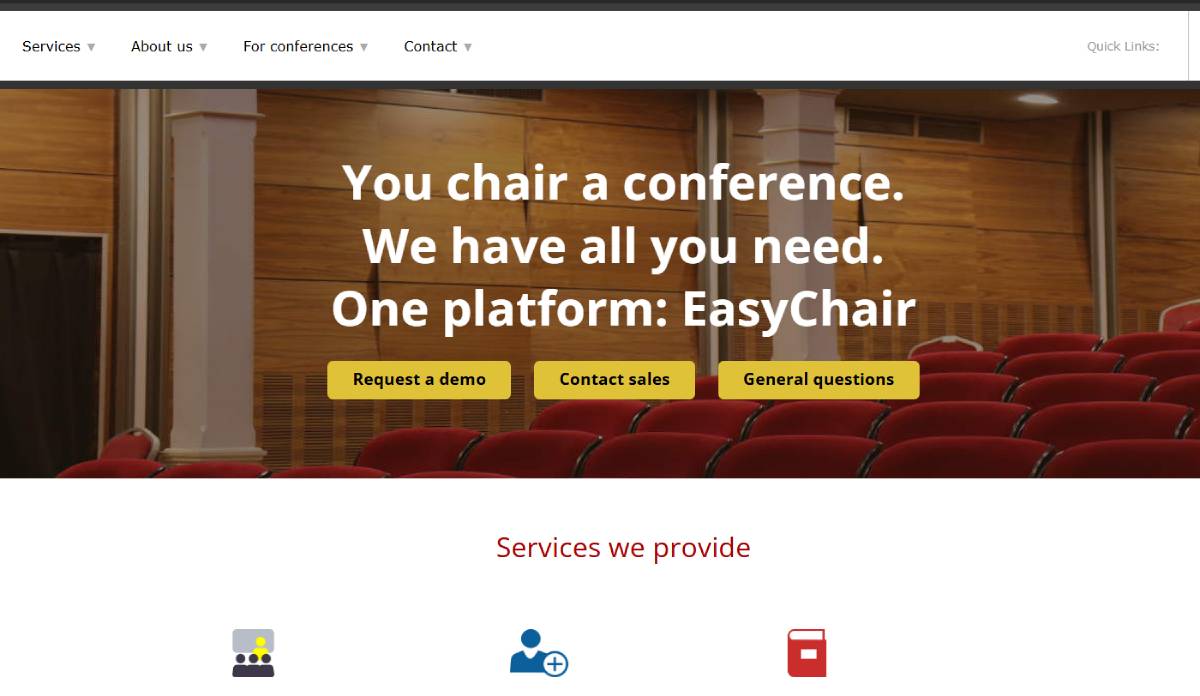
EasyChair continues to support the global research community by providing digital tools for managing academic conferences, paper submissions, and scholarly collaboration. As universities, research institutions, and professional organizations increasingly rely on online platforms, solutions like EasyChair highlight the growing importance of efficient digital infrastructure in advancing knowledge exchange worldwide.
EasyChair is an online conference management system designed to streamline academic event organization, including paper submissions, peer reviews, scheduling, and communication between researchers and conference organizers.
The platform is widely used by universities, scientific communities, professional associations, and research groups seeking structured workflows for managing scholarly events. By digitizing traditionally complex administrative processes, EasyChair helps improve efficiency, transparency, and collaboration within academic networks.
Its capabilities reflect the broader adoption of specialized digital platforms supporting research ecosystems. As global academic collaboration expands across borders, tools that simplify conference operations and knowledge sharing continue becoming essential components of modern research infrastructure.
The global research landscape has become increasingly interconnected as universities, institutions, and scientists collaborate across geographic boundaries. Digital transformation has reshaped academic workflows, replacing many traditional paper-based processes with online systems that improve accessibility, speed, and coordination.
EasyChair aligns with this broader trend by providing infrastructure for managing academic conferences and research communication. The growth of virtual conferences, international partnerships, and open research networks has increased demand for reliable platforms that support large-scale collaboration.
Academic publishing and conference management involve complex processes, including submission tracking, peer evaluation, reviewer coordination, and participant communication. Digital solutions help organizations manage these activities more effectively while improving researcher experiences.
As research communities continue expanding globally, platforms supporting efficient knowledge exchange will remain important contributors to scientific progress and institutional collaboration.
Academic technology analysts emphasize that digital conference management platforms have become essential tools for modern research organizations. They note that efficient coordination systems allow institutions to handle increasing volumes of submissions, reviews, and international participation.
Researchers and conference organizers often highlight the importance of streamlined workflows that reduce administrative challenges and allow more focus on scientific discussions and collaboration. Online platforms also support greater accessibility by enabling participation from researchers across different regions.
Although EasyChair operates within a specialized academic technology segment, industry observers recognize its role in supporting global research networks. Analysts suggest that future developments in scholarly technology will likely focus on artificial intelligence-assisted reviewing, automated workflow management, improved collaboration features, and enhanced data security to support the evolving needs of research communities.
For academic institutions, research organizations, and technology providers, EasyChair demonstrates the growing importance of digital infrastructure in supporting knowledge-based industries. Universities and professional organizations can benefit from improved efficiency, reduced administrative complexity, and stronger collaboration capabilities.
Investors monitoring education technology and research software markets may view academic workflow platforms as part of the broader expansion of digital transformation solutions. Policymakers supporting innovation and scientific development may recognize the importance of reliable digital systems that strengthen research networks.
The platform reflects a wider shift toward technology-enabled collaboration, helping institutions manage increasingly global and complex research environments. Looking ahead, EasyChair and similar academic management platforms are expected to remain important as global research collaboration continues expanding. Decision-makers should monitor advancements in AI-powered academic workflows, digital publishing integration, cybersecurity, and virtual research environments. As scientific communities become more connected, digital conference and collaboration platforms will continue shaping how knowledge is created, reviewed, and shared worldwide.
Source: AlternativeTo
Date: July 22, 2026


