
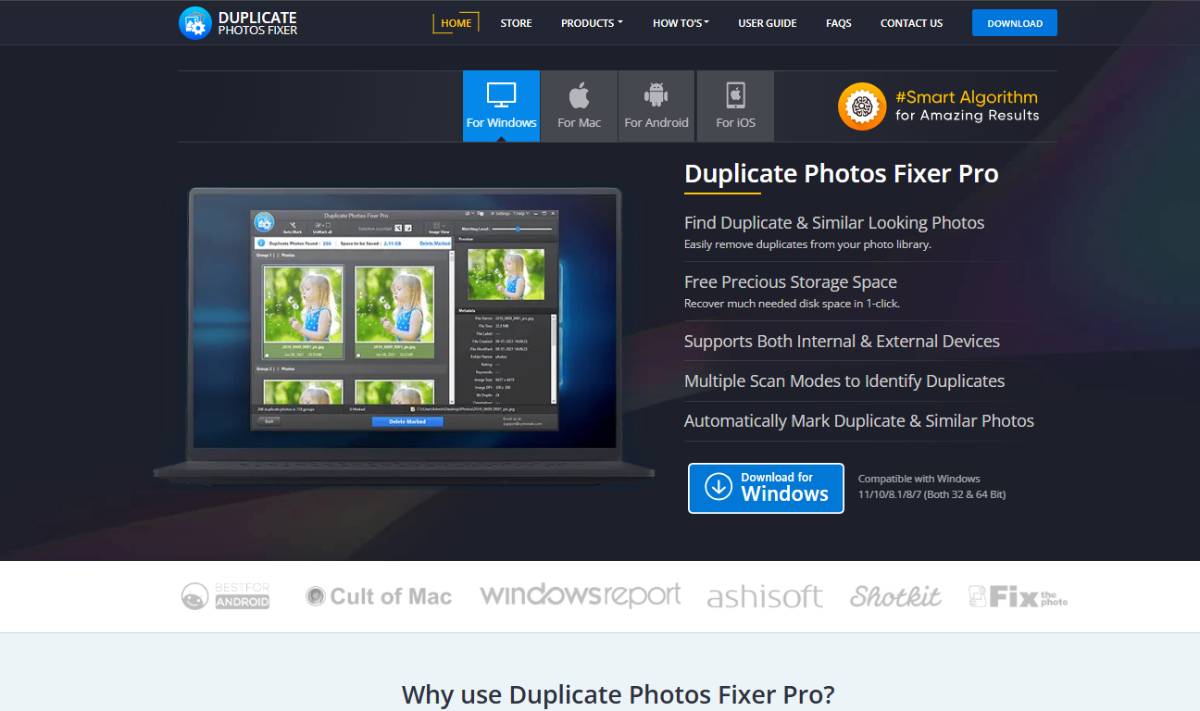
Duplicate Photos Fixer Advances Photo Management

The software is designed to scan photo collections and identify duplicate or visually similar images, helping users reduce unnecessary storage consumption.

August 12, 2026
|

Duplicate Photos Fixer Pro is positioned as a digital photo-management utility designed to help users identify and remove duplicate images across computer storage. Its focus on automated duplicate detection addresses a growing challenge for individuals and organizations managing increasingly large personal and professional image libraries across multiple devices.

The software is designed to scan photo collections and identify duplicate or visually similar images, helping users reduce unnecessary storage consumption. By locating repeated files, the platform can simplify photo organization and make it easier to maintain cleaner digital libraries.

Its core functionality focuses on duplicate detection, comparison and removal rather than broader photo-editing capabilities. This specialized approach can be particularly relevant for users who accumulate images through smartphones, cameras, backups and file transfers.

The utility also reflects a broader category of software aimed at improving local storage management. As photo libraries grow in size and resolution, identifying redundant files can help users reclaim capacity and reduce the administrative effort associated with manual organization.

The rapid growth of digital photography has transformed photo storage into a persistent management challenge. Modern smartphones and cameras can generate thousands of high-resolution images, while cloud synchronization, device migration and repeated backups can create multiple copies of the same files.

This trend has increased demand for specialized tools that can identify redundant content without requiring users to manually inspect entire collections. Duplicate-photo utilities address a relatively narrow but practical problem: reducing unnecessary files while preserving the images users actually need.

The issue is also relevant to businesses with substantial visual archives. Marketing teams, creative departments, photographers and media organizations can accumulate large collections of campaign assets, product images and visual references over time.

For executives, the broader significance is digital efficiency. Reducing redundant data can help organizations manage storage more effectively while improving file discoverability. However, automated deletion also introduces the need for careful review and backup procedures to prevent valuable originals from being removed unintentionally.

The primary value proposition of duplicate-photo management software lies in automation. Manually comparing large image collections is time-consuming, particularly when files have different names or are stored across multiple folders.

Automated scanning can help users surface potential duplicates more efficiently, allowing them to review candidates before deletion. Visual comparison capabilities can be especially useful when duplicate images have been resized, renamed or otherwise modified.

From an operational perspective, the effectiveness of such software depends on detection accuracy and user control. A system that identifies duplicates too aggressively could create data-loss risks, while overly conservative detection could limit the amount of storage recovered.

Organizations should therefore treat automated photo cleanup as a controlled data-management process. Backups, review mechanisms and clear deletion policies remain important, particularly when image collections contain business-critical or irreplaceable content.

For businesses, duplicate-photo management can support more efficient digital asset organization and reduce unnecessary local storage usage. Creative, marketing and media teams may benefit when large image libraries become difficult to navigate or maintain.

For consumers, the primary benefit is potentially greater storage efficiency and easier photo organization across growing personal collections. Removing redundant files can also make it easier to locate important images.

For technology decision-makers, however, storage savings should be considered alongside data-preservation requirements. Organizations managing sensitive or commercially valuable imagery should establish backup and retention procedures before deploying automated deletion tools.

The wider trend reinforces an important principle for digital operations: as data volumes increase, organizations need practical systems for identifying, organizing and governing redundant information.

Demand for digital storage-management tools is likely to remain relevant as image libraries continue expanding through smartphones, high-resolution cameras and automated backups. Future solutions may increasingly combine duplicate detection with broader digital asset organization and intelligent classification. For users and organizations, the priority will remain straightforward: reduce unnecessary data while protecting valuable content and maintaining reliable control over what gets deleted.

Source: Crozdesk
Date: August 12, 2026

  • Featured tools
Murf Ai
Free

Murf AI Review – Advanced AI Voice Generator for Realistic Voiceovers

#
Text to Speech
Learn more
Hostinger Website Builder
Paid

Hostinger Website Builder is a drag-and-drop website creator bundled with hosting and AI-powered tools, designed for businesses, blogs and small shops with minimal technical effort.It makes launching a site fast and affordable, with templates, responsive design and built-in hosting all in one.

#
Productivity
#
Startup Tools
#
Ecommerce
Learn more

Learn more about future of AI

Join 80,000+ Ai enthusiast getting weekly updates on exciting AI tools.
Thank you! Your submission has been received!
Oops! Something went wrong while submitting the form.

Duplicate Photos Fixer Advances Photo Management

August 12, 2026

The software is designed to scan photo collections and identify duplicate or visually similar images, helping users reduce unnecessary storage consumption.

Duplicate Photos Fixer Pro is positioned as a digital photo-management utility designed to help users identify and remove duplicate images across computer storage. Its focus on automated duplicate detection addresses a growing challenge for individuals and organizations managing increasingly large personal and professional image libraries across multiple devices.

The software is designed to scan photo collections and identify duplicate or visually similar images, helping users reduce unnecessary storage consumption. By locating repeated files, the platform can simplify photo organization and make it easier to maintain cleaner digital libraries.

Its core functionality focuses on duplicate detection, comparison and removal rather than broader photo-editing capabilities. This specialized approach can be particularly relevant for users who accumulate images through smartphones, cameras, backups and file transfers.

The utility also reflects a broader category of software aimed at improving local storage management. As photo libraries grow in size and resolution, identifying redundant files can help users reclaim capacity and reduce the administrative effort associated with manual organization.

The rapid growth of digital photography has transformed photo storage into a persistent management challenge. Modern smartphones and cameras can generate thousands of high-resolution images, while cloud synchronization, device migration and repeated backups can create multiple copies of the same files.

This trend has increased demand for specialized tools that can identify redundant content without requiring users to manually inspect entire collections. Duplicate-photo utilities address a relatively narrow but practical problem: reducing unnecessary files while preserving the images users actually need.

The issue is also relevant to businesses with substantial visual archives. Marketing teams, creative departments, photographers and media organizations can accumulate large collections of campaign assets, product images and visual references over time.

For executives, the broader significance is digital efficiency. Reducing redundant data can help organizations manage storage more effectively while improving file discoverability. However, automated deletion also introduces the need for careful review and backup procedures to prevent valuable originals from being removed unintentionally.

The primary value proposition of duplicate-photo management software lies in automation. Manually comparing large image collections is time-consuming, particularly when files have different names or are stored across multiple folders.

Automated scanning can help users surface potential duplicates more efficiently, allowing them to review candidates before deletion. Visual comparison capabilities can be especially useful when duplicate images have been resized, renamed or otherwise modified.

From an operational perspective, the effectiveness of such software depends on detection accuracy and user control. A system that identifies duplicates too aggressively could create data-loss risks, while overly conservative detection could limit the amount of storage recovered.

Organizations should therefore treat automated photo cleanup as a controlled data-management process. Backups, review mechanisms and clear deletion policies remain important, particularly when image collections contain business-critical or irreplaceable content.

For businesses, duplicate-photo management can support more efficient digital asset organization and reduce unnecessary local storage usage. Creative, marketing and media teams may benefit when large image libraries become difficult to navigate or maintain.

For consumers, the primary benefit is potentially greater storage efficiency and easier photo organization across growing personal collections. Removing redundant files can also make it easier to locate important images.

For technology decision-makers, however, storage savings should be considered alongside data-preservation requirements. Organizations managing sensitive or commercially valuable imagery should establish backup and retention procedures before deploying automated deletion tools.

The wider trend reinforces an important principle for digital operations: as data volumes increase, organizations need practical systems for identifying, organizing and governing redundant information.

Demand for digital storage-management tools is likely to remain relevant as image libraries continue expanding through smartphones, high-resolution cameras and automated backups. Future solutions may increasingly combine duplicate detection with broader digital asset organization and intelligent classification. For users and organizations, the priority will remain straightforward: reduce unnecessary data while protecting valuable content and maintaining reliable control over what gets deleted.

Source: Crozdesk
Date: August 12, 2026

Promote Your Tool

Copy Embed Code

Similar Blogs

August 14, 2026
|

Benefitfocus Expands Digital Benefits Administration

Benefitfocus provides cloud-based technology covering benefits enrollment, administration, communications, billing, payments and data exchange.
Read more
August 14, 2026
|

Travel Agent Revenue Models Evolve Digitally

Travel agencies can earn commissions when customers book hotels, cruises, tours, vacation packages and other travel products through them. Suppliers may pay agents for generating bookings, making commissions a traditional component of agency revenue.
Read more
August 14, 2026
|

Sofon Advances Guided Selling CPQ Automation

Sofon's platform combines guided selling, product configuration, pricing, quotation and sales-management capabilities. Guided questionnaires help sales teams identify customer requirements and translate them into suitable product configurations.
Read more
August 14, 2026
|

WellRyde Advances Medical Transportation Management

WellRyde provides technology for managing non-emergency medical transportation operations, including trip scheduling, dispatch coordination, transportation-provider management and reporting.
Read more
August 14, 2026
|

Review WAVE Advances Digital Patient Engagement

Review WAVE provides healthcare practices with tools for online appointment scheduling, two-way texting, automated appointment reminders, digital forms, web chat, marketing campaigns and online review generation.
Read more
August 14, 2026
|

Edgenuity Expands Digital Virtual Education

Edgenuity provides digital curriculum and learning solutions covering core academic subjects, electives, Advanced Placement and career-oriented education.
Read more