
Designrr Expands AI Publishing Tools for Creator Economy

The rise of tools like Designrr reflects broader changes in the global digital content economy, where businesses increasingly operate as media publishers.

March 30, 2026
|

A significant shift in digital publishing is unfolding as Designrr strengthens its platform enabling businesses, marketers, and creators to transform content into eBooks, Kindle titles, and lead magnets. The move reflects rising demand for automated publishing tools as organizations seek scalable ways to monetize knowledge and digital content.

Key capabilities include:

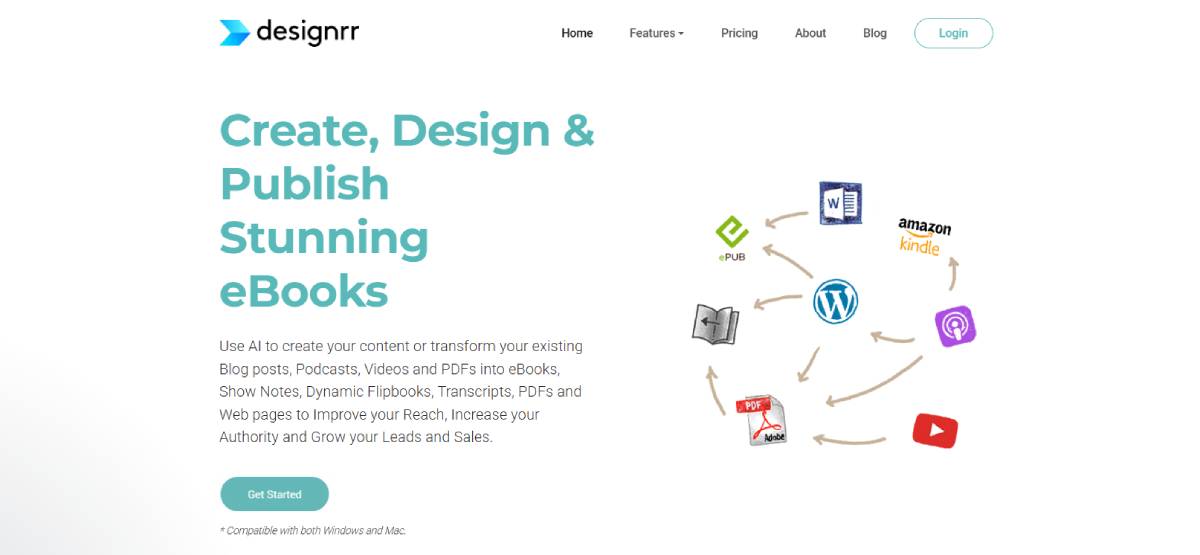
  • Designrr offers a cloud-based platform that converts blogs, podcasts, videos, and documents into professionally formatted eBooks and digital publications.
  • The platform integrates automated layout design, content import tools, and export formats compatible with platforms such as Amazon’s Kindle ecosystem.
  • Businesses and digital marketers use the software to create lead magnets, reports, training guides, and online publications.
  • The tool supports branding customization, automated table-of-contents generation, and publishing-ready templates.
  • Demand for simplified publishing workflows has increased as content marketing becomes a central growth strategy for startups, creators, and enterprises building authority-driven digital channels.
  • The AI platform Designrr enables users to transform blogs, podcasts, videos, and documents into professionally designed eBooks and digital publications.

The rise of tools like Designrr reflects broader changes in the global digital content economy, where businesses increasingly operate as media publishers. Organizations across sectors now rely on blogs, newsletters, podcasts, and downloadable guides to attract and retain audiences.

Historically, producing professional eBooks required specialized design software and publishing expertise. Modern cloud platforms have simplified the process by automating formatting, layout, and distribution. This shift aligns with the rapid expansion of the creator economy, where individuals and companies alike monetize knowledge through digital products.

The trend also intersects with the growth of content-led marketing strategies, where eBooks and whitepapers function as high-value assets for lead generation and brand authority. As digital publishing continues to evolve, automated tools are becoming central to how organizations scale content production and distribution globally.

Digital publishing analysts say automation platforms are transforming how organizations approach content distribution. Tools like Designrr enable businesses to repurpose existing media into multiple formats, significantly reducing production costs and time.

Marketing strategists highlight that eBooks remain among the most effective lead-generation assets, particularly in B2B sectors such as consulting, SaaS, and education. By automating design and publishing workflows, companies can produce professional materials without dedicated editorial teams.

Industry observers also note that integrated publishing tools allow content creators to scale intellectual property across channels turning blog posts into books, podcasts into written guides, and webinars into downloadable reports. This capability is increasingly valuable in a competitive digital marketplace where consistent content output drives visibility and customer engagement.

For businesses, automated publishing platforms open new opportunities for content monetization, audience building, and knowledge distribution. Companies can transform internal expertise into digital assets such as guides, reports, and books that support marketing and education initiatives.

Investors tracking the creator economy are closely watching software platforms that simplify digital product creation. As knowledge commerce grows globally, tools enabling rapid publishing could become foundational infrastructure for creators and startups.

From a policy perspective, the expansion of digital publishing technologies may also raise questions around copyright, intellectual property protection, and AI-assisted content creation, areas where regulators are increasingly active.

Looking ahead, platforms like Designrr may integrate deeper AI capabilities, enabling automated summarization, writing assistance, and content personalization. Decision-makers will watch how publishing tools evolve alongside the creator economy and knowledge commerce. As digital publishing continues to expand, automated content production platforms could play a central role in shaping how organizations distribute expertise and influence global audiences.

Source: Designrr
Date: March 2026

  • Featured tools
Symphony Ayasdi AI
Free

SymphonyAI Sensa is an AI-powered surveillance and financial crime detection platform that surfaces hidden risk behavior through explainable, AI-driven analytics.

#
Finance
Learn more
Tome AI
Free

Tome AI is an AI-powered storytelling and presentation tool designed to help users create compelling narratives and presentations quickly and efficiently. It leverages advanced AI technologies to generate content, images, and animations based on user input.

#
Presentation
#
Startup Tools
Learn more

Learn more about future of AI

Join 80,000+ Ai enthusiast getting weekly updates on exciting AI tools.
Thank you! Your submission has been received!
Oops! Something went wrong while submitting the form.

Designrr Expands AI Publishing Tools for Creator Economy

March 30, 2026

The rise of tools like Designrr reflects broader changes in the global digital content economy, where businesses increasingly operate as media publishers.

A significant shift in digital publishing is unfolding as Designrr strengthens its platform enabling businesses, marketers, and creators to transform content into eBooks, Kindle titles, and lead magnets. The move reflects rising demand for automated publishing tools as organizations seek scalable ways to monetize knowledge and digital content.

Key capabilities include:

  • Designrr offers a cloud-based platform that converts blogs, podcasts, videos, and documents into professionally formatted eBooks and digital publications.
  • The platform integrates automated layout design, content import tools, and export formats compatible with platforms such as Amazon’s Kindle ecosystem.
  • Businesses and digital marketers use the software to create lead magnets, reports, training guides, and online publications.
  • The tool supports branding customization, automated table-of-contents generation, and publishing-ready templates.
  • Demand for simplified publishing workflows has increased as content marketing becomes a central growth strategy for startups, creators, and enterprises building authority-driven digital channels.
  • The AI platform Designrr enables users to transform blogs, podcasts, videos, and documents into professionally designed eBooks and digital publications.

The rise of tools like Designrr reflects broader changes in the global digital content economy, where businesses increasingly operate as media publishers. Organizations across sectors now rely on blogs, newsletters, podcasts, and downloadable guides to attract and retain audiences.

Historically, producing professional eBooks required specialized design software and publishing expertise. Modern cloud platforms have simplified the process by automating formatting, layout, and distribution. This shift aligns with the rapid expansion of the creator economy, where individuals and companies alike monetize knowledge through digital products.

The trend also intersects with the growth of content-led marketing strategies, where eBooks and whitepapers function as high-value assets for lead generation and brand authority. As digital publishing continues to evolve, automated tools are becoming central to how organizations scale content production and distribution globally.

Digital publishing analysts say automation platforms are transforming how organizations approach content distribution. Tools like Designrr enable businesses to repurpose existing media into multiple formats, significantly reducing production costs and time.

Marketing strategists highlight that eBooks remain among the most effective lead-generation assets, particularly in B2B sectors such as consulting, SaaS, and education. By automating design and publishing workflows, companies can produce professional materials without dedicated editorial teams.

Industry observers also note that integrated publishing tools allow content creators to scale intellectual property across channels turning blog posts into books, podcasts into written guides, and webinars into downloadable reports. This capability is increasingly valuable in a competitive digital marketplace where consistent content output drives visibility and customer engagement.

For businesses, automated publishing platforms open new opportunities for content monetization, audience building, and knowledge distribution. Companies can transform internal expertise into digital assets such as guides, reports, and books that support marketing and education initiatives.

Investors tracking the creator economy are closely watching software platforms that simplify digital product creation. As knowledge commerce grows globally, tools enabling rapid publishing could become foundational infrastructure for creators and startups.

From a policy perspective, the expansion of digital publishing technologies may also raise questions around copyright, intellectual property protection, and AI-assisted content creation, areas where regulators are increasingly active.

Looking ahead, platforms like Designrr may integrate deeper AI capabilities, enabling automated summarization, writing assistance, and content personalization. Decision-makers will watch how publishing tools evolve alongside the creator economy and knowledge commerce. As digital publishing continues to expand, automated content production platforms could play a central role in shaping how organizations distribute expertise and influence global audiences.

Source: Designrr
Date: March 2026

Promote Your Tool

Copy Embed Code

Similar Blogs

March 30, 2026
|

Meta Court Setbacks Signal Stricter AI Scrutiny

Meta faced multiple legal losses related to its AI initiatives, particularly around training data usage, algorithmic transparency, and consumer protection obligations. Courts questioned the company’s safeguards, emphasizing risks of bias, privacy violations, and misinformation.
Read more
March 30, 2026
|

Anthropic Pushes Back Against Pentagon Pressure

Anthropic, a leading AI firm, resisted Pentagon pressure to weaken or remove safeguards designed to prevent misuse of its AI systems. The confrontation escalated after Hegseth urged faster deployment of AI capabilities without certain safety constraints.
Read more
March 30, 2026
|

Digital Twin Meets AI in Mining Transformation

MineScape 2026 introduces enhanced capabilities combining AI-powered analytics with digital twin simulations to optimize mine planning and operations.
Read more
March 30, 2026
|

AI Moves Beyond Earth With Space Data Centers

Nvidia has introduced a concept for deploying AI data center hardware in space, leveraging satellite platforms and orbital infrastructure to process data closer to its source. The initiative aligns with rising demand for real-time analytics from Earth observation, telecommunications, and defense sectors.
Read more
March 30, 2026
|

AI Becomes Frontline Defense Against Spam Calls

The development aligns with a broader trend across global markets where AI is being used both to enable and combat digital fraud. Spam calls have become a widespread issue, costing consumers and businesses billions annually.
Read more
March 30, 2026
|

Bluesky Unveils AI Driven Feed Customization

The integration of AI into feed customization represents a convergence of personalization and decentralization. Historically, social media has prioritized engagement metrics over user choice.
Read more