
Coolors Revolutionizes Digital Color Design

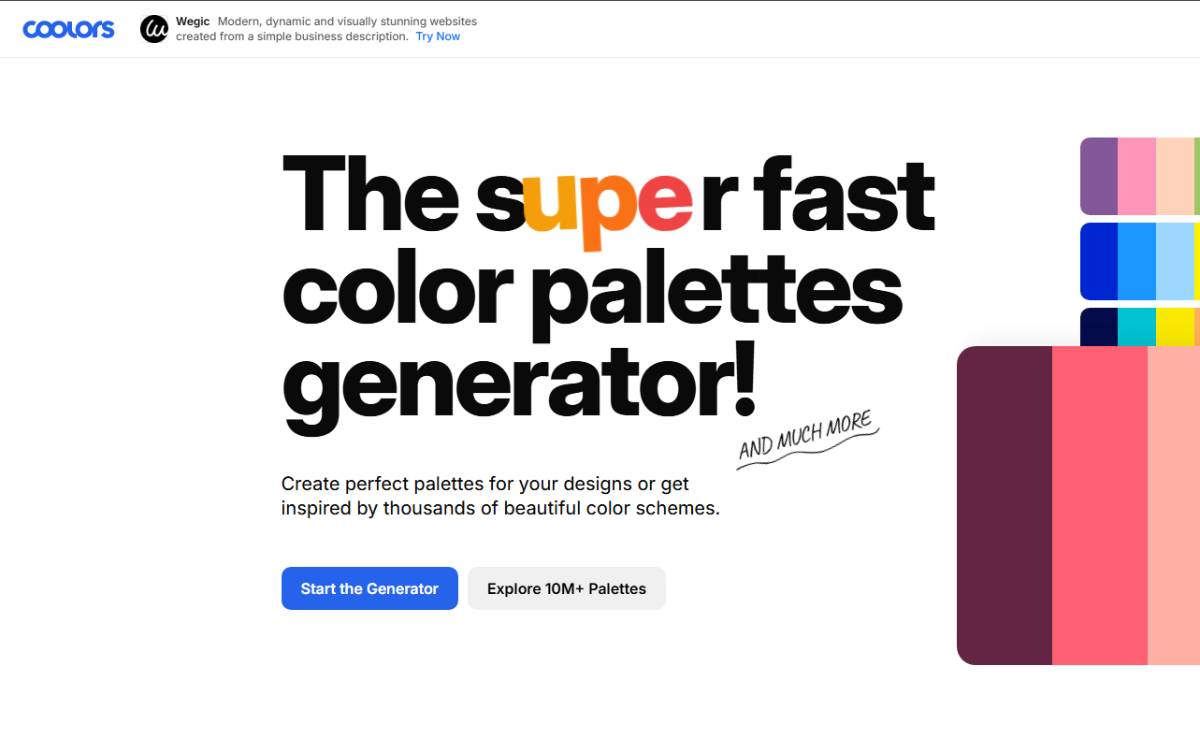
Coolors has emerged as a widely used color-generation and design support platform, offering tools that help users create, explore, and manage color palettes efficiently.

July 29, 2026
|

Coolors continues to strengthen the digital design ecosystem by simplifying color discovery, palette creation, and creative workflows for designers, brands, and businesses worldwide. The platform reflects a broader shift toward accessible design technology, enabling professionals and teams to create visually consistent digital experiences faster while reducing complexity in branding and creative production.

Coolors has emerged as a widely used color-generation and design support platform, offering tools that help users create, explore, and manage color palettes efficiently. The platform serves designers, marketers, developers, and creative teams seeking faster ways to establish visual identities.

Its capabilities align with growing demand for lightweight digital tools that improve productivity without requiring advanced design expertise. As businesses increasingly prioritize brand consistency across websites, applications, and marketing channels, color management solutions are becoming essential components of modern creative workflows.

The platform’s accessibility has helped expand professional-level design resources to a broader global audience. The rise of platforms like Coolors reflects a major transformation in the creative technology industry. Historically, professional color selection required specialized software knowledge and extensive design experience. Today, cloud-based tools are democratizing creative processes by making advanced design functions available to individuals, startups, and enterprise teams.

This trend connects with the broader growth of no-code and AI-assisted design solutions, where businesses seek faster production cycles and more efficient collaboration. Visual branding has become increasingly important as companies compete across digital channels, social platforms, and global markets.

From startups building their first identity to multinational organizations maintaining brand standards, accessible design platforms are helping teams improve speed, consistency, and creative output.

Design industry analysts view tools like Coolors as part of a larger movement toward simplifying creative workflows through automation and user-friendly technology. Experts suggest that accessible design platforms allow non-specialists to participate more effectively in branding decisions while enabling professional designers to accelerate early-stage creative exploration.

Creative leaders increasingly emphasize the importance of cohesive visual systems, particularly as companies manage multiple digital touchpoints across websites, mobile applications, advertising campaigns, and social media platforms.

While traditional design software remains essential for advanced projects, lightweight platforms provide valuable support for rapid ideation and collaboration. Industry observers note that the future of design will likely combine human creativity with intelligent digital tools to improve efficiency without replacing strategic creative thinking.

For businesses, platforms such as Coolors can reduce design barriers and help teams develop stronger visual identities with fewer resources. Startups and small companies can benefit from faster branding processes, while larger organizations can use such tools to support consistent creative communication.

Investors and executives should recognize the growing importance of design technology as digital competition increases across industries. Companies that maintain strong visual branding often gain advantages in customer recognition and engagement.

From a policy perspective, the expansion of accessible creative tools highlights the importance of digital literacy and technology adoption in modern workplaces. Organizations may need to invest in training employees to maximize these emerging solutions.

The future of digital design tools will likely focus on deeper automation, AI-powered recommendations, and improved collaboration features. As businesses demand faster creative cycles, platforms like Coolors are positioned to support evolving workflows across branding, marketing, and product development. Decision-makers should watch how emerging technologies reshape the relationship between creativity, automation, and business strategy in the global digital economy.

Source: AlternativeTo
Date: July 2026

  • Featured tools
Wonder AI
Free

Wonder AI is a versatile AI-powered creative platform that generates text, images, and audio with minimal input, designed for fast storytelling, visual creation, and audio content generation

#
Art Generator
Learn more
Neuron AI
Free

Neuron AI is an AI-driven content optimization platform that helps creators produce SEO-friendly content by combining semantic SEO, competitor analysis, and AI-assisted writing workflows.

#
SEO
Learn more

Learn more about future of AI

Join 80,000+ Ai enthusiast getting weekly updates on exciting AI tools.
Thank you! Your submission has been received!
Oops! Something went wrong while submitting the form.

Coolors Revolutionizes Digital Color Design

July 29, 2026

Coolors has emerged as a widely used color-generation and design support platform, offering tools that help users create, explore, and manage color palettes efficiently.

Coolors continues to strengthen the digital design ecosystem by simplifying color discovery, palette creation, and creative workflows for designers, brands, and businesses worldwide. The platform reflects a broader shift toward accessible design technology, enabling professionals and teams to create visually consistent digital experiences faster while reducing complexity in branding and creative production.

Coolors has emerged as a widely used color-generation and design support platform, offering tools that help users create, explore, and manage color palettes efficiently. The platform serves designers, marketers, developers, and creative teams seeking faster ways to establish visual identities.

Its capabilities align with growing demand for lightweight digital tools that improve productivity without requiring advanced design expertise. As businesses increasingly prioritize brand consistency across websites, applications, and marketing channels, color management solutions are becoming essential components of modern creative workflows.

The platform’s accessibility has helped expand professional-level design resources to a broader global audience. The rise of platforms like Coolors reflects a major transformation in the creative technology industry. Historically, professional color selection required specialized software knowledge and extensive design experience. Today, cloud-based tools are democratizing creative processes by making advanced design functions available to individuals, startups, and enterprise teams.

This trend connects with the broader growth of no-code and AI-assisted design solutions, where businesses seek faster production cycles and more efficient collaboration. Visual branding has become increasingly important as companies compete across digital channels, social platforms, and global markets.

From startups building their first identity to multinational organizations maintaining brand standards, accessible design platforms are helping teams improve speed, consistency, and creative output.

Design industry analysts view tools like Coolors as part of a larger movement toward simplifying creative workflows through automation and user-friendly technology. Experts suggest that accessible design platforms allow non-specialists to participate more effectively in branding decisions while enabling professional designers to accelerate early-stage creative exploration.

Creative leaders increasingly emphasize the importance of cohesive visual systems, particularly as companies manage multiple digital touchpoints across websites, mobile applications, advertising campaigns, and social media platforms.

While traditional design software remains essential for advanced projects, lightweight platforms provide valuable support for rapid ideation and collaboration. Industry observers note that the future of design will likely combine human creativity with intelligent digital tools to improve efficiency without replacing strategic creative thinking.

For businesses, platforms such as Coolors can reduce design barriers and help teams develop stronger visual identities with fewer resources. Startups and small companies can benefit from faster branding processes, while larger organizations can use such tools to support consistent creative communication.

Investors and executives should recognize the growing importance of design technology as digital competition increases across industries. Companies that maintain strong visual branding often gain advantages in customer recognition and engagement.

From a policy perspective, the expansion of accessible creative tools highlights the importance of digital literacy and technology adoption in modern workplaces. Organizations may need to invest in training employees to maximize these emerging solutions.

The future of digital design tools will likely focus on deeper automation, AI-powered recommendations, and improved collaboration features. As businesses demand faster creative cycles, platforms like Coolors are positioned to support evolving workflows across branding, marketing, and product development. Decision-makers should watch how emerging technologies reshape the relationship between creativity, automation, and business strategy in the global digital economy.

Source: AlternativeTo
Date: July 2026

Promote Your Tool

Copy Embed Code

Similar Blogs

August 10, 2026
|

Content Marketing Software Accelerates Enterprise Growth

The content marketing software category encompasses platforms designed to support multiple stages of the marketing lifecycle, including content planning, creation, collaboration, distribution, optimization and performance measurement.
Read more
August 10, 2026
|

3D Printing Software Drives Manufacturing Transformation

3D printing software encompasses a broad range of capabilities designed to support the additive manufacturing lifecycle. Platforms can assist with three-dimensional modeling, file preparation, slicing, print optimization.
Read more
August 10, 2026
|

ZenDMS Advances Enterprise Document Management

ZenDMS is positioned within the document management software segment, where businesses increasingly require centralized tools to store, organize and retrieve critical information.
Read more
August 10, 2026
|

SmartSimple Cloud Advances Grant Management Automation

SmartSimple Cloud is positioned as a configurable cloud platform designed to support grant management, corporate social responsibility, scholarship programs, awards and other complex funding workflows.
Read more
August 10, 2026
|

HaloPSA Accelerates Integrated Service Management

HaloPSA brings multiple professional services automation capabilities into a centralized environment, including service desk management, ticketing, contract management, asset tracking, project management.
Read more
August 10, 2026
|

Ministry Scheduler Pro Advances Workforce Coordination

Ministry Scheduler Pro is designed to support organizations that coordinate volunteers, employees and recurring assignments across multiple activities and locations.
Read more