
Construction Software Transforms Cost Planning

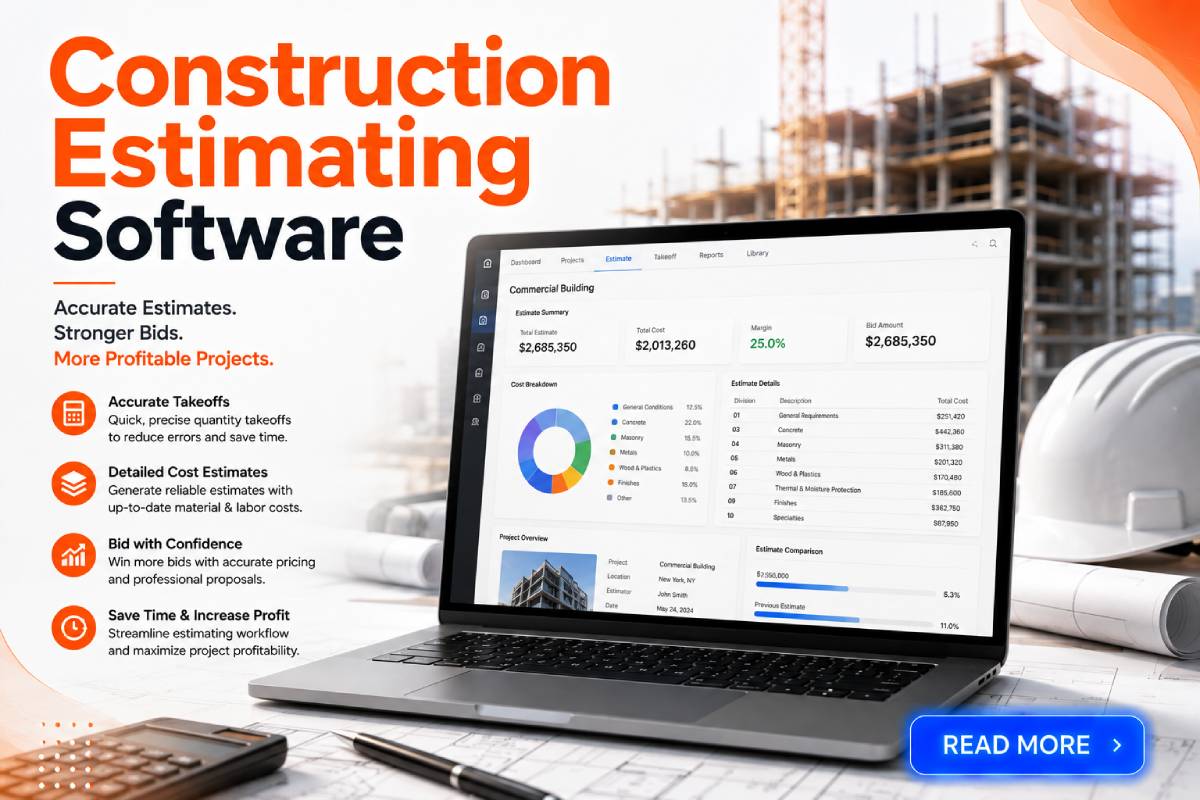
Modern construction estimating platforms bring together cost databases, material pricing, labor calculations, quantity takeoffs, bid preparation and project-specific estimates.

August 11, 2026
|

Construction estimating software is becoming an increasingly important technology for contractors, builders and construction firms seeking greater accuracy in project cost planning. Digital estimating tools are helping companies organize material, labor and equipment costs, accelerate bid preparation and reduce calculation errors, signaling a broader shift toward data-driven construction management.

Modern construction estimating platforms bring together cost databases, material pricing, labor calculations, quantity takeoffs, bid preparation and project-specific estimates. By replacing manual spreadsheets and disconnected calculations, these systems can help contractors produce more consistent estimates and respond faster to bidding opportunities.

Many platforms also integrate estimating with project management, accounting and customer relationship systems. This creates a connected workflow from initial cost calculation through bidding and project execution.

The category is particularly relevant as construction companies face fluctuating material prices, labor shortages and increasingly competitive bidding environments. For executives, accurate estimating has become a strategic capability because even small cost assumptions can influence margins, competitiveness and project profitability.

The development aligns with a wider digital transformation across the construction industry. Historically, estimating often depended heavily on spreadsheets, manual quantity calculations, historical records and individual expertise. While these methods remain common, they can become difficult to manage as project complexity increases.

Construction firms now operate in an environment characterized by volatile material costs, evolving labor requirements, complex project specifications and pressure to submit competitive bids quickly. Digital estimating software can help standardize calculations while providing greater visibility into cost assumptions.

The technology is also becoming more closely connected with broader construction-management systems. Estimating data can increasingly flow into budgeting, scheduling, accounting and project management processes, reducing duplication and improving continuity.

For construction executives, the strategic importance extends beyond faster bids. Accurate estimates influence whether companies win contracts, protect margins and allocate resources effectively. As competition intensifies, technology that improves estimating precision can become a meaningful operational advantage.

Industry experts generally view digital estimating as a way to improve consistency and reduce the administrative burden associated with complex construction bids. The technology can allow estimators to work with standardized cost information while maintaining the flexibility required for project-specific conditions.

Automated quantity calculations, reusable cost assemblies and centralized pricing information can also help teams accelerate estimate preparation. For larger contractors, integrating estimating with financial and project-management systems can create a clearer connection between proposed costs and actual project performance.

However, technology does not eliminate the need for experienced estimators. Construction projects often involve changing specifications, regional pricing differences, subcontractor conditions and unforeseen variables. Human judgment remains essential when interpreting data and determining appropriate contingencies.

The emerging industry view is therefore centered on augmentation rather than replacement. The most effective estimating platforms are likely to combine automation and data intelligence with experienced construction professionals who understand project risk.

For construction companies, better estimating technology can support faster bidding, improved cost control and stronger visibility into potential project margins. Contractors may also be able to evaluate more opportunities without proportionally increasing administrative workloads.

For investors and executives, the key benefit is improved financial predictability. More accurate estimates can help companies reduce cost overruns, protect margins and make better decisions about which projects to pursue.

The technology also has implications for procurement and construction policy. More standardized digital cost information could improve documentation and transparency across complex projects, although organizations must ensure that pricing data remains accurate and appropriately governed.

Executives should assess estimating platforms based on data quality, integration capabilities, usability, scalability and their ability to connect estimates with actual project outcomes.

Construction estimating software is likely to evolve toward greater automation, cloud collaboration, predictive analytics and artificial intelligence. Future platforms may increasingly compare historical project performance with current market conditions to improve cost forecasts and identify potential risks before bids are submitted.

Decision-makers should watch how rapidly these technologies integrate with broader construction ecosystems. The competitive advantage will increasingly belong to firms that can estimate faster, price more accurately and convert reliable cost intelligence into stronger project margins.

Source: Crozdesk
Date: August 11, 2026

  • Featured tools
Figstack AI
Free

Figstack AI is an intelligent assistant for developers that explains code, generates docstrings, converts code between languages, and analyzes time complexity helping you work smarter, not harder.

#
Coding
Learn more
Kreateable AI
Free

Kreateable AI is a white-label, AI-driven design platform that enables logo generation, social media posts, ads, and more for businesses, agencies, and service providers.

#
Logo Generator
Learn more

Learn more about future of AI

Join 80,000+ Ai enthusiast getting weekly updates on exciting AI tools.
Thank you! Your submission has been received!
Oops! Something went wrong while submitting the form.

Construction Software Transforms Cost Planning

August 11, 2026

Modern construction estimating platforms bring together cost databases, material pricing, labor calculations, quantity takeoffs, bid preparation and project-specific estimates.

Construction estimating software is becoming an increasingly important technology for contractors, builders and construction firms seeking greater accuracy in project cost planning. Digital estimating tools are helping companies organize material, labor and equipment costs, accelerate bid preparation and reduce calculation errors, signaling a broader shift toward data-driven construction management.

Modern construction estimating platforms bring together cost databases, material pricing, labor calculations, quantity takeoffs, bid preparation and project-specific estimates. By replacing manual spreadsheets and disconnected calculations, these systems can help contractors produce more consistent estimates and respond faster to bidding opportunities.

Many platforms also integrate estimating with project management, accounting and customer relationship systems. This creates a connected workflow from initial cost calculation through bidding and project execution.

The category is particularly relevant as construction companies face fluctuating material prices, labor shortages and increasingly competitive bidding environments. For executives, accurate estimating has become a strategic capability because even small cost assumptions can influence margins, competitiveness and project profitability.

The development aligns with a wider digital transformation across the construction industry. Historically, estimating often depended heavily on spreadsheets, manual quantity calculations, historical records and individual expertise. While these methods remain common, they can become difficult to manage as project complexity increases.

Construction firms now operate in an environment characterized by volatile material costs, evolving labor requirements, complex project specifications and pressure to submit competitive bids quickly. Digital estimating software can help standardize calculations while providing greater visibility into cost assumptions.

The technology is also becoming more closely connected with broader construction-management systems. Estimating data can increasingly flow into budgeting, scheduling, accounting and project management processes, reducing duplication and improving continuity.

For construction executives, the strategic importance extends beyond faster bids. Accurate estimates influence whether companies win contracts, protect margins and allocate resources effectively. As competition intensifies, technology that improves estimating precision can become a meaningful operational advantage.

Industry experts generally view digital estimating as a way to improve consistency and reduce the administrative burden associated with complex construction bids. The technology can allow estimators to work with standardized cost information while maintaining the flexibility required for project-specific conditions.

Automated quantity calculations, reusable cost assemblies and centralized pricing information can also help teams accelerate estimate preparation. For larger contractors, integrating estimating with financial and project-management systems can create a clearer connection between proposed costs and actual project performance.

However, technology does not eliminate the need for experienced estimators. Construction projects often involve changing specifications, regional pricing differences, subcontractor conditions and unforeseen variables. Human judgment remains essential when interpreting data and determining appropriate contingencies.

The emerging industry view is therefore centered on augmentation rather than replacement. The most effective estimating platforms are likely to combine automation and data intelligence with experienced construction professionals who understand project risk.

For construction companies, better estimating technology can support faster bidding, improved cost control and stronger visibility into potential project margins. Contractors may also be able to evaluate more opportunities without proportionally increasing administrative workloads.

For investors and executives, the key benefit is improved financial predictability. More accurate estimates can help companies reduce cost overruns, protect margins and make better decisions about which projects to pursue.

The technology also has implications for procurement and construction policy. More standardized digital cost information could improve documentation and transparency across complex projects, although organizations must ensure that pricing data remains accurate and appropriately governed.

Executives should assess estimating platforms based on data quality, integration capabilities, usability, scalability and their ability to connect estimates with actual project outcomes.

Construction estimating software is likely to evolve toward greater automation, cloud collaboration, predictive analytics and artificial intelligence. Future platforms may increasingly compare historical project performance with current market conditions to improve cost forecasts and identify potential risks before bids are submitted.

Decision-makers should watch how rapidly these technologies integrate with broader construction ecosystems. The competitive advantage will increasingly belong to firms that can estimate faster, price more accurately and convert reliable cost intelligence into stronger project margins.

Source: Crozdesk
Date: August 11, 2026

Promote Your Tool

Copy Embed Code

Similar Blogs

August 11, 2026
|

ADP Vantage Advances Enterprise Workforce Management

ADP Vantage HCM is positioned as an enterprise human capital management solution designed to support organizations with complex workforce requirements.
Read more
August 11, 2026
|

OnceHub Advances Automated Business Scheduling

OnceHub provides scheduling and appointment-management capabilities designed to help organizations automate the process of arranging meetings and customer appointments.
Read more
August 11, 2026
|

BlueConic Advances Customer Data Management

BlueConic provides a customer data platform designed to help organizations collect, unify and activate customer information from multiple sources.
Read more
August 11, 2026
|

Work Order Software Reshapes Field Operations

Modern work order platforms typically combine work-order creation, scheduling, dispatching, technician management, asset tracking, inventory control and reporting.
Read more
August 11, 2026
|

MillionVerifier Advances Email Verification Efficiency

MillionVerifier provides email verification and list-cleaning capabilities designed to identify problematic email addresses before businesses send campaigns.
Read more
August 11, 2026
|

MyWiFi Advances Managed Business Connectivity

MyWiFi Networks provides a cloud-based platform focused on managing Wi-Fi networks and connected user experiences
Read more