
Coherent Expands Texas AI Infrastructure Operations

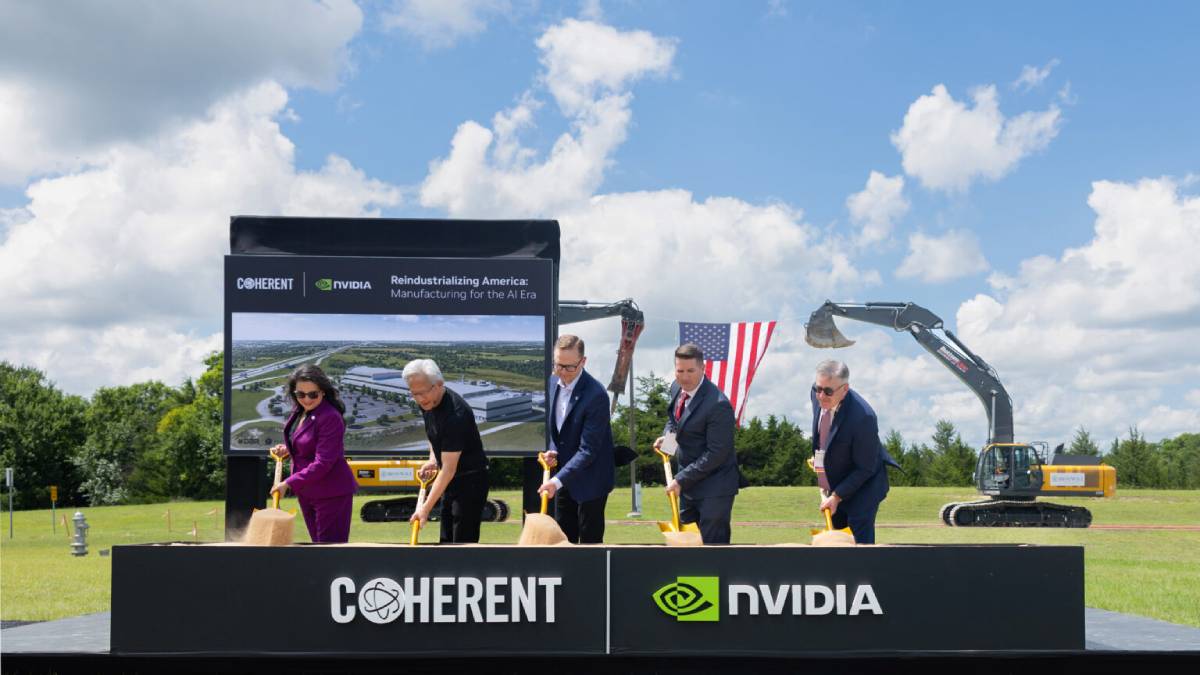
Coherent announced the expansion of its Texas manufacturing operations to increase production capacity for optical networking technologies essential to AI infrastructure.

June 17, 2026
|
Image Source: NVIDIA Blog

A major development in the artificial intelligence infrastructure sector unfolded as Coherent broke ground on an expanded manufacturing facility in Texas aimed at scaling production of advanced optical technologies. The investment highlights the growing demand for high-performance networking components that underpin AI data centers, signaling a broader industry push to strengthen critical supply chains supporting the global AI boom.

Coherent announced the expansion of its Texas manufacturing operations to increase production capacity for optical networking technologies essential to AI infrastructure. The facility will support the manufacturing of components used in high-speed data transmission systems that connect AI servers and data center clusters.

The project comes amid unprecedented demand for AI computing power, driven by hyperscale cloud providers, enterprise AI deployments, and generative AI applications. Industry leaders including NVIDIA and major cloud operators increasingly rely on advanced optical interconnects to manage the massive volumes of data moving across AI systems.

The expansion is expected to enhance domestic manufacturing capabilities while reinforcing the United States' role in critical technology supply chains. The move also reflects growing investment in AI infrastructure beyond semiconductors, extending into networking and connectivity technologies.

The development aligns with a broader trend across global markets where AI infrastructure investment is expanding rapidly beyond chips and computing hardware. As AI models become larger and more computationally intensive, the ability to move data efficiently between processors has emerged as a critical bottleneck.

Optical networking technologies have become a foundational element of modern AI data centers. High-speed optical transceivers and interconnect systems enable thousands of graphics processing units to operate together as unified computing clusters. Without these technologies, scaling advanced AI workloads would become increasingly difficult and costly.

The surge in demand has triggered a wave of investments across the semiconductor, networking, energy, and manufacturing sectors. Governments worldwide are also prioritizing domestic technology production amid growing concerns about supply chain resilience and strategic technological competitiveness.

For the United States, strengthening local manufacturing capacity has become a key objective as policymakers seek to maintain leadership in AI development while reducing vulnerabilities associated with global supply disruptions. Infrastructure providers are therefore becoming as strategically important as chip designers in the evolving AI ecosystem.

Industry analysts view the expansion as evidence that the AI race is creating opportunities throughout the technology supply chain, not just among software developers and semiconductor manufacturers. While companies such as NVIDIA dominate headlines, networking and optical infrastructure providers are increasingly becoming critical enablers of AI growth.

Corporate executives have emphasized that future AI deployments will require significant improvements in data movement efficiency. As AI clusters grow larger, networking performance becomes a determining factor in overall system productivity and operational costs.

Market observers note that investments in optical technologies could generate long-term competitive advantages as demand for AI infrastructure continues to accelerate. Companies capable of scaling production while maintaining technological leadership may benefit from sustained growth across cloud computing, enterprise AI, and research applications.

Experts also highlight that infrastructure diversification is becoming a strategic priority. Expanding manufacturing footprints within the United States can improve resilience against geopolitical disruptions and strengthen national technology capabilities.

For businesses, the expansion underscores the growing importance of AI infrastructure readiness. Organizations planning large-scale AI deployments will increasingly depend on reliable access to networking and optical technologies capable of supporting advanced workloads.

Investors may view the development as further validation that AI-related growth extends beyond chipmakers into adjacent sectors such as networking equipment, manufacturing, and data center infrastructure. This broadens the range of companies positioned to benefit from continued AI adoption.

For policymakers, the project supports objectives related to domestic manufacturing, technology security, and economic competitiveness. Governments may continue encouraging investments that strengthen local supply chains for strategically important technologies.

Consumers are unlikely to see immediate direct effects, but improved infrastructure could accelerate the availability of more powerful AI services across industries. As global demand for AI computing continues to rise, attention will increasingly shift toward the infrastructure components that enable large-scale deployments. Decision-makers should monitor investments in networking, optical systems, energy capacity, and manufacturing expansion alongside developments in semiconductors.

The next phase of the AI race may be determined not only by who builds the most advanced models, but also by who controls the infrastructure required to power them at scale. Coherent's Texas expansion reflects the growing strategic importance of AI's optical backbone.

Source: NVIDIA Blog
Date: June 2026

  • Featured tools
Wonder AI
Free

Wonder AI is a versatile AI-powered creative platform that generates text, images, and audio with minimal input, designed for fast storytelling, visual creation, and audio content generation

#
Art Generator
Learn more
Hostinger Horizons
Freemium

Hostinger Horizons is an AI-powered platform that allows users to build and deploy custom web applications without writing code. It packs hosting, domain management and backend integration into a unified tool for rapid app creation.

#
Startup Tools
#
Coding
#
Project Management
Learn more

Learn more about future of AI

Join 80,000+ Ai enthusiast getting weekly updates on exciting AI tools.
Thank you! Your submission has been received!
Oops! Something went wrong while submitting the form.

Coherent Expands Texas AI Infrastructure Operations

June 17, 2026

Coherent announced the expansion of its Texas manufacturing operations to increase production capacity for optical networking technologies essential to AI infrastructure.

Image Source: NVIDIA Blog

A major development in the artificial intelligence infrastructure sector unfolded as Coherent broke ground on an expanded manufacturing facility in Texas aimed at scaling production of advanced optical technologies. The investment highlights the growing demand for high-performance networking components that underpin AI data centers, signaling a broader industry push to strengthen critical supply chains supporting the global AI boom.

Coherent announced the expansion of its Texas manufacturing operations to increase production capacity for optical networking technologies essential to AI infrastructure. The facility will support the manufacturing of components used in high-speed data transmission systems that connect AI servers and data center clusters.

The project comes amid unprecedented demand for AI computing power, driven by hyperscale cloud providers, enterprise AI deployments, and generative AI applications. Industry leaders including NVIDIA and major cloud operators increasingly rely on advanced optical interconnects to manage the massive volumes of data moving across AI systems.

The expansion is expected to enhance domestic manufacturing capabilities while reinforcing the United States' role in critical technology supply chains. The move also reflects growing investment in AI infrastructure beyond semiconductors, extending into networking and connectivity technologies.

The development aligns with a broader trend across global markets where AI infrastructure investment is expanding rapidly beyond chips and computing hardware. As AI models become larger and more computationally intensive, the ability to move data efficiently between processors has emerged as a critical bottleneck.

Optical networking technologies have become a foundational element of modern AI data centers. High-speed optical transceivers and interconnect systems enable thousands of graphics processing units to operate together as unified computing clusters. Without these technologies, scaling advanced AI workloads would become increasingly difficult and costly.

The surge in demand has triggered a wave of investments across the semiconductor, networking, energy, and manufacturing sectors. Governments worldwide are also prioritizing domestic technology production amid growing concerns about supply chain resilience and strategic technological competitiveness.

For the United States, strengthening local manufacturing capacity has become a key objective as policymakers seek to maintain leadership in AI development while reducing vulnerabilities associated with global supply disruptions. Infrastructure providers are therefore becoming as strategically important as chip designers in the evolving AI ecosystem.

Industry analysts view the expansion as evidence that the AI race is creating opportunities throughout the technology supply chain, not just among software developers and semiconductor manufacturers. While companies such as NVIDIA dominate headlines, networking and optical infrastructure providers are increasingly becoming critical enablers of AI growth.

Corporate executives have emphasized that future AI deployments will require significant improvements in data movement efficiency. As AI clusters grow larger, networking performance becomes a determining factor in overall system productivity and operational costs.

Market observers note that investments in optical technologies could generate long-term competitive advantages as demand for AI infrastructure continues to accelerate. Companies capable of scaling production while maintaining technological leadership may benefit from sustained growth across cloud computing, enterprise AI, and research applications.

Experts also highlight that infrastructure diversification is becoming a strategic priority. Expanding manufacturing footprints within the United States can improve resilience against geopolitical disruptions and strengthen national technology capabilities.

For businesses, the expansion underscores the growing importance of AI infrastructure readiness. Organizations planning large-scale AI deployments will increasingly depend on reliable access to networking and optical technologies capable of supporting advanced workloads.

Investors may view the development as further validation that AI-related growth extends beyond chipmakers into adjacent sectors such as networking equipment, manufacturing, and data center infrastructure. This broadens the range of companies positioned to benefit from continued AI adoption.

For policymakers, the project supports objectives related to domestic manufacturing, technology security, and economic competitiveness. Governments may continue encouraging investments that strengthen local supply chains for strategically important technologies.

Consumers are unlikely to see immediate direct effects, but improved infrastructure could accelerate the availability of more powerful AI services across industries. As global demand for AI computing continues to rise, attention will increasingly shift toward the infrastructure components that enable large-scale deployments. Decision-makers should monitor investments in networking, optical systems, energy capacity, and manufacturing expansion alongside developments in semiconductors.

The next phase of the AI race may be determined not only by who builds the most advanced models, but also by who controls the infrastructure required to power them at scale. Coherent's Texas expansion reflects the growing strategic importance of AI's optical backbone.

Source: NVIDIA Blog
Date: June 2026

Promote Your Tool

Copy Embed Code

Similar Blogs

June 17, 2026
|

Apple Separates Legacy Devices From AI Era

Apple is expected to continue tying advanced AI features to its latest hardware generations, reinforcing a multi-tier ecosystem strategy. The next phase will likely focus on expanding AI capabilities.
Read more
June 17, 2026
|

Florida Sues TikTok Over Youth Safety

TikTok has faced increasing scrutiny across multiple U.S. states and federal agencies regarding youth safety, data privacy, and algorithmic content delivery.
Read more
June 17, 2026
|

Big Tech Intensifies AI Lobbying Push

Big Tech companies are reportedly increasing lobbying efforts as U.S. lawmakers consider stricter AI-related regulations, including provisions linked to child safety and algorithmic accountability.
Read more
June 17, 2026
|

Anthropic Faces Legal Scrutiny Over Claude Pricing Claims

The lawsuit claims Anthropic misrepresented or failed to clearly disclose usage restrictions associated with its Claude Max subscription tier, potentially affecting customer expectations around access and performance.
Read more
June 17, 2026
|

Mozilla Weighs Cautious AI Integration Strategy

Mozilla is expected to continue testing limited AI features while closely monitoring user response and competitive pressure.
Read more
June 17, 2026
|

Google Gemini 3.5 Enables Real Time Translation

For investors, the development reinforces the growing monetization potential of AI infrastructure embedded in productivity ecosystems rather than standalone apps.
Read more