



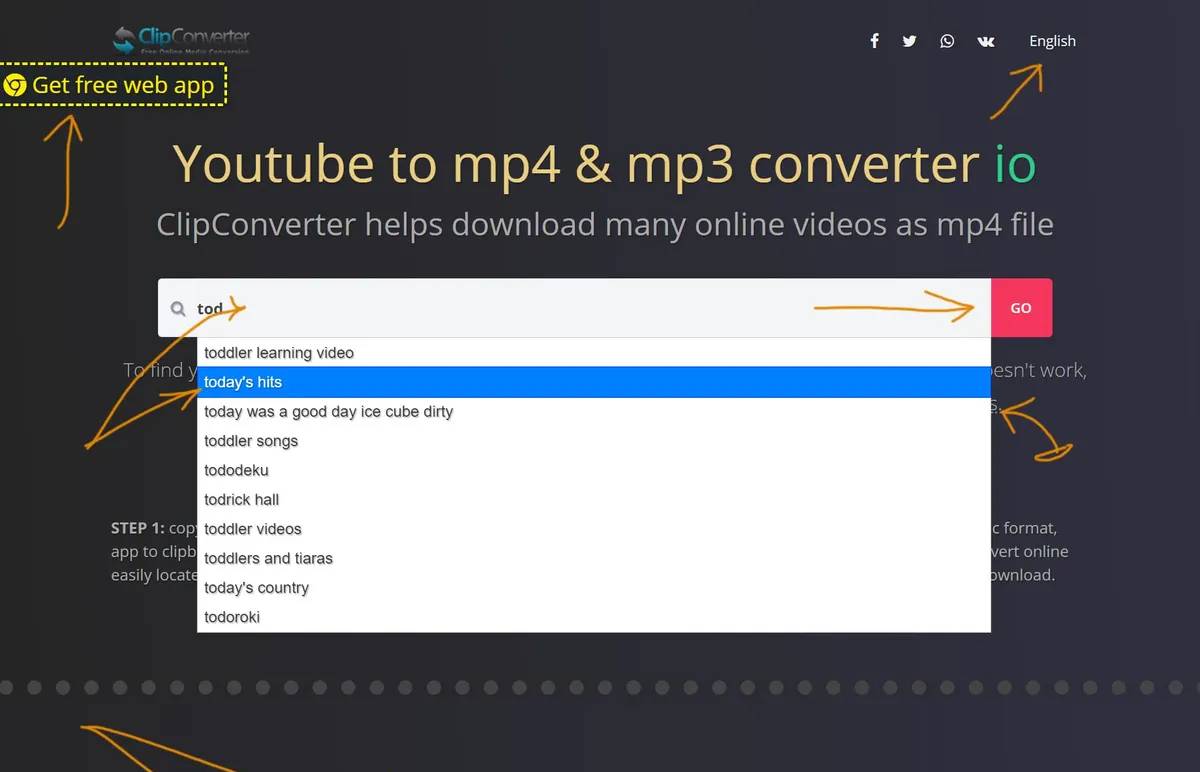
Clip Converter Io highlights the growing importance of online media conversion tools as users increasingly seek flexible ways to manage digital audio and video content. The platform reflects broader trends in content accessibility, workflow efficiency, and cloud-based software, serving individuals, creators, and businesses navigating an expanding digital media ecosystem.
Clip Converter Io is an online media conversion platform that enables users to convert compatible audio and video content into various file formats for personal workflow needs. The service illustrates the continued demand for browser-based productivity tools that eliminate the need for complex software installations.
As digital content creation accelerates across education, marketing, and entertainment sectors, media conversion platforms are becoming integral to content management processes. The broader market is also seeing increased expectations around speed, compatibility, and user-friendly experiences. Developers in this space continue enhancing performance while adapting to evolving browser technologies, device compatibility, and digital content standards.
The rapid expansion of digital content has significantly increased demand for tools that simplify media management across multiple devices and platforms. Organizations, educators, content creators, and individual users frequently work with different file formats that require conversion for editing, storage, presentation, or distribution. Cloud-based utilities have emerged as practical alternatives to desktop software by providing faster access and cross-platform compatibility.
At the same time, the media conversion industry operates within an evolving legal and regulatory environment, where intellectual property rights, licensing agreements, and platform terms of service remain important considerations. As businesses increasingly adopt digital-first strategies, workflow automation and content interoperability continue driving investment in flexible software solutions. Clip Converter Io reflects this broader evolution toward lightweight, accessible digital productivity tools.
Technology analysts note that online media utilities continue gaining relevance because organizations increasingly rely on digital assets across marketing, training, communications, and entertainment. Experts suggest that successful platforms will differentiate themselves through performance, reliability, security, and compliance with applicable intellectual property frameworks.
While no specific official statements are directly associated with Clip Converter Io, industry observers emphasize that providers of media tools must continually adapt to changing browser standards, evolving file formats, and user expectations. Analysts also point to artificial intelligence as a future catalyst for smarter media processing, including automated optimization, format recommendations, and workflow enhancements. Long-term success is expected to depend on balancing convenience, innovation, and responsible digital content practices.
For businesses, media conversion platforms support operational efficiency by simplifying content preparation for marketing campaigns, training materials, customer communications, and multimedia publishing. Organizations evaluating digital workflow solutions increasingly prioritize compatibility, automation, and ease of use. Investors continue monitoring cloud-based productivity software as enterprises expand digital transformation initiatives.
Policymakers and regulators remain focused on copyright compliance, digital rights management, consumer protection, and responsible online platform operations. Companies operating in this sector will likely need to strengthen transparency, security, and adherence to applicable content usage standards while continuing to innovate in response to evolving market demands.
The market for online media conversion solutions is expected to expand as digital content production continues accelerating across industries. Decision-makers should monitor advances in artificial intelligence, browser technologies, cloud infrastructure, and digital rights frameworks. Platforms that combine speed, security, regulatory awareness, and seamless user experiences will be well positioned to support the next generation of digital content workflows.
Source: AlternativeTo
Date: July 28, 2026


