
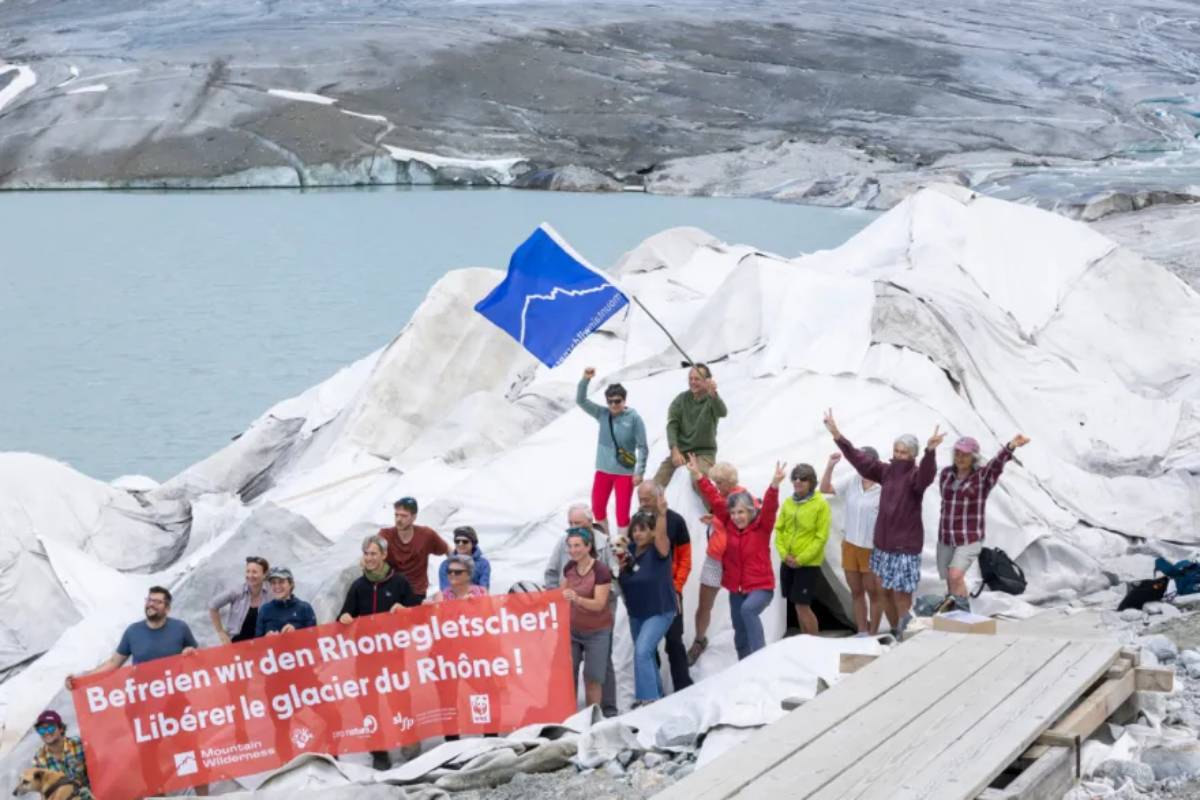
Climate Petition Targets Rhône Glacier Cave

The petition argues that the constructed ice cave accelerates environmental stress on the already retreating Rhône Glacier, one of Switzerland’s most closely monitored climate indicators.

July 29, 2026
|
Image Source: Swiss Info

A growing environmental petition is calling for the removal of the artificial tourist ice cave at Switzerland’s Rhône Glacier, citing accelerating climate degradation and ecological disruption. The debate highlights the tension between tourism-driven economic activity and urgent climate adaptation strategies in fragile alpine ecosystems increasingly threatened by glacial retreat.

The petition argues that the constructed ice cave accelerates environmental stress on the already retreating Rhône Glacier, one of Switzerland’s most closely monitored climate indicators. Environmental groups and scientists have raised concerns over human intervention in sensitive glacial zones.

The attraction has been a popular tourism site, drawing visitors interested in experiencing glacial interiors. However, critics say its maintenance may contribute to further destabilization of the ice structure.

Authorities and local stakeholders are now facing pressure to reassess the long-term viability of such installations, balancing tourism revenue against environmental preservation and scientific conservation priorities.

Glaciers across the Alps have experienced unprecedented retreat over the past decades due to rising global temperatures. Switzerland, home to some of Europe’s most iconic glaciers, has been at the center of climate adaptation debates, particularly regarding tourism infrastructure in vulnerable ecosystems.

The Rhône Glacier has long served as both a natural landmark and a scientific reference point for climate monitoring. Over time, artificial interventions such as ice tunnels and tourist caves have been introduced to sustain visitor interest and local tourism economies.

However, as climate change accelerates glacial melt, such interventions are increasingly scrutinized. Environmental policy discussions in Switzerland now frequently weigh ecological preservation against regional economic dependence on seasonal tourism, particularly in alpine communities reliant on visitor traffic.

Climate scientists emphasize that even minimal structural interventions in glacial environments can influence melt patterns and structural stability. Researchers argue that tourism installations may inadvertently accelerate ice degradation by altering thermal and structural conditions.

A European climate policy analyst noted that “glacial tourism is reaching a tipping point where preservation must outweigh accessibility.” Environmental organizations are calling for stricter guidelines on infrastructure development in high-altitude sensitive zones.

However, tourism industry representatives argue that controlled access to glaciers helps raise public awareness about climate change. They suggest that removing such attractions could reduce educational engagement and economic support for alpine regions dependent on seasonal tourism flows.

For the tourism industry, the petition signals growing pressure to rethink climate-sensitive attractions and adopt more sustainable models of visitor engagement. Businesses operating in alpine tourism may face stricter environmental regulations and operational limitations.

For policymakers, the issue underscores the need to balance economic dependency on tourism with long-term ecological preservation strategies. Decisions regarding glacier infrastructure could set precedents for broader climate adaptation policies across Europe.

The situation also highlights increasing ESG scrutiny, where environmental impact considerations are becoming central to tourism investment, branding, and regulatory compliance frameworks.

Authorities are expected to review environmental assessments and stakeholder positions before making decisions on the glacier cave’s future. The outcome may influence broader policy on tourism infrastructure in sensitive climate zones. As glacier retreat accelerates, similar debates are likely to intensify across the Alpine region, shaping the future of sustainable mountain tourism.

Source: Swiss Info
Date: June 2026

  • Featured tools
Figstack AI
Free

Figstack AI is an intelligent assistant for developers that explains code, generates docstrings, converts code between languages, and analyzes time complexity helping you work smarter, not harder.

#
Coding
Learn more
Tome AI
Free

Tome AI is an AI-powered storytelling and presentation tool designed to help users create compelling narratives and presentations quickly and efficiently. It leverages advanced AI technologies to generate content, images, and animations based on user input.

#
Presentation
#
Startup Tools
Learn more

Learn more about future of AI

Join 80,000+ Ai enthusiast getting weekly updates on exciting AI tools.
Thank you! Your submission has been received!
Oops! Something went wrong while submitting the form.

Climate Petition Targets Rhône Glacier Cave

July 29, 2026

The petition argues that the constructed ice cave accelerates environmental stress on the already retreating Rhône Glacier, one of Switzerland’s most closely monitored climate indicators.

Image Source: Swiss Info

A growing environmental petition is calling for the removal of the artificial tourist ice cave at Switzerland’s Rhône Glacier, citing accelerating climate degradation and ecological disruption. The debate highlights the tension between tourism-driven economic activity and urgent climate adaptation strategies in fragile alpine ecosystems increasingly threatened by glacial retreat.

The petition argues that the constructed ice cave accelerates environmental stress on the already retreating Rhône Glacier, one of Switzerland’s most closely monitored climate indicators. Environmental groups and scientists have raised concerns over human intervention in sensitive glacial zones.

The attraction has been a popular tourism site, drawing visitors interested in experiencing glacial interiors. However, critics say its maintenance may contribute to further destabilization of the ice structure.

Authorities and local stakeholders are now facing pressure to reassess the long-term viability of such installations, balancing tourism revenue against environmental preservation and scientific conservation priorities.

Glaciers across the Alps have experienced unprecedented retreat over the past decades due to rising global temperatures. Switzerland, home to some of Europe’s most iconic glaciers, has been at the center of climate adaptation debates, particularly regarding tourism infrastructure in vulnerable ecosystems.

The Rhône Glacier has long served as both a natural landmark and a scientific reference point for climate monitoring. Over time, artificial interventions such as ice tunnels and tourist caves have been introduced to sustain visitor interest and local tourism economies.

However, as climate change accelerates glacial melt, such interventions are increasingly scrutinized. Environmental policy discussions in Switzerland now frequently weigh ecological preservation against regional economic dependence on seasonal tourism, particularly in alpine communities reliant on visitor traffic.

Climate scientists emphasize that even minimal structural interventions in glacial environments can influence melt patterns and structural stability. Researchers argue that tourism installations may inadvertently accelerate ice degradation by altering thermal and structural conditions.

A European climate policy analyst noted that “glacial tourism is reaching a tipping point where preservation must outweigh accessibility.” Environmental organizations are calling for stricter guidelines on infrastructure development in high-altitude sensitive zones.

However, tourism industry representatives argue that controlled access to glaciers helps raise public awareness about climate change. They suggest that removing such attractions could reduce educational engagement and economic support for alpine regions dependent on seasonal tourism flows.

For the tourism industry, the petition signals growing pressure to rethink climate-sensitive attractions and adopt more sustainable models of visitor engagement. Businesses operating in alpine tourism may face stricter environmental regulations and operational limitations.

For policymakers, the issue underscores the need to balance economic dependency on tourism with long-term ecological preservation strategies. Decisions regarding glacier infrastructure could set precedents for broader climate adaptation policies across Europe.

The situation also highlights increasing ESG scrutiny, where environmental impact considerations are becoming central to tourism investment, branding, and regulatory compliance frameworks.

Authorities are expected to review environmental assessments and stakeholder positions before making decisions on the glacier cave’s future. The outcome may influence broader policy on tourism infrastructure in sensitive climate zones. As glacier retreat accelerates, similar debates are likely to intensify across the Alpine region, shaping the future of sustainable mountain tourism.

Source: Swiss Info
Date: June 2026

Promote Your Tool

Copy Embed Code

Similar Blogs

July 29, 2026
|

EmulationStation Enhances Retro Gaming Experience

EmulationStation is a front-end interface designed to organize and present video game emulation libraries through a streamlined user experience.
Read more
July 29, 2026
|

Tomoson Expands Influencer Marketing Collaboration

Tomoson operates as an influencer marketing platform designed to help brands collaborate with content creators and manage promotional campaigns.
Read more
July 29, 2026
|

ZeroBin.net Advances Secure Data Sharing

ZeroBin.net operates as a privacy-oriented platform that allows users to share encrypted information through temporary digital channels.
Read more
July 29, 2026
|

Gaia Expands Digital Knowledge Access

Gaia operates within the broader category of digital platforms focused on information discovery, organization, and knowledge accessibility.
Read more
July 29, 2026
|

MailDrop Expands Privacy Email Solutions

MailDrop operates as a temporary email service designed to help users create disposable email addresses for online registrations and digital interactions.
Read more
July 29, 2026
|

MacX YouTube Downloader Enhances Video Management

MacX YouTube Downloader is a multimedia software solution designed to support video downloading, conversion, and management from online platforms.
Read more