
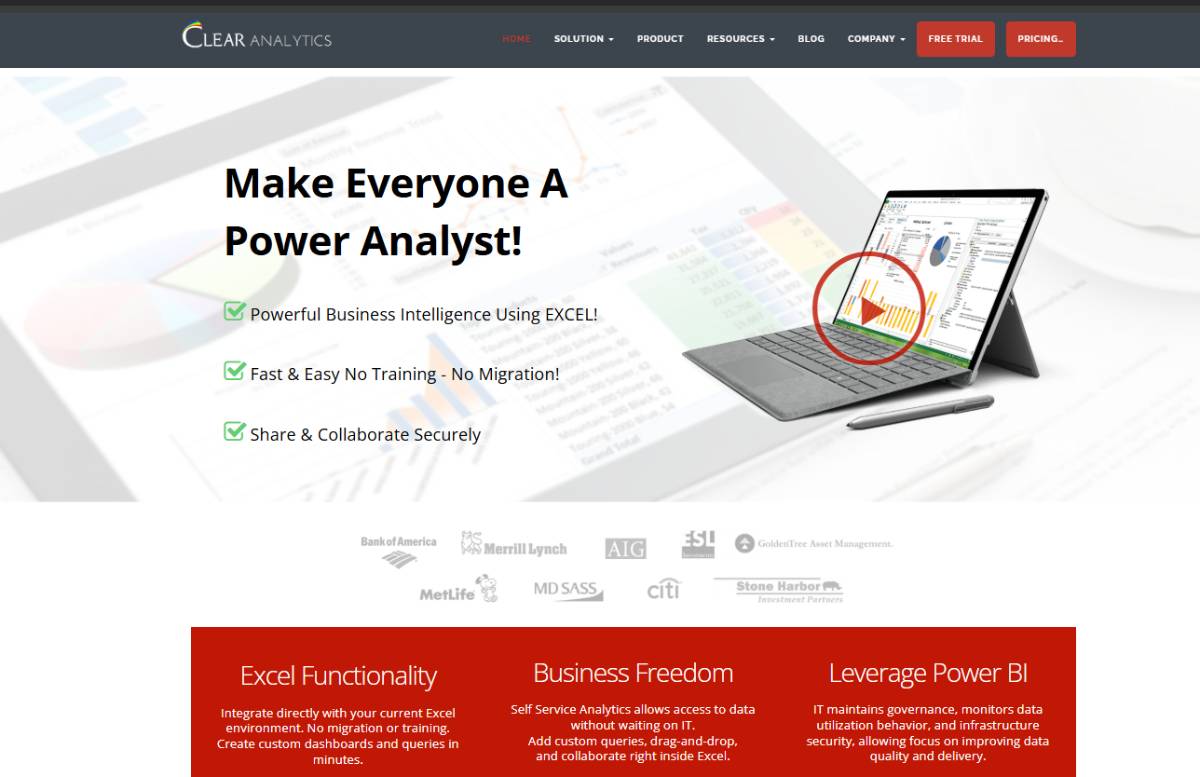
Clear Analytics Advances Data Driven Decision-Making

Clear Analytics is positioned within the expanding business analytics landscape, where organizations are seeking practical ways to analyze and present information without creating excessive technical complexity.

August 11, 2026
|

Clear Analytics highlights the growing role of accessible analytics tools in helping organizations convert business data into actionable intelligence. As enterprises face increasingly complex datasets and faster decision cycles, analytics platforms are becoming central to reporting, forecasting and performance management, giving executives greater visibility into operations and supporting more informed strategic decisions.

Clear Analytics is positioned within the expanding business analytics landscape, where organizations are seeking practical ways to analyze and present information without creating excessive technical complexity. Analytics capabilities can support data reporting, visualization, business intelligence and performance analysis across multiple organizational functions.

The shift toward self-service analytics is particularly significant as companies seek to reduce dependence on specialized technical teams for routine reporting. Business users increasingly expect tools that can connect with existing data sources while producing understandable insights.

For executives, the priority is moving from simply collecting information toward establishing faster, more consistent and evidence-based decision-making processes. The development aligns with a broader transformation in enterprise technology as businesses increasingly treat data as a strategic asset. Organizations across industries are generating information from financial systems, customer platforms, operational applications and digital channels, creating both opportunities and challenges for leadership teams.

Traditional reporting processes can require significant manual effort, particularly when information is distributed across multiple systems. Modern analytics platforms seek to address this challenge by making data analysis more accessible to business users.

The rise of cloud computing, automation and artificial intelligence is further accelerating this transition. Companies are increasingly evaluating analytics solutions not only for reporting capabilities but also for scalability, integration and ease of use.

Against this backdrop, platforms such as Clear Analytics reflect the wider movement toward democratizing data analysis. The objective is to give more employees access to meaningful business intelligence while helping leadership teams make decisions using timely and consolidated information.

Industry analysts consistently emphasize accessibility, data quality and integration as important factors in successful analytics adoption. From a management perspective, analytics technology creates the greatest value when employees can interpret information effectively and connect insights to measurable business outcomes.

Technology leaders also increasingly recognize that analytics adoption requires more than deploying software. Organizations need appropriate data governance, user training and clearly defined performance metrics to ensure that insights are reliable and actionable.

For enterprise decision-makers, another consideration is the balance between sophisticated analytical capabilities and usability. A platform can provide extensive functionality, but its strategic value may be limited if employees struggle to use it effectively.

The broader market therefore points toward analytics solutions that combine accessibility with dependable data management. As organizations become more data-driven, the ability to deliver relevant information to decision-makers quickly is becoming an increasingly important competitive capability.

For businesses, improved analytics can strengthen operational visibility, financial planning and performance monitoring. Executives can use consolidated information to identify trends, evaluate results and respond more quickly to changing market conditions.

Investors may view effective analytics infrastructure as an indicator of an organization's broader digital maturity, particularly when data is incorporated into strategic planning and operational management.

Employees can also benefit from self-service access to business information, reducing reliance on manual reporting processes. However, organizations must maintain appropriate controls around data accuracy, security and access.

From a policy perspective, greater use of analytics reinforces the importance of responsible data governance. Enterprises will need to balance accessibility with privacy, security and regulatory requirements as data becomes increasingly central to corporate decision-making.

The analytics sector is expected to continue evolving toward more automated, accessible and intelligent decision-support environments. Organizations will increasingly assess platforms based on integration, scalability, usability and the quality of insights they deliver. Executives should monitor developments in AI-assisted analytics, automated reporting and data governance. The long-term winners will be platforms that make complex business information easier to understand while maintaining trust, accuracy and control.

Source: Crozdesk
Date: August 11, 2026

  • Featured tools
Wonder AI
Free

Wonder AI is a versatile AI-powered creative platform that generates text, images, and audio with minimal input, designed for fast storytelling, visual creation, and audio content generation

#
Art Generator
Learn more
Outplay AI
Free

Outplay AI is a dynamic sales engagement platform combining AI-powered outreach, multi-channel automation, and performance tracking to help teams optimize conversion and pipeline generation.

#
Sales
Learn more

Learn more about future of AI

Join 80,000+ Ai enthusiast getting weekly updates on exciting AI tools.
Thank you! Your submission has been received!
Oops! Something went wrong while submitting the form.

Clear Analytics Advances Data Driven Decision-Making

August 11, 2026

Clear Analytics is positioned within the expanding business analytics landscape, where organizations are seeking practical ways to analyze and present information without creating excessive technical complexity.

Clear Analytics highlights the growing role of accessible analytics tools in helping organizations convert business data into actionable intelligence. As enterprises face increasingly complex datasets and faster decision cycles, analytics platforms are becoming central to reporting, forecasting and performance management, giving executives greater visibility into operations and supporting more informed strategic decisions.

Clear Analytics is positioned within the expanding business analytics landscape, where organizations are seeking practical ways to analyze and present information without creating excessive technical complexity. Analytics capabilities can support data reporting, visualization, business intelligence and performance analysis across multiple organizational functions.

The shift toward self-service analytics is particularly significant as companies seek to reduce dependence on specialized technical teams for routine reporting. Business users increasingly expect tools that can connect with existing data sources while producing understandable insights.

For executives, the priority is moving from simply collecting information toward establishing faster, more consistent and evidence-based decision-making processes. The development aligns with a broader transformation in enterprise technology as businesses increasingly treat data as a strategic asset. Organizations across industries are generating information from financial systems, customer platforms, operational applications and digital channels, creating both opportunities and challenges for leadership teams.

Traditional reporting processes can require significant manual effort, particularly when information is distributed across multiple systems. Modern analytics platforms seek to address this challenge by making data analysis more accessible to business users.

The rise of cloud computing, automation and artificial intelligence is further accelerating this transition. Companies are increasingly evaluating analytics solutions not only for reporting capabilities but also for scalability, integration and ease of use.

Against this backdrop, platforms such as Clear Analytics reflect the wider movement toward democratizing data analysis. The objective is to give more employees access to meaningful business intelligence while helping leadership teams make decisions using timely and consolidated information.

Industry analysts consistently emphasize accessibility, data quality and integration as important factors in successful analytics adoption. From a management perspective, analytics technology creates the greatest value when employees can interpret information effectively and connect insights to measurable business outcomes.

Technology leaders also increasingly recognize that analytics adoption requires more than deploying software. Organizations need appropriate data governance, user training and clearly defined performance metrics to ensure that insights are reliable and actionable.

For enterprise decision-makers, another consideration is the balance between sophisticated analytical capabilities and usability. A platform can provide extensive functionality, but its strategic value may be limited if employees struggle to use it effectively.

The broader market therefore points toward analytics solutions that combine accessibility with dependable data management. As organizations become more data-driven, the ability to deliver relevant information to decision-makers quickly is becoming an increasingly important competitive capability.

For businesses, improved analytics can strengthen operational visibility, financial planning and performance monitoring. Executives can use consolidated information to identify trends, evaluate results and respond more quickly to changing market conditions.

Investors may view effective analytics infrastructure as an indicator of an organization's broader digital maturity, particularly when data is incorporated into strategic planning and operational management.

Employees can also benefit from self-service access to business information, reducing reliance on manual reporting processes. However, organizations must maintain appropriate controls around data accuracy, security and access.

From a policy perspective, greater use of analytics reinforces the importance of responsible data governance. Enterprises will need to balance accessibility with privacy, security and regulatory requirements as data becomes increasingly central to corporate decision-making.

The analytics sector is expected to continue evolving toward more automated, accessible and intelligent decision-support environments. Organizations will increasingly assess platforms based on integration, scalability, usability and the quality of insights they deliver. Executives should monitor developments in AI-assisted analytics, automated reporting and data governance. The long-term winners will be platforms that make complex business information easier to understand while maintaining trust, accuracy and control.

Source: Crozdesk
Date: August 11, 2026

Promote Your Tool

Copy Embed Code

Similar Blogs

August 14, 2026
|

Benefitfocus Expands Digital Benefits Administration

Benefitfocus provides cloud-based technology covering benefits enrollment, administration, communications, billing, payments and data exchange.
Read more
August 14, 2026
|

Travel Agent Revenue Models Evolve Digitally

Travel agencies can earn commissions when customers book hotels, cruises, tours, vacation packages and other travel products through them. Suppliers may pay agents for generating bookings, making commissions a traditional component of agency revenue.
Read more
August 14, 2026
|

Sofon Advances Guided Selling CPQ Automation

Sofon's platform combines guided selling, product configuration, pricing, quotation and sales-management capabilities. Guided questionnaires help sales teams identify customer requirements and translate them into suitable product configurations.
Read more
August 14, 2026
|

WellRyde Advances Medical Transportation Management

WellRyde provides technology for managing non-emergency medical transportation operations, including trip scheduling, dispatch coordination, transportation-provider management and reporting.
Read more
August 14, 2026
|

Review WAVE Advances Digital Patient Engagement

Review WAVE provides healthcare practices with tools for online appointment scheduling, two-way texting, automated appointment reminders, digital forms, web chat, marketing campaigns and online review generation.
Read more
August 14, 2026
|

Edgenuity Expands Digital Virtual Education

Edgenuity provides digital curriculum and learning solutions covering core academic subjects, electives, Advanced Placement and career-oriented education.
Read more