
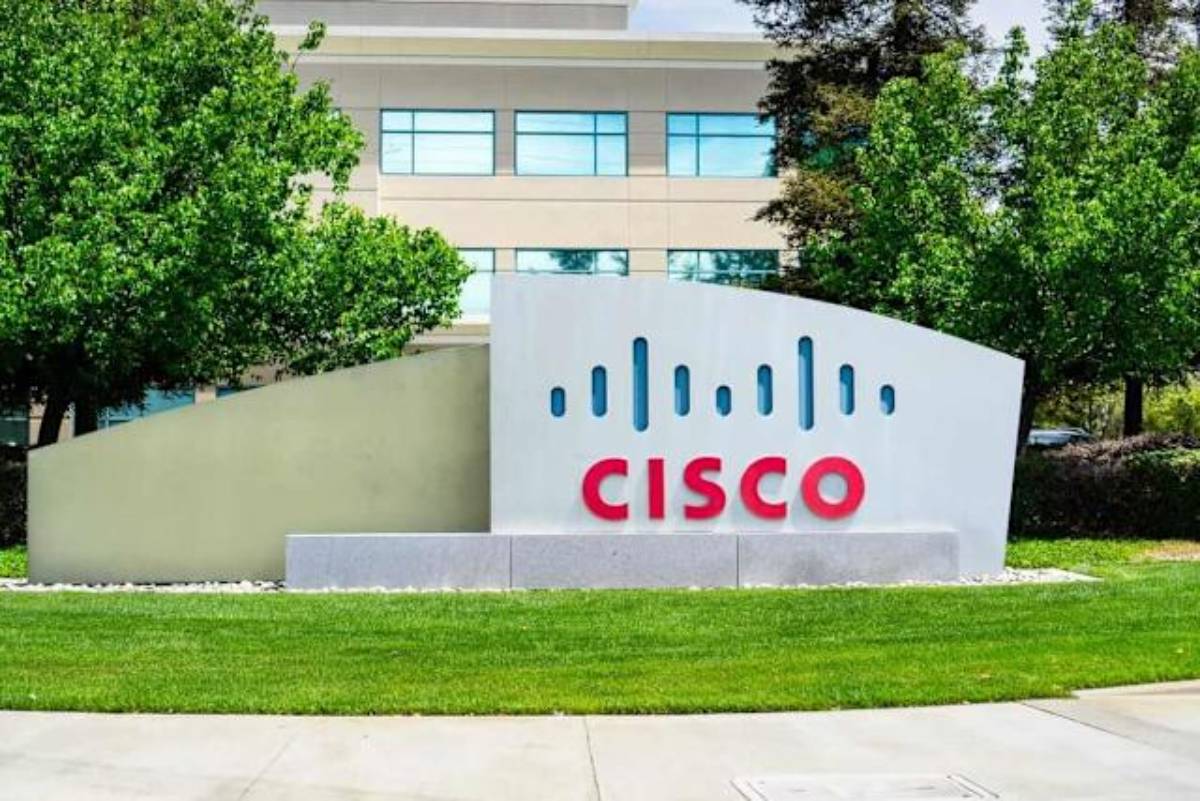
Cisco Unveils AI Security Push for Autonomous Agents

Cisco introduced advanced security offerings designed to address risks associated with autonomous AI agents interacting across networks and systems. The initiative focuses on safeguarding enterprise environments where AI systems can independently execute tasks.

March 30, 2026
|

A major development unfolded as Cisco launched a new suite of security services aimed at protecting enterprises from emerging threats posed by AI agents. The move signals a strategic shift in cybersecurity, with implications for global businesses navigating increasingly autonomous and interconnected digital ecosystems.

Cisco introduced advanced security offerings designed to address risks associated with autonomous AI agents interacting across networks and systems. The initiative focuses on safeguarding enterprise environments where AI systems can independently execute tasks, communicate with other agents, and access sensitive data.

Key elements include enhanced threat detection, identity management, and behavioral monitoring tailored for machine-driven interactions. The launch comes as organizations rapidly deploy generative and agentic AI tools, raising concerns about unintended consequences and malicious exploitation. Cisco positions its services as a proactive response to a new class of cyber threats, where both humans and AI systems can act as potential attack vectors.

The development aligns with a broader trend across global markets where AI adoption is fundamentally transforming cybersecurity paradigms. Traditional security frameworks were designed for human-driven activity, but the rise of autonomous agents introduces new vulnerabilities.

AI agents can operate at scale, make decisions in real time, and interact with multiple systems simultaneously amplifying both efficiency and risk. This shift has prompted enterprises to rethink identity verification, access controls, and threat detection mechanisms.

Geopolitically, the increasing use of AI in critical infrastructure, defense, and financial systems has elevated cybersecurity to a national priority. Governments and regulators are pushing for stronger safeguards, while companies race to innovate. Cisco’s move reflects growing industry recognition that securing AI-to-AI interactions is becoming as critical as protecting human users.

Industry analysts suggest that Cisco’s initiative highlights a turning point in cybersecurity, where machine identity and behavior become central to defense strategies. Experts note that AI agents can unintentionally create vulnerabilities if not properly governed, especially when operating across decentralized systems.

Security professionals emphasize the need for continuous monitoring and adaptive controls, as static defenses are insufficient against dynamic AI-driven threats. Observers also point out that the convergence of AI and cybersecurity is creating new market opportunities, with vendors racing to develop specialized solutions for agentic environments.

From an enterprise perspective, the ability to secure autonomous systems is rapidly becoming a competitive differentiator, particularly in sectors handling sensitive data and critical operations.

For global executives, Cisco’s move underscores the urgency of integrating AI-specific security measures into digital transformation strategies. Businesses deploying AI agents must now consider not only performance but also governance, monitoring, and risk mitigation.

Investors may view cybersecurity firms with AI-focused capabilities as key beneficiaries of the next wave of enterprise spending. From a policy standpoint, regulators are likely to intensify scrutiny סביב AI deployments, particularly in sectors such as finance, healthcare, and infrastructure. Organizations that fail to address AI-related security risks could face operational disruptions, regulatory penalties, and reputational damage in an increasingly automated world.

Looking ahead, the cybersecurity landscape is expected to evolve rapidly as AI agents become more prevalent across industries. Companies will need to adopt adaptive, AI-driven security frameworks to keep pace with emerging threats.

Decision-makers should monitor advancements in agentic security and regulatory developments closely. The future of cybersecurity will hinge on the ability to secure not just people but intelligent machines acting on their behalf.

Source: Yahoo Finan
Date:
March 2026

  • Featured tools
Scalenut AI
Free

Scalenut AI is an all-in-one SEO content platform that combines AI-driven writing, keyword research, competitor insights, and optimization tools to help you plan, create, and rank content.

#
SEO
Learn more
Hostinger Horizons
Freemium

Hostinger Horizons is an AI-powered platform that allows users to build and deploy custom web applications without writing code. It packs hosting, domain management and backend integration into a unified tool for rapid app creation.

#
Startup Tools
#
Coding
#
Project Management
Learn more

Learn more about future of AI

Join 80,000+ Ai enthusiast getting weekly updates on exciting AI tools.
Thank you! Your submission has been received!
Oops! Something went wrong while submitting the form.

Cisco Unveils AI Security Push for Autonomous Agents

March 30, 2026

Cisco introduced advanced security offerings designed to address risks associated with autonomous AI agents interacting across networks and systems. The initiative focuses on safeguarding enterprise environments where AI systems can independently execute tasks.

A major development unfolded as Cisco launched a new suite of security services aimed at protecting enterprises from emerging threats posed by AI agents. The move signals a strategic shift in cybersecurity, with implications for global businesses navigating increasingly autonomous and interconnected digital ecosystems.

Cisco introduced advanced security offerings designed to address risks associated with autonomous AI agents interacting across networks and systems. The initiative focuses on safeguarding enterprise environments where AI systems can independently execute tasks, communicate with other agents, and access sensitive data.

Key elements include enhanced threat detection, identity management, and behavioral monitoring tailored for machine-driven interactions. The launch comes as organizations rapidly deploy generative and agentic AI tools, raising concerns about unintended consequences and malicious exploitation. Cisco positions its services as a proactive response to a new class of cyber threats, where both humans and AI systems can act as potential attack vectors.

The development aligns with a broader trend across global markets where AI adoption is fundamentally transforming cybersecurity paradigms. Traditional security frameworks were designed for human-driven activity, but the rise of autonomous agents introduces new vulnerabilities.

AI agents can operate at scale, make decisions in real time, and interact with multiple systems simultaneously amplifying both efficiency and risk. This shift has prompted enterprises to rethink identity verification, access controls, and threat detection mechanisms.

Geopolitically, the increasing use of AI in critical infrastructure, defense, and financial systems has elevated cybersecurity to a national priority. Governments and regulators are pushing for stronger safeguards, while companies race to innovate. Cisco’s move reflects growing industry recognition that securing AI-to-AI interactions is becoming as critical as protecting human users.

Industry analysts suggest that Cisco’s initiative highlights a turning point in cybersecurity, where machine identity and behavior become central to defense strategies. Experts note that AI agents can unintentionally create vulnerabilities if not properly governed, especially when operating across decentralized systems.

Security professionals emphasize the need for continuous monitoring and adaptive controls, as static defenses are insufficient against dynamic AI-driven threats. Observers also point out that the convergence of AI and cybersecurity is creating new market opportunities, with vendors racing to develop specialized solutions for agentic environments.

From an enterprise perspective, the ability to secure autonomous systems is rapidly becoming a competitive differentiator, particularly in sectors handling sensitive data and critical operations.

For global executives, Cisco’s move underscores the urgency of integrating AI-specific security measures into digital transformation strategies. Businesses deploying AI agents must now consider not only performance but also governance, monitoring, and risk mitigation.

Investors may view cybersecurity firms with AI-focused capabilities as key beneficiaries of the next wave of enterprise spending. From a policy standpoint, regulators are likely to intensify scrutiny סביב AI deployments, particularly in sectors such as finance, healthcare, and infrastructure. Organizations that fail to address AI-related security risks could face operational disruptions, regulatory penalties, and reputational damage in an increasingly automated world.

Looking ahead, the cybersecurity landscape is expected to evolve rapidly as AI agents become more prevalent across industries. Companies will need to adopt adaptive, AI-driven security frameworks to keep pace with emerging threats.

Decision-makers should monitor advancements in agentic security and regulatory developments closely. The future of cybersecurity will hinge on the ability to secure not just people but intelligent machines acting on their behalf.

Source: Yahoo Finan
Date:
March 2026

Promote Your Tool

Copy Embed Code

Similar Blogs

April 13, 2026
|

Rudi AI Emerges in Automation Space

Rudi-AI presents itself as an AI automation platform built around intelligent agents capable of executing structured tasks and supporting workflow optimization.
Read more
April 13, 2026
|

Manus AI Redefines Autonomous Workflows

Manus introduces an AI agent model designed to move beyond conversational assistance into task execution, workflow automation, and multi-step decision support.
Read more
April 13, 2026
|

Otter AI Reshapes Meeting Intelligence

Otter.ai continues to expand its position in the enterprise AI collaboration space by offering automated meeting transcription, summarization, and insight generation.
Read more
April 13, 2026
|

InVideo AI Expands Video Automation Platform

InVideo is positioning itself within the expanding generative AI ecosystem by offering tools that enable users to create videos through automated prompts and templates.
Read more
April 13, 2026
|

US Urged to Lead Global AI Race

Sundar Pichai stated in a televised interview that the United States should take a leading role in artificial intelligence development to ensure technological competitiveness and strategic advantage.
Read more
April 13, 2026
|

AI Megacap Valuation Reset Sparks Timing Debate

The stock part of the dominant group of large-cap U.S. technology firms often referred to as the “Magnificent Seven” has experienced renewed price pressure despite continued investor interest in artificial intelligence exposure.
Read more