



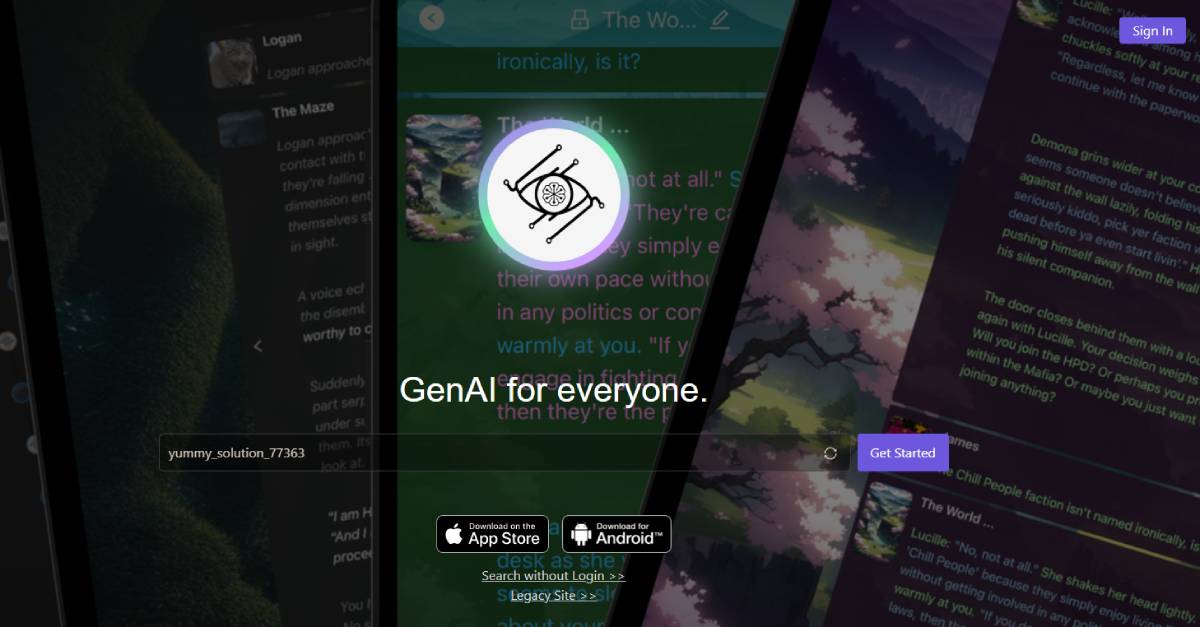
A notable shift in the AI consumer landscape is emerging as Chub AI gains traction as a platform for interactive character-driven conversations. Positioned within the expanding AI companionship ecosystem, the platform reflects growing demand for immersive, user-generated AI personas, raising new questions around digital identity, engagement models, and content governance in generative AI systems.
Chub AI operates as a community-driven platform enabling users to create, share, and interact with AI-generated characters. These characters are designed for conversational engagement, storytelling, and roleplay experiences, allowing highly personalized interactions.
The platform’s growth reflects broader adoption of AI companions across consumer segments seeking entertainment, creative expression, and social interaction. As AI-generated personas become more sophisticated, platforms like Chub AI are increasingly positioned at the intersection of social networking and generative AI infrastructure. This evolution is occurring alongside rising competition in AI chatbot ecosystems and expanding creator-driven digital economies.
The rise of AI character platforms such as Chub AI aligns with a broader trend in generative AI: the shift from productivity tools toward emotionally and socially engaging systems. While early AI adoption focused on search, automation, and content generation, newer applications emphasize personalization and immersive interaction.
This trend builds on the evolution of online roleplay communities, gaming ecosystems, and social simulation platforms, now enhanced by large language models. The convergence of AI and digital identity creation is reshaping how users interact with technology, blurring boundaries between entertainment, companionship, and creative storytelling.
At the same time, the industry faces increasing scrutiny around content moderation, user safety, and ethical design. Regulators and platform operators are navigating complex challenges related to AI-generated personas, including transparency, consent, and potential misuse in highly personalized environments.
Industry analysts note that AI character platforms represent a rapidly expanding niche within the broader generative AI economy. They argue that demand is being driven less by productivity use cases and more by experiential engagement particularly among younger digital-native users.
While formal executive commentary from Chub AI remains limited publicly, the platform’s positioning reflects a clear alignment with user-generated AI ecosystems, where community participation drives content creation and platform growth.
Experts highlight both opportunity and risk. On one hand, such platforms unlock new monetization models based on subscriptions, premium characters, and creator economies. On the other, they raise concerns about content governance, emotional dependency, and the need for clearer boundaries between simulated interaction and real-world social behavior. Analysts suggest that regulatory frameworks may eventually need to address AI companionship as a distinct category within digital services.
For businesses, the growth of platforms like Chub AI signals an expansion of AI beyond enterprise use cases into consumer emotional engagement markets. This creates opportunities in advertising, subscription models, and creator-driven ecosystems.
However, it also introduces regulatory and reputational considerations. Companies operating in this space may face increasing scrutiny around user safety, age-appropriate content, and psychological impact. Investors are likely to evaluate whether AI companionship platforms can sustain long-term engagement without regulatory pushback.
For policymakers, the rise of AI-driven social simulation tools may require updated guidelines that distinguish between entertainment AI and functional AI systems, particularly as usage becomes more immersive and persistent.
Looking ahead, AI character platforms are expected to evolve toward more lifelike, persistent, and multimodal experiences. Chub AI and similar platforms may expand integrations with voice, memory systems, and cross-platform identity frameworks. The key challenge will be balancing engagement with responsible design. Decision-makers should watch for regulatory developments, platform monetization shifts, and growing competition in the AI companionship sector as it matures into a mainstream digital category.
Source: Chub AI
Date: May 26, 2026


