
C-Green Turns Sewage Into Resources

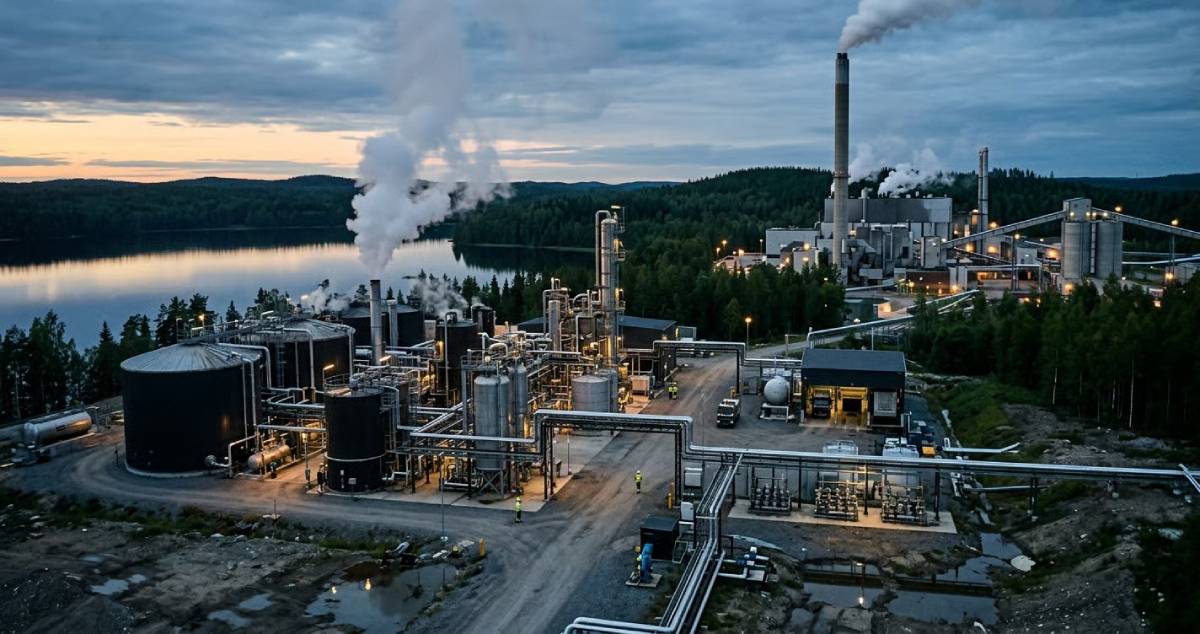
C-Green has secured SEK 40 million in funding to scale its hydrothermal carbonization technology, which transforms sewage sludge and organic waste into hydrochar—a carbon-rich material with multiple industrial applications.

July 2, 2026
|
Image Source:  Nordic Tech News

A breakthrough in circular economy innovation is gaining momentum as C-Green raises SEK 40 million to commercialize its technology for converting sewage sludge into valuable industrial materials. The development signals growing investor interest in waste-to-value solutions and sustainable infrastructure technologies across Europe’s green economy ecosystem.

C-Green has secured SEK 40 million in funding to scale its hydrothermal carbonization technology, which transforms sewage sludge and organic waste into hydrochar a carbon-rich material with multiple industrial applications.

The funding will support expansion of production capacity, commercialization efforts, and deployment of new waste-processing facilities, particularly in urban and industrial regions facing increasing pressure to manage wastewater sustainably.

The company’s approach targets municipalities, utilities, and industrial operators seeking cost-efficient and environmentally responsible alternatives to traditional waste disposal methods, while also creating new revenue streams from processed waste materials.

Waste management is becoming a critical challenge for modern economies as urban populations grow and environmental regulations tighten. Traditional sewage treatment methods often generate large volumes of sludge that require costly disposal and present environmental risks.

In response, the circular economy model has gained traction, focusing on converting waste into usable resources. Technologies such as hydrothermal carbonization are increasingly being explored as scalable solutions that can transform organic waste into energy-rich materials and industrial inputs.

Europe has been at the forefront of this transition, driven by strict environmental regulations and strong policy support for sustainability innovation. Countries such as Sweden are actively investing in climate technologies that reduce landfill dependency and support carbon reduction targets.

C-Green operates within this broader ecosystem, aiming to bridge the gap between environmental compliance and commercial viability by turning waste streams into economically valuable outputs.

Environmental technology analysts view waste-to-value innovations as a critical component of the global transition toward a circular economy. They note that technologies like hydrothermal carbonization could significantly reduce municipal waste management costs while also contributing to carbon reduction goals.

Industry experts highlight that scalability remains a key challenge, as infrastructure investments, regulatory approvals, and long-term supply contracts are required to make such systems commercially viable at scale.

Sustainability researchers emphasize that investor interest in companies like C-Green reflects growing confidence in climate-tech business models that combine environmental impact with revenue generation potential. However, they also caution that adoption rates will depend on policy incentives, pricing structures for waste processing, and integration with existing municipal systems.

Overall, the sector is seen as emerging but strategically important in Europe’s long-term environmental and industrial transformation agenda. For municipalities and utility providers, C-Green’s technology offers a potential shift from cost-heavy waste disposal to revenue-generating resource recovery systems.

For investors, the funding round signals continued growth in the climate-tech and circular economy sectors, particularly in waste management innovation and sustainable infrastructure solutions.

For policymakers, the development supports broader environmental objectives, including landfill reduction, carbon neutrality targets, and resource efficiency strategies. It also highlights the need for supportive regulatory frameworks that enable commercialization of emerging environmental technologies while ensuring environmental safety and operational reliability across municipal systems.

The next phase for C-Green will focus on scaling its technology and securing long-term partnerships with municipalities and industrial operators. Market adoption will depend on cost competitiveness, regulatory alignment, and infrastructure readiness.

If successful, hydrothermal carbonization could become a key pillar in Europe’s circular economy transition, transforming wastewater management from a cost center into a resource-generating industry.

Source: Nordic Tech News
Date: July 2, 2026

  • Featured tools
Surfer AI
Free

Surfer AI is an AI-powered content creation assistant built into the Surfer SEO platform, designed to generate SEO-optimized articles from prompts, leveraging data from search results to inform tone, structure, and relevance.

#
SEO
Learn more
Copy Ai
Free

Copy AI is one of the most popular AI writing tools designed to help professionals create high-quality content quickly. Whether you are a product manager drafting feature descriptions or a marketer creating ad copy, Copy AI can save hours of work while maintaining creativity and tone.

#
Copywriting
Learn more

Learn more about future of AI

Join 80,000+ Ai enthusiast getting weekly updates on exciting AI tools.
Thank you! Your submission has been received!
Oops! Something went wrong while submitting the form.

C-Green Turns Sewage Into Resources

July 2, 2026

C-Green has secured SEK 40 million in funding to scale its hydrothermal carbonization technology, which transforms sewage sludge and organic waste into hydrochar—a carbon-rich material with multiple industrial applications.

Image Source:  Nordic Tech News

A breakthrough in circular economy innovation is gaining momentum as C-Green raises SEK 40 million to commercialize its technology for converting sewage sludge into valuable industrial materials. The development signals growing investor interest in waste-to-value solutions and sustainable infrastructure technologies across Europe’s green economy ecosystem.

C-Green has secured SEK 40 million in funding to scale its hydrothermal carbonization technology, which transforms sewage sludge and organic waste into hydrochar a carbon-rich material with multiple industrial applications.

The funding will support expansion of production capacity, commercialization efforts, and deployment of new waste-processing facilities, particularly in urban and industrial regions facing increasing pressure to manage wastewater sustainably.

The company’s approach targets municipalities, utilities, and industrial operators seeking cost-efficient and environmentally responsible alternatives to traditional waste disposal methods, while also creating new revenue streams from processed waste materials.

Waste management is becoming a critical challenge for modern economies as urban populations grow and environmental regulations tighten. Traditional sewage treatment methods often generate large volumes of sludge that require costly disposal and present environmental risks.

In response, the circular economy model has gained traction, focusing on converting waste into usable resources. Technologies such as hydrothermal carbonization are increasingly being explored as scalable solutions that can transform organic waste into energy-rich materials and industrial inputs.

Europe has been at the forefront of this transition, driven by strict environmental regulations and strong policy support for sustainability innovation. Countries such as Sweden are actively investing in climate technologies that reduce landfill dependency and support carbon reduction targets.

C-Green operates within this broader ecosystem, aiming to bridge the gap between environmental compliance and commercial viability by turning waste streams into economically valuable outputs.

Environmental technology analysts view waste-to-value innovations as a critical component of the global transition toward a circular economy. They note that technologies like hydrothermal carbonization could significantly reduce municipal waste management costs while also contributing to carbon reduction goals.

Industry experts highlight that scalability remains a key challenge, as infrastructure investments, regulatory approvals, and long-term supply contracts are required to make such systems commercially viable at scale.

Sustainability researchers emphasize that investor interest in companies like C-Green reflects growing confidence in climate-tech business models that combine environmental impact with revenue generation potential. However, they also caution that adoption rates will depend on policy incentives, pricing structures for waste processing, and integration with existing municipal systems.

Overall, the sector is seen as emerging but strategically important in Europe’s long-term environmental and industrial transformation agenda. For municipalities and utility providers, C-Green’s technology offers a potential shift from cost-heavy waste disposal to revenue-generating resource recovery systems.

For investors, the funding round signals continued growth in the climate-tech and circular economy sectors, particularly in waste management innovation and sustainable infrastructure solutions.

For policymakers, the development supports broader environmental objectives, including landfill reduction, carbon neutrality targets, and resource efficiency strategies. It also highlights the need for supportive regulatory frameworks that enable commercialization of emerging environmental technologies while ensuring environmental safety and operational reliability across municipal systems.

The next phase for C-Green will focus on scaling its technology and securing long-term partnerships with municipalities and industrial operators. Market adoption will depend on cost competitiveness, regulatory alignment, and infrastructure readiness.

If successful, hydrothermal carbonization could become a key pillar in Europe’s circular economy transition, transforming wastewater management from a cost center into a resource-generating industry.

Source: Nordic Tech News
Date: July 2, 2026

Promote Your Tool

Copy Embed Code

Similar Blogs

July 2, 2026
|

Switzerland Delays e-ID Security Upgrade

Swiss authorities have postponed the introduction of the national e-ID system, originally planned as part of the country’s digital transformation agenda.
Read more
July 2, 2026
|

ICEYE Raises €1B Space Eyes

ICEYE, a Finnish space technology company, has raised €1 billion in a major funding round led by General Atlantic.
Read more
July 2, 2026
|

Rotomate Replaces Factory Expertise AI

Rotomate, an industrial AI startup, has raised €2.1 million in pre-seed funding to address a growing workforce challenge in manufacturing: the retirement of experienced factory specialists.
Read more
July 2, 2026
|

Skyfora Builds Telecom Climate Intelligence

Skyfora has secured €6.5 million in fresh funding to expand its satellite-assisted weather intelligence platform. The company leverages GNSS signal distortion data from telecom infrastructure to generate hyper-local weather insights.
Read more
July 2, 2026
|

Omda Expands Public Safety Stack

Omda has acquired a public safety and emergency software division from Saab, a unit focused on critical incident management and emergency response systems.
Read more
July 2, 2026
|

Nordic Capital Backs Defense Tech

Sandwater, in partnership with Gardar Fund, has secured €80 million in fresh capital commitments aimed at Ukrainian defense and dual-use technology startups.
Read more