
BuildBook Advances Construction Project Management

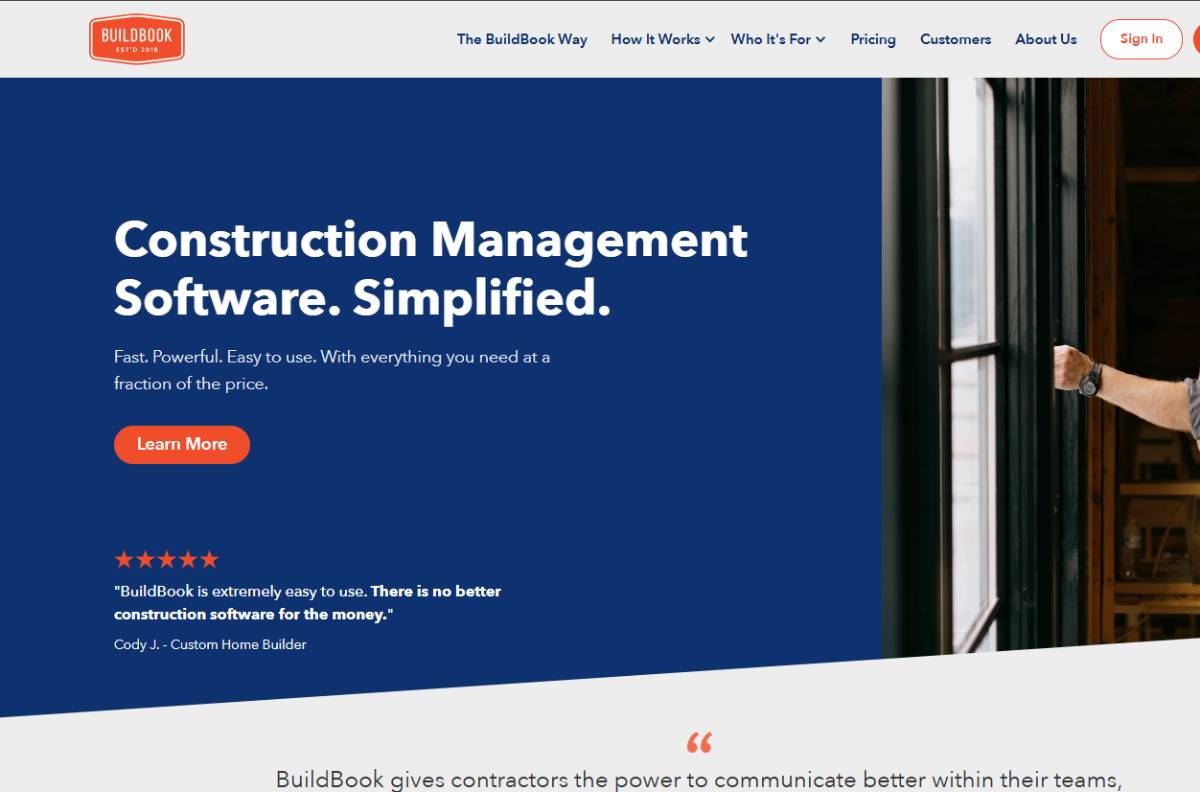
BuildBook combines construction CRM, estimating, proposals and project-management capabilities within one platform. Its tools include custom estimates, branded proposals, price books, project budgets.

August 10, 2026
|

BuildBook is advancing digital project management for residential construction businesses through an integrated platform covering estimating, scheduling, budgeting, task management, client communication and sales. The software targets custom home builders, remodelers and specialty contractors seeking to replace fragmented workflows with centralized project visibility, stronger financial control and more consistent collaboration.

BuildBook combines construction CRM, estimating, proposals and project-management capabilities within one platform. Its tools include custom estimates, branded proposals, price books, project budgets, Gantt schedules, task management, change orders and financial tracking.

The platform also provides client dashboards, daily logs, team messaging, document management and mobile access, allowing project participants to share updates and information through a centralized workspace. QuickBooks Online integration supports connections between project and accounting workflows.

For residential contractors, the platform's positioning centers on reducing administrative complexity while improving oversight of project schedules, costs, customer decisions and communications.

The construction sector continues to face pressure from rising operating costs, complex project coordination and growing customer expectations for transparency. Residential builders frequently rely on a combination of spreadsheets, email, messaging tools, accounting applications and manual processes, creating information gaps that can affect schedules and profitability.

BuildBook's integrated model reflects the broader digital transformation of construction management. Instead of treating estimating, scheduling, budgeting and client communication as separate activities, modern construction platforms increasingly connect these functions around a centralized project record.

This approach is particularly relevant for custom builders and remodelers, where projects can involve frequent scope changes, client selections, subcontractor coordination and payment milestones. Better visibility into these moving parts can help management identify issues earlier and make more informed decisions.

The shift also highlights a broader industry trend: construction technology is moving from basic digital recordkeeping toward connected operational systems that support both project execution and business performance.

From an executive perspective, BuildBook's primary strategic value lies in connecting the commercial and operational sides of construction. Estimates and proposals can establish the foundation for project budgets, while schedules, tasks and change orders provide ongoing visibility into execution.

Financial management is particularly important because construction margins can be affected by material costs, labor changes, client modifications and payment delays. Centralized budget and change-order tracking can give contractors greater control over these variables.

Client communication represents another important element. Project dashboards, shared documents, selections, daily logs and progress updates can provide homeowners with greater visibility while reducing repetitive communication for project teams.

The broader industry lesson is that construction software increasingly competes on workflow integration rather than isolated features. For technology buyers, the ability to connect sales, project delivery, financial management and customer communication may become more valuable than adding another standalone productivity tool.

For construction companies, integrated project-management technology can reduce duplicated administrative work and improve access to project information. Connecting estimates, budgets, schedules and change orders may also help management detect financial or scheduling risks earlier.

For executives, the potential business benefit is stronger control over project profitability. Better visibility into costs and client-driven changes can support faster intervention when projects move away from their original financial assumptions.

For customers, digital dashboards and centralized communication can improve transparency around schedules, selections, documents and project progress. This can strengthen trust between contractors and homeowners while creating clearer records of project decisions.

At the industry level, broader adoption of digital construction systems could encourage more standardized documentation and collaboration. However, companies must still assess cybersecurity, accounting integration, employee adoption and whether a platform can support their operational scale.

BuildBook's future prospects will depend on how effectively it expands digital capabilities while preserving ease of use for residential contractors. Financial integrations, mobile workflows, automation, project analytics and client collaboration are likely to remain important areas of development. As builders face continued pressure to protect margins and improve customer experiences, integrated construction-management platforms could become increasingly central to operational strategy.

Source: Crozdesk
Date: August 10, 2026

  • Featured tools
Symphony Ayasdi AI
Free

SymphonyAI Sensa is an AI-powered surveillance and financial crime detection platform that surfaces hidden risk behavior through explainable, AI-driven analytics.

#
Finance
Learn more
Murf Ai
Free

Murf AI Review – Advanced AI Voice Generator for Realistic Voiceovers

#
Text to Speech
Learn more

Learn more about future of AI

Join 80,000+ Ai enthusiast getting weekly updates on exciting AI tools.
Thank you! Your submission has been received!
Oops! Something went wrong while submitting the form.

BuildBook Advances Construction Project Management

August 10, 2026

BuildBook combines construction CRM, estimating, proposals and project-management capabilities within one platform. Its tools include custom estimates, branded proposals, price books, project budgets.

BuildBook is advancing digital project management for residential construction businesses through an integrated platform covering estimating, scheduling, budgeting, task management, client communication and sales. The software targets custom home builders, remodelers and specialty contractors seeking to replace fragmented workflows with centralized project visibility, stronger financial control and more consistent collaboration.

BuildBook combines construction CRM, estimating, proposals and project-management capabilities within one platform. Its tools include custom estimates, branded proposals, price books, project budgets, Gantt schedules, task management, change orders and financial tracking.

The platform also provides client dashboards, daily logs, team messaging, document management and mobile access, allowing project participants to share updates and information through a centralized workspace. QuickBooks Online integration supports connections between project and accounting workflows.

For residential contractors, the platform's positioning centers on reducing administrative complexity while improving oversight of project schedules, costs, customer decisions and communications.

The construction sector continues to face pressure from rising operating costs, complex project coordination and growing customer expectations for transparency. Residential builders frequently rely on a combination of spreadsheets, email, messaging tools, accounting applications and manual processes, creating information gaps that can affect schedules and profitability.

BuildBook's integrated model reflects the broader digital transformation of construction management. Instead of treating estimating, scheduling, budgeting and client communication as separate activities, modern construction platforms increasingly connect these functions around a centralized project record.

This approach is particularly relevant for custom builders and remodelers, where projects can involve frequent scope changes, client selections, subcontractor coordination and payment milestones. Better visibility into these moving parts can help management identify issues earlier and make more informed decisions.

The shift also highlights a broader industry trend: construction technology is moving from basic digital recordkeeping toward connected operational systems that support both project execution and business performance.

From an executive perspective, BuildBook's primary strategic value lies in connecting the commercial and operational sides of construction. Estimates and proposals can establish the foundation for project budgets, while schedules, tasks and change orders provide ongoing visibility into execution.

Financial management is particularly important because construction margins can be affected by material costs, labor changes, client modifications and payment delays. Centralized budget and change-order tracking can give contractors greater control over these variables.

Client communication represents another important element. Project dashboards, shared documents, selections, daily logs and progress updates can provide homeowners with greater visibility while reducing repetitive communication for project teams.

The broader industry lesson is that construction software increasingly competes on workflow integration rather than isolated features. For technology buyers, the ability to connect sales, project delivery, financial management and customer communication may become more valuable than adding another standalone productivity tool.

For construction companies, integrated project-management technology can reduce duplicated administrative work and improve access to project information. Connecting estimates, budgets, schedules and change orders may also help management detect financial or scheduling risks earlier.

For executives, the potential business benefit is stronger control over project profitability. Better visibility into costs and client-driven changes can support faster intervention when projects move away from their original financial assumptions.

For customers, digital dashboards and centralized communication can improve transparency around schedules, selections, documents and project progress. This can strengthen trust between contractors and homeowners while creating clearer records of project decisions.

At the industry level, broader adoption of digital construction systems could encourage more standardized documentation and collaboration. However, companies must still assess cybersecurity, accounting integration, employee adoption and whether a platform can support their operational scale.

BuildBook's future prospects will depend on how effectively it expands digital capabilities while preserving ease of use for residential contractors. Financial integrations, mobile workflows, automation, project analytics and client collaboration are likely to remain important areas of development. As builders face continued pressure to protect margins and improve customer experiences, integrated construction-management platforms could become increasingly central to operational strategy.

Source: Crozdesk
Date: August 10, 2026

Promote Your Tool

Copy Embed Code

Similar Blogs

August 10, 2026
|

Content Marketing Software Accelerates Enterprise Growth

The content marketing software category encompasses platforms designed to support multiple stages of the marketing lifecycle, including content planning, creation, collaboration, distribution, optimization and performance measurement.
Read more
August 10, 2026
|

3D Printing Software Drives Manufacturing Transformation

3D printing software encompasses a broad range of capabilities designed to support the additive manufacturing lifecycle. Platforms can assist with three-dimensional modeling, file preparation, slicing, print optimization.
Read more
August 10, 2026
|

ZenDMS Advances Enterprise Document Management

ZenDMS is positioned within the document management software segment, where businesses increasingly require centralized tools to store, organize and retrieve critical information.
Read more
August 10, 2026
|

SmartSimple Cloud Advances Grant Management Automation

SmartSimple Cloud is positioned as a configurable cloud platform designed to support grant management, corporate social responsibility, scholarship programs, awards and other complex funding workflows.
Read more
August 10, 2026
|

HaloPSA Accelerates Integrated Service Management

HaloPSA brings multiple professional services automation capabilities into a centralized environment, including service desk management, ticketing, contract management, asset tracking, project management.
Read more
August 10, 2026
|

Ministry Scheduler Pro Advances Workforce Coordination

Ministry Scheduler Pro is designed to support organizations that coordinate volunteers, employees and recurring assignments across multiple activities and locations.
Read more