



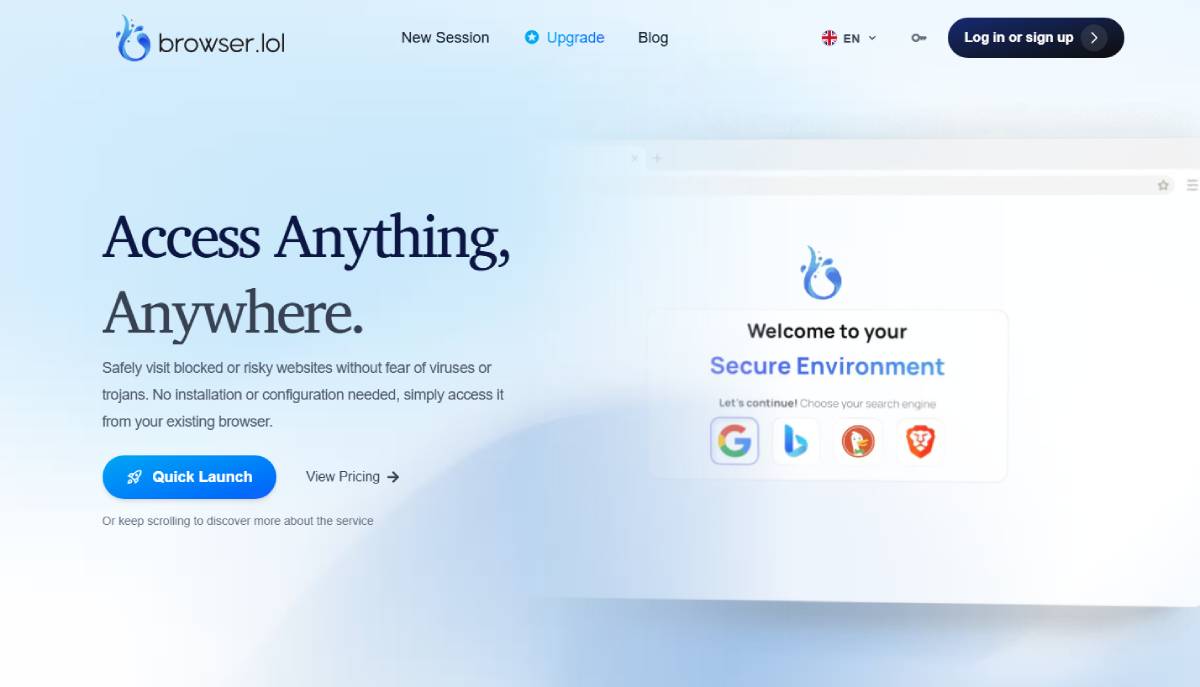
Browser.lol highlights the growing adoption of cloud-based browser technologies that allow users to access web environments without relying entirely on local device capabilities. As remote work, cybersecurity requirements, and flexible digital access models expand globally, browser isolation solutions are gaining importance among businesses, developers, and privacy-conscious users.
Browser.lol provides a browser-based environment that allows users to run and access web sessions remotely through cloud infrastructure. The platform is designed to simplify browsing experiences by reducing dependence on local system resources while offering an alternative approach to accessing online content.
Cloud browser technologies can support various use cases, including secure browsing, testing websites, accessing web applications, and improving compatibility across different devices. Browser.lol reflects increasing interest in browser virtualization and remote execution models as organizations and individuals seek more flexible ways to interact with digital services. Its approach aligns with broader technology trends focused on accessibility, security, and device-independent computing.
The internet landscape has increasingly shifted toward cloud-based computing, where applications, storage, and digital experiences are delivered remotely rather than relying exclusively on local hardware. This transformation has accelerated through the growth of remote work, distributed teams, cybersecurity concerns, and the demand for seamless access across multiple devices.
Browser isolation and cloud browser technologies have emerged as important components of modern security strategies, helping organizations reduce exposure to certain online risks while improving control over digital environments. Browser.lol fits within this wider movement by demonstrating how web access itself can become more flexible and cloud-driven.
As businesses continue adopting zero-trust security models and cloud-first infrastructures, technologies that separate browsing activity from endpoint devices are receiving increased attention. The evolution of remote browser solutions reflects a broader shift toward secure, scalable, and location-independent digital experiences.
Cybersecurity analysts increasingly recognize browser isolation as a valuable approach for reducing online risks and improving enterprise security controls. Experts note that moving browser activity into controlled environments can help organizations bettIr manage threats associated with malicious websites, phishing attempts, and unsafe digital interactions.
Technology specialists also highlight the importance of cloud-based browsing solutions in supporting modern workforces where employees access business applications from diverse locations and devices. These platforms can improve flexibility while reducing dependency on specific hardware configurations.
Although Browser.lol represents a specialized cloud browsing solution rather than a mainstream enterprise security platform, industry observers view such technologies as part of a larger transition toward secure digital access models. Analysts suggest future development will focus on improved performance, stronger privacy protections, artificial intelligence integration, and deeper enterprise adoption.
For businesses, Browser.lol represents the growing importance of secure and flexible digital access technologies within modern IT strategies. Organizations managing remote employees, sensitive data, and distributed operations may increasingly evaluate cloud browser solutions as part of broader cybersecurity frameworks.
Investors monitoring cloud computing and cybersecurity markets may view browser virtualization technologies as supporting continued demand for security-focused digital infrastructure. Policymakers and regulators will continue examining standards related to data protection, cloud security, and responsible technology deployment.
The platform reflects broader industry movement toward cloud-native solutions that improve accessibility while strengthening digital security practices across organizations and users.
Looking ahead, Browser.lol and similar cloud browser technologies are positioned to benefit from continued growth in remote work, cybersecurity innovation, and cloud computing adoption. Decision-makers should monitor developments in browser isolation, AI-powered security tools, enterprise integration, and privacy regulations. As digital environments become increasingly distributed, cloud-based browser solutions are expected to play a larger role in shaping secure and flexible internet access.
Source: AlternativeTo
Date: July 22, 2026


