



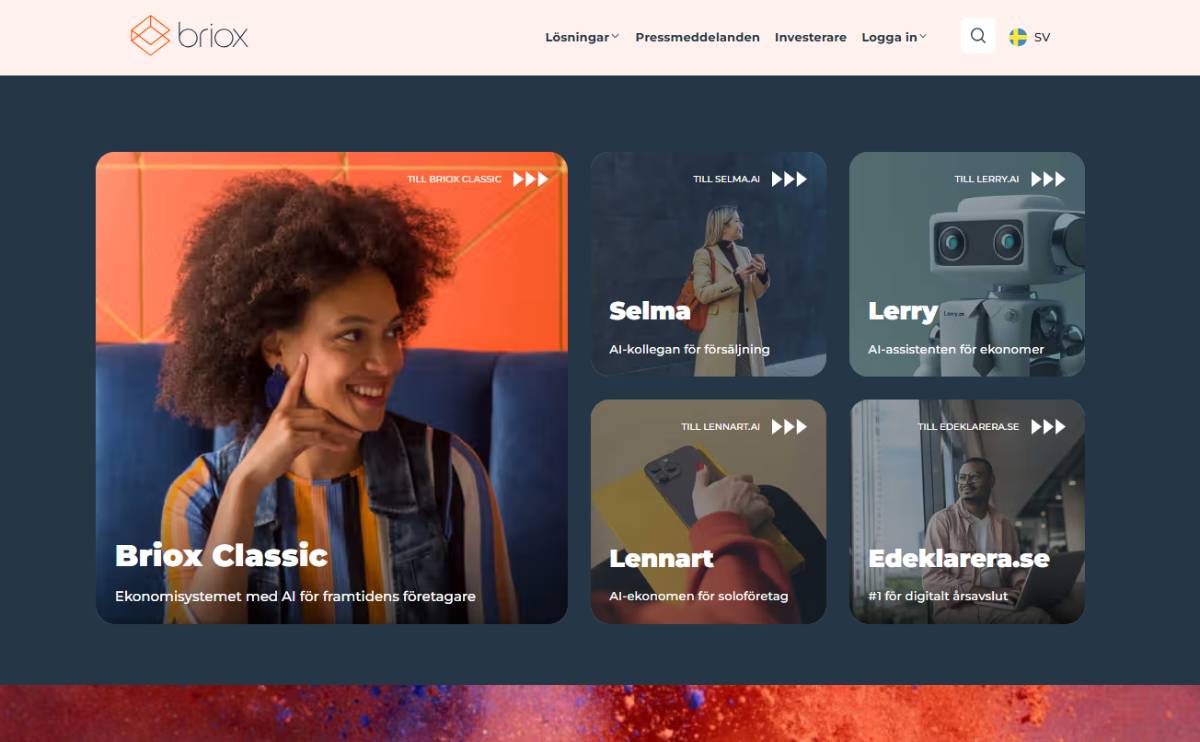
A major development unfolded in the business software sector as Swedish SaaS company Briox acquired AI sales agent startup Selma for SEK 35 million. The deal signals a strategic move toward embedding artificial intelligence into accounting and business management platforms, helping small and medium-sized enterprises automate sales processes and improve operational efficiency.
Briox has acquired Selma, an AI-powered sales agent company, in a transaction valued at SEK 35 million. The acquisition strengthens Briox’s focus on integrating artificial intelligence into its cloud-based business solutions.
Selma’s technology is designed to automate sales activities, support customer engagement, and improve lead management through AI-driven workflows. Briox plans to leverage the technology across its platform ecosystem, particularly targeting small and medium-sized businesses seeking digital tools to simplify operations.
The acquisition reflects growing demand for AI-enabled business software as companies look to increase productivity while reducing manual administrative tasks. The development aligns with a broader global trend where software companies are rapidly integrating artificial intelligence into everyday business processes. From customer support and sales automation to accounting and workflow management, AI is becoming a key competitive differentiator in the SaaS industry.
Small and medium-sized enterprises are increasingly adopting digital platforms that provide automation capabilities without requiring large technology investments. Companies like Briox are responding by expanding their solutions beyond traditional business management software toward intelligent platforms that can proactively support users.
The acquisition of Selma highlights how established software providers are using strategic acquisitions to accelerate AI adoption. As competition increases, businesses that successfully combine industry-specific expertise with AI capabilities are expected to gain stronger positions in the evolving digital economy.
Industry analysts view AI acquisitions as a growing strategy among software companies seeking faster access to specialised technology and talent. Experts suggest that integrating AI assistants into business platforms can create significant value by improving efficiency, reducing repetitive work, and enabling better decision-making.
Briox’s acquisition of Selma demonstrates how smaller AI-focused companies are becoming attractive targets for established SaaS providers. Rather than developing every capability internally, companies are increasingly acquiring innovative startups to accelerate product development.
Market observers note that AI-powered sales agents could transform how businesses manage customer relationships by automating routine communication while allowing teams to focus on higher-value activities. However, successful adoption will depend on factors such as accuracy, user trust, data security, and seamless integration with existing business systems.
For businesses, the integration of Selma’s AI sales technology could provide new opportunities to automate customer acquisition, improve productivity, and compete more effectively in digital markets. Small businesses may benefit from enterprise-level automation tools that were previously difficult to access.
For investors, the acquisition highlights continued interest in AI-driven SaaS companies and the potential value of specialised AI solutions. Software providers may increasingly pursue acquisitions to strengthen their artificial intelligence capabilities.
From a policy perspective, increased use of AI in business operations will require attention to data privacy, transparency, and responsible AI practices. Regulators may focus on ensuring that automation technologies remain secure and trustworthy.
Briox’s next phase will likely focus on integrating Selma’s AI capabilities into its broader software ecosystem and expanding adoption among business customers. Decision-makers should watch how effectively AI sales agents deliver measurable improvements in productivity and revenue growth. As AI becomes embedded across business software, companies that successfully combine automation with industry-specific solutions will shape the future of enterprise technology.
Source: Nordic Tech News
Date: Not specified


