



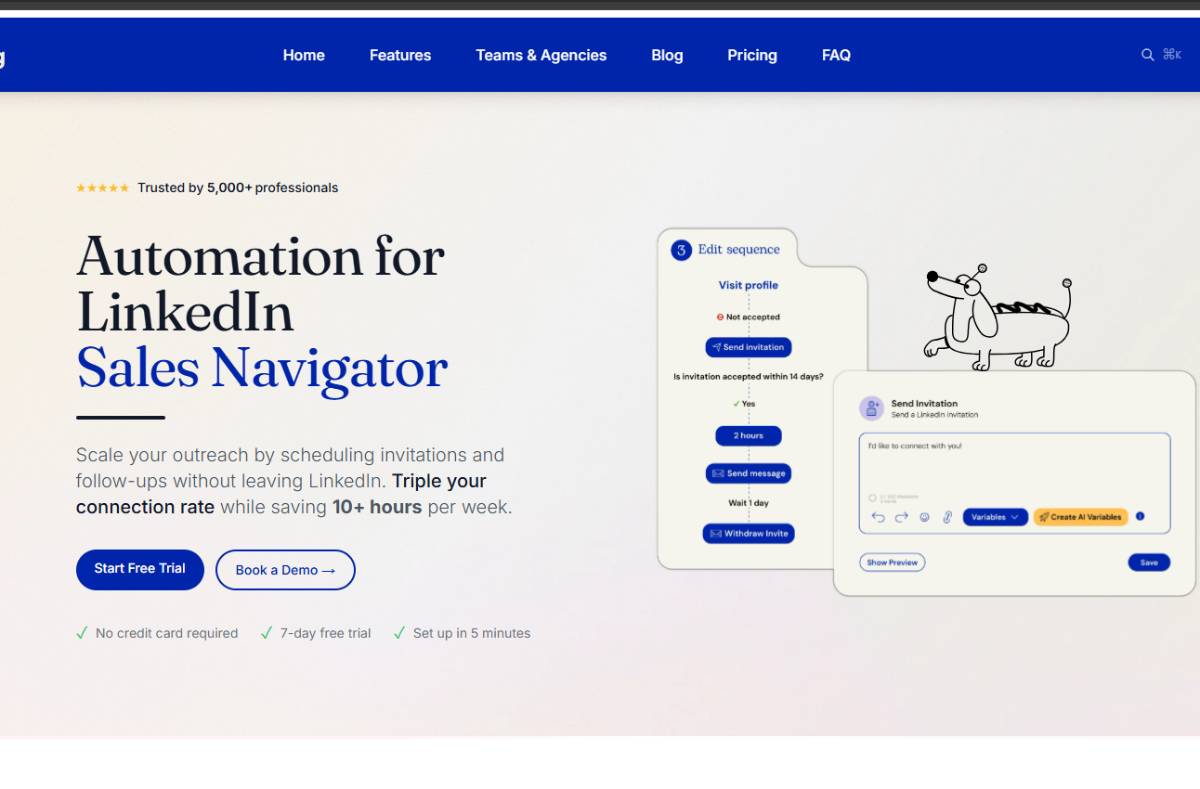
A significant development is reshaping digital customer engagement as Botdog strengthens its AI-driven chatbot platform for businesses seeking faster, automated customer interactions. The evolution reflects a broader shift toward conversational AI, enabling organizations to improve customer service, streamline operations, and enhance user experiences while reducing support costs across multiple industries.
Botdog continues advancing intelligent chatbot technology designed to automate customer conversations across websites and digital platforms. The platform enables organizations to deploy AI-powered virtual assistants capable of answering inquiries, qualifying leads, and supporting customers around the clock.
Businesses increasingly use conversational automation to reduce response times while improving customer satisfaction and operational efficiency. The platform supports customizable workflows, integration with business systems, and scalable deployment across organizations of varying sizes. As customer expectations for instant digital support continue rising, AI chatbots are becoming a strategic component of enterprise customer experience initiatives and digital transformation programs.
Conversational AI has rapidly evolved from basic scripted responses to intelligent automation powered by machine learning and natural language processing. Organizations across retail, healthcare, finance, education, and professional services are investing heavily in chatbot technologies to meet growing demand for always-available customer support.
The development aligns with broader enterprise trends emphasizing automation, cloud computing, and AI-assisted customer engagement. Rising labor costs, expanding digital commerce, and increasing customer expectations have accelerated adoption of intelligent virtual assistants capable of managing routine inquiries while allowing human employees to focus on more complex tasks.
Industry analysts expect conversational AI to remain one of the fastest-growing segments within enterprise software as businesses pursue scalable customer engagement strategies that improve service quality without proportionally increasing operational expenses.
Technology analysts increasingly recognize conversational AI as a strategic business capability rather than simply a customer support tool. Experts suggest organizations implementing AI-powered chatbots can improve response consistency, increase operational efficiency, and enhance customer satisfaction through continuous availability.
Industry consultants also note that successful chatbot deployments depend on seamless integration with CRM platforms, knowledge bases, analytics, and workflow automation systems. While no specific official corporate statement accompanies this development, digital transformation specialists emphasize that enterprises investing in intelligent automation are better positioned to respond to rapidly evolving customer expectations.
Market observers further believe future chatbot platforms will increasingly incorporate generative AI, multilingual capabilities, predictive customer insights, and personalized interactions, expanding their value well beyond traditional customer service applications.
For business leaders, AI-powered chatbot platforms offer opportunities to improve customer engagement while reducing service delivery costs. Organizations can automate repetitive inquiries, shorten response times, and strengthen digital customer experiences without significantly expanding support teams.
Investors continue monitoring enterprise AI adoption as conversational technologies become increasingly integrated into broader business operations. At the same time, policymakers and regulators remain focused on responsible AI deployment, data privacy, transparency, and cybersecurity standards. Companies adopting conversational AI must balance automation with regulatory compliance, customer trust, and ethical governance to achieve sustainable long-term value.
Looking ahead, conversational AI platforms are expected to become more intelligent through advances in generative AI, predictive analytics, and enterprise automation. Decision-makers should monitor evolving regulations governing AI transparency, privacy, and digital communications. Businesses that integrate chatbot technologies into broader customer engagement strategies will likely gain competitive advantages through faster service delivery, improved operational efficiency, and stronger customer relationships.
Source: Crozdesk
Date: August 5, 2026


