



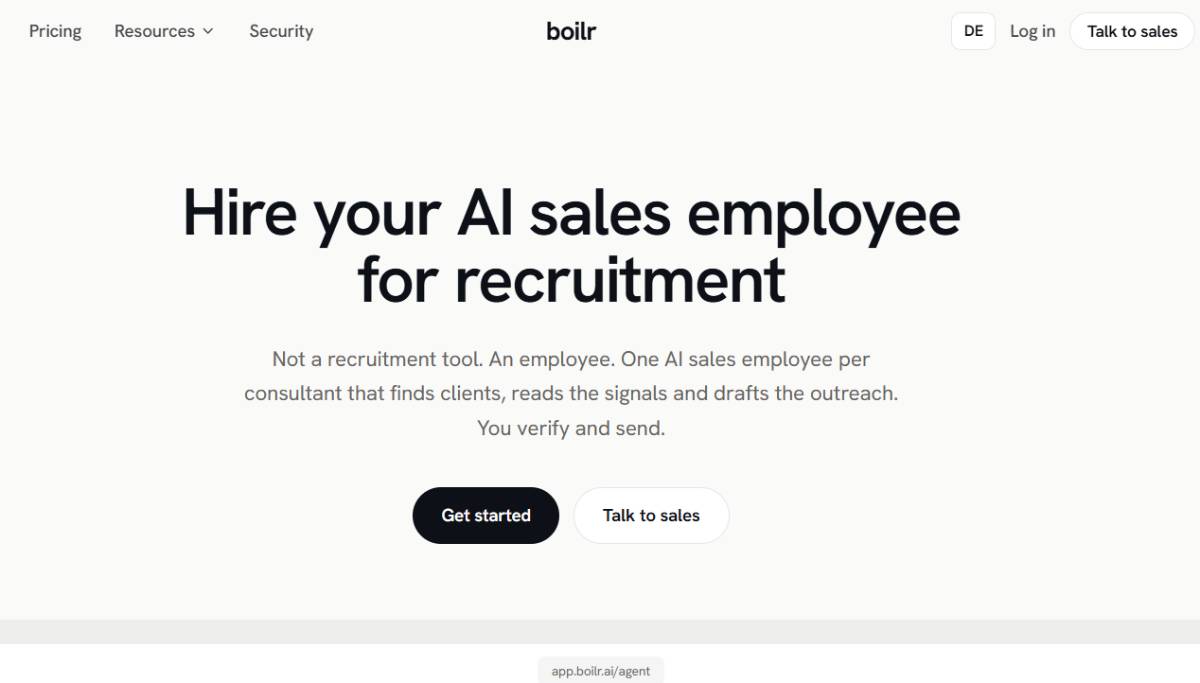
Artificial intelligence is reshaping the recruitment industry as Boilr.ai introduces an AI-powered platform designed to streamline hiring workflows and improve talent intelligence. The development highlights a broader transformation in workforce management, enabling businesses to make faster, data-driven recruitment decisions amid intensifying global competition for skilled professionals.
Boilr.ai is positioning itself as an intelligent recruitment technology platform that leverages artificial intelligence to automate repetitive hiring tasks, enhance candidate evaluation, and improve recruiter productivity. The platform aims to simplify talent acquisition by enabling organizations to process applications more efficiently while delivering actionable recruitment insights.
As businesses continue adopting AI across human resources, recruitment intelligence is becoming an essential capability for organizations seeking to reduce hiring costs and accelerate decision-making. The company's innovation reflects growing demand for digital HR solutions that combine automation with data analytics to improve recruitment outcomes without compromising candidate experience.
The announcement comes as organizations worldwide accelerate investment in artificial intelligence to modernize human resources and talent acquisition. Increasing labor shortages, rising recruitment costs, and growing competition for specialized professionals have encouraged businesses to adopt AI-powered hiring technologies that improve operational efficiency and decision quality.
Recruitment intelligence platforms are evolving beyond applicant tracking systems by incorporating predictive analytics, automated candidate screening, skills matching, and workflow optimization. These capabilities help organizations identify qualified candidates more quickly while reducing administrative workloads for HR teams.
At the same time, businesses must balance automation with fairness, transparency, and regulatory compliance as AI becomes more deeply integrated into employment decisions. For technology providers, recruitment intelligence represents one of the fastest-growing segments within enterprise software and digital workforce transformation.
Industry experts believe AI-powered recruitment will become a core component of future workforce strategies rather than simply an operational enhancement. Analysts suggest that intelligent automation enables recruiters to focus more on relationship building, strategic workforce planning, and candidate engagement instead of repetitive administrative processes.
Human capital specialists also emphasize that successful implementation depends on maintaining transparency, minimizing algorithmic bias, and ensuring human oversight throughout recruitment decisions. Business leaders increasingly recognize that AI should augment not replace human judgment in evaluating talent.
Experts further argue that organizations investing in responsible recruitment intelligence platforms will gain competitive advantages through faster hiring cycles, improved workforce planning, and enhanced candidate experiences while supporting long-term organizational growth.
For businesses, AI-driven recruitment intelligence offers opportunities to improve hiring efficiency, reduce operational costs, and strengthen talent acquisition in increasingly competitive labor markets. Organizations adopting advanced HR technologies may achieve better workforce planning while enhancing employee quality and long-term retention.
Investors are likely to view recruitment technology as a high-growth segment within enterprise software, driven by ongoing digital transformation across industries. Policymakers and regulators, meanwhile, will continue examining how artificial intelligence is used in employment decisions, placing greater emphasis on transparency, fairness, data privacy, and ethical AI governance. Companies adopting AI recruitment solutions should ensure compliance with evolving regulatory standards.
As artificial intelligence becomes increasingly embedded in human resources, recruitment intelligence platforms are expected to play a larger role in workforce management. Decision-makers should monitor advances in predictive hiring analytics, AI governance frameworks, and evolving labor regulations. Organizations that successfully combine intelligent automation with responsible human oversight will be better positioned to compete for talent in the rapidly evolving global employment market.
Source: Silicon Luxembourg
Date: July 2026


