



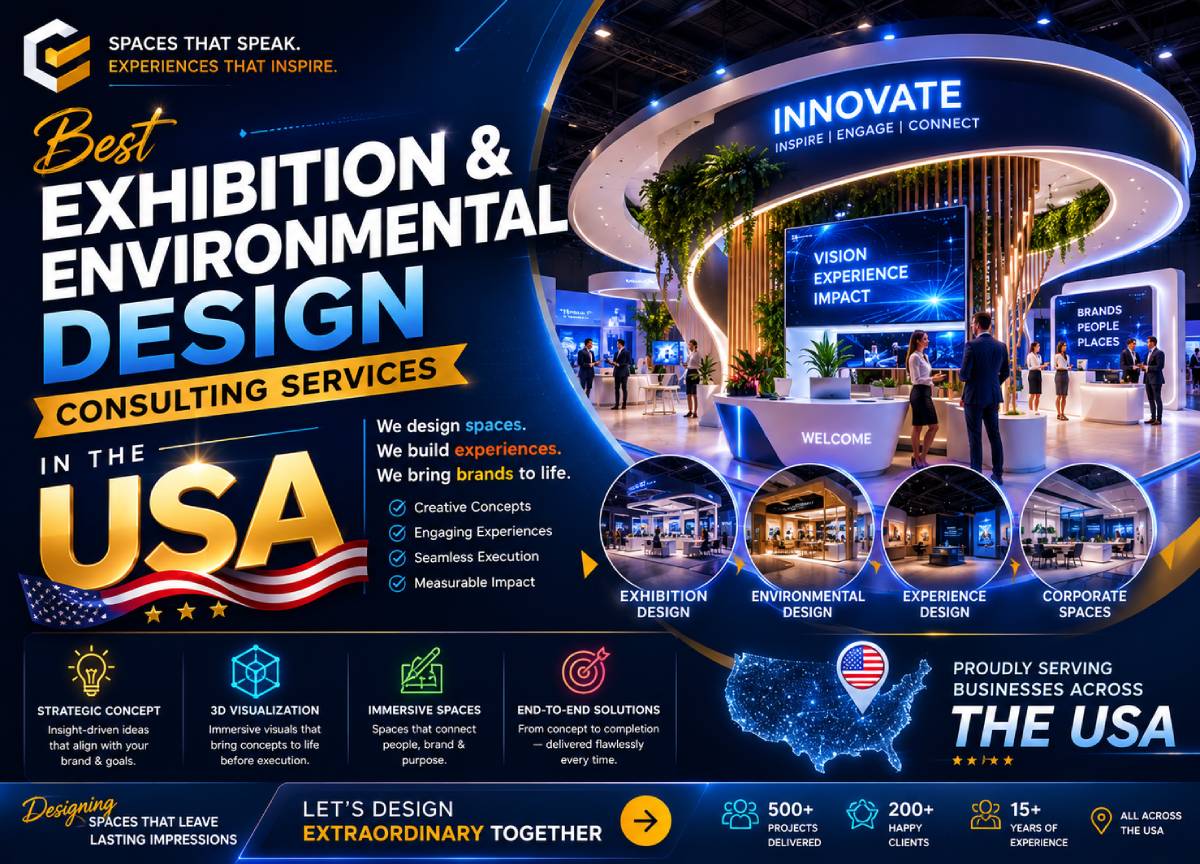
Exhibition and environmental design occupies a unique and genuinely powerful position in the broader landscape of American design practice. Unlike disciplines that communicate primarily through screens, pages, or products, exhibition and environmental design shapes the physical spaces in which people encounter history, science, culture, and ideas in person. When done well, it does not simply display information. It creates conditions for genuine discovery, emotional connection, and lasting understanding in ways that no other medium can fully replicate.
Across the United States, the demand for this discipline has grown substantially as museums, cultural institutions, science centers, heritage organizations, federal agencies, and corporations have recognized that how an environment is designed has a direct and measurable influence on how meaningfully audiences engage with the content it presents. A well-designed exhibition invites curiosity, supports learning, honors the communities whose stories it tells, and creates the kind of memorable experience that brings visitors back and turns passive audiences into active advocates. A poorly designed one, regardless of how significant the content it houses, creates barriers between visitor and subject that no amount of interpretive text can overcome.
The best exhibition and environmental design consultants operating in the United States today bring together narrative intelligence, spatial thinking, interpretive expertise, community engagement capability, and the technical knowledge needed to translate complex ideas into physical environments that work for the full range of people who will move through them. This guide features a curated selection of standout US-based firms recognized for their proven track records, authentic client relationships, and the depth of leadership driving their work.
How These Providers Were Selected
Every firm featured in this guide was evaluated through a consistent, research-driven process built around three core criteria:
Research-Driven Credibility: Each consultancy was assessed against publicly available project portfolios, documented design frameworks, and verifiable case studies demonstrating real-world outcomes rather than self-reported credentials or marketing claims alone.
Client-Validated Results: Selection was informed by authentic client feedback, genuine evidence of measurable return on investment, and industry credibility built through sustained delivery across multiple projects and client relationships over time.
US-Based Leadership and Expertise: All featured providers are headquartered in the United States, with founders and senior practitioners who maintain active roles in shaping both the firms they lead and the broader exhibition and environmental design field in America.
This is not a ranking. Every provider featured here brings distinctive strengths, a clearly articulated design philosophy, and a well-established record of creating exhibition and environmental experiences that genuinely serve the institutions and audiences they are designed for.
Featured Exhibition and Environmental Design Consulting Services in the USA
1. Thinc Design
What they offer: Exhibition planning and environmental storytelling services that produce spaces blending compelling narrative with design innovation, built for cultural institutions, science centers, and visitor experience organizations that want their physical environments to function as genuine storytelling instruments rather than decorative containers for content.
Clients served: Museums, nonprofits, cultural organizations, and educational institutions seeking exhibition environments that connect audiences to content through carefully designed spatial experiences grounded in research, community engagement, and authentic narrative development.
Approach: A deeply collaborative design process rooted in storytelling, rigorous research, and genuine community engagement, built around a conviction that the most effective exhibition environments are those that emerge from a thorough and honest understanding of the audiences who will inhabit them and the communities whose stories they represent.
Why they stand out: A distinctive and well-demonstrated expertise in weaving compelling narratives into spatial design that produces exhibitions with genuine emotional and intellectual resonance rather than simply organizing content attractively, a strong and globally recognized portfolio in cultural institution and museum projects reflecting both the breadth and quality of the firm's experience, and a deeply participatory design model that integrates community voices and perspectives into the design process as essential creative inputs rather than consultation checkboxes.
Leadership: Tom Hennes, Founder and Principal. Tom brings decades of experience in exhibition design to every Thinc project, shaped significantly by a background in theater that gives him a distinctive and practically grounded understanding of how spatial environments can be orchestrated to prioritize and deepen audience experience. He is known for a leadership approach that consistently emphasizes authenticity and accessibility as non-negotiable design standards, ensuring that every exhibition environment created under his direction connects with the full range of visitors it is intended to serve rather than only those with prior familiarity with the subject matter.
His major museum projects across the country and around the world have established Thinc Design as a go-to partner for cultural institutions seeking exhibition experiences that are simultaneously intellectually rigorous, emotionally resonant, and broadly accessible.
2. Paul Orselli Workshop (POW!)
What they offer: Interactive museum exhibit design and hands-on learning environment creation that prioritizes curiosity, play, and genuine educational impact, built for science centers, children's museums, and learning institutions that want their physical spaces to inspire active engagement rather than passive observation.
Clients served: Museums, science centers, and children's learning institutions seeking interactive exhibition environments that make learning genuinely enjoyable and intellectually stimulating for the young visitors and curious minds they serve, particularly those that benefit from a prototyping-forward design approach that tests concepts with real audiences before committing to full-scale production.
Approach: A flexible design and consulting workshop model focused on rapid prototyping and iterative design development, built around a philosophy that testing interactive concepts with actual visitors early and often produces better exhibition outcomes than elaborate pre-production design development conducted in isolation from the people the exhibit is intended to engage.
Why they stand out: A prototyping-first approach that genuinely reduces development risk while consistently improving visitor engagement outcomes by ensuring interactive concepts are tested and refined in response to real visitor behavior rather than theoretical assumptions about how people will use them, deep and specialized experience in children's and science-focused learning environments that gives the practice a contextual knowledge base most generalist exhibition design firms cannot match, and a consistent emphasis on educational impact as the primary measure of design success rather than visual impressiveness or production quality alone.
Leadership: Paul Orselli, Founder, President and Chief Instigator. Paul is widely recognized across the museum and informal learning community for a hands-on and genuinely playful approach to exhibition design that consistently produces interactive environments children and adults find both engaging and educationally meaningful. His decades of experience working with client institutions across the country and internationally have given him a practitioner's understanding of what makes interactive exhibits work in real visitor environments rather than simply in design presentations.
He is also known for a generous commitment to sharing professional knowledge and insights with the broader museum community, fostering the kind of collaborative exchange and peer learning that raises the quality of practice across the field as a whole. His leadership style balances genuine creative enthusiasm with practical design intelligence that consistently delivers on the educational promise of the projects he undertakes.
3. Exhibit Design Consultants
What they offer: Full-service exhibition planning and design covering the complete arc from initial concept development through final installation, with strong capability across corporate, trade show, and cultural exhibition contexts that require different but equally rigorous design approaches to achieve their respective goals.
Clients served: Trade show clients, corporations, and museum organizations seeking exhibition environments that are designed from the outset to achieve specific strategic objectives, whether that means communicating brand identity and generating qualified business leads in a competitive trade show environment or creating engaging educational experiences in a cultural institution context.
Approach: An end-to-end consulting model that provides design expertise, production management oversight, and installation supervision under a single consistent engagement structure, reducing the coordination complexity and quality control challenges that arise when design, production, and installation are managed by separate vendors with different organizational priorities and communication practices.
Why they stand out: A genuinely comprehensive approach to exhibition design that spans the full spectrum from initial concept through completed installation, giving clients a reliable single point of accountability for the complete delivery of their exhibition environment, proven and well-documented experience in corporate exhibit strategy and measurable return on investment that gives the firm credibility with clients whose exhibition budgets must justify themselves in commercial terms as much as creative ones, and a consistently demonstrated ability to balance strong visual brand expression with genuinely engaging visitor experience design in ways that serve both institutional identity and audience connection simultaneously.
Leadership: Timothy Morris, Founder and Owner. Timothy brings decades of exhibition design and consulting expertise to a practice that has successfully served clients across both cultural and corporate exhibition contexts, giving him a breadth of sector experience that informs every engagement with insight drawn from genuinely different organizational priorities and visitor dynamics.
He is known for a precision-oriented leadership approach that consistently aligns design decisions with the strategic goals each client brings to the engagement rather than defaulting to aesthetic solutions that look impressive but do not serve the specific objectives the exhibition is designed to achieve. His sustained track record of building Exhibit Design Consultants into a trusted partner for organizations seeking measurable results through environmental design reflects the genuine quality and commercial accountability that define his practice.
4. Museum Environments
What they offer: Interpretive exhibit design and development for cultural heritage and history organizations, producing exhibition environments that create meaningful and emotionally resonant connections between visitors and historical content through storytelling approaches that honor the communities and subjects being represented.
Clients served: History museums, cultural institutions, and heritage organizations seeking exhibition environments that present historical content with both scholarly accuracy and genuine emotional accessibility, particularly those whose work involves representing community histories and cultural narratives that deserve to be told with care, authenticity, and deep respect for the people and experiences involved.
Approach: A collaborative design model rooted in community storytelling that works closely with institutional stakeholders, community representatives, and content experts to ensure that every exhibition environment produced reflects authentic voices and perspectives rather than externally imposed narratives about communities and histories the design team has engaged with primarily from the outside.
Why they stand out: Deep and genuinely specialized expertise in cultural and heritage-based exhibitions that reflects years of sustained engagement with the particular interpretive, ethical, and design challenges this type of work presents, a principled commitment to community-centered storytelling that treats the people whose histories are being represented as active participants in shaping the narratives their communities' exhibitions tell rather than subjects whose stories are interpreted and presented without their meaningful input, and a consistent track record of creating visitor experiences that connect emotionally as well as intellectually, producing the kind of lasting impressions that fulfill the deepest institutional aspirations of the museums and heritage organizations the firm serves.
Leadership: Mariano Desmarás, Creative Director and Partner. Mariano brings a background that combines formal design training with deep experience in cultural interpretation, giving him both the creative capability to produce compelling spatial environments and the interpretive intelligence to ensure those environments tell stories with the accuracy, nuance, and cultural sensitivity they deserve.
His career has spanned multiple countries and cultural contexts, giving him a genuinely international perspective on how exhibition design can honor local voices and elevate community narratives in ways that create meaningful connections with diverse visitor populations. His leadership vision consistently ensures that Museum Environments delivers projects that go beyond spatial aesthetics to provide lasting cultural value for the institutions and communities they serve.
5. Museum Partners Consulting, LLC
What they offer: Strategic exhibition consulting and institutional guidance for museums and cultural organizations, focused on helping institutions align their exhibition programs with their core missions, their audience engagement goals, and the long-term organizational sustainability that determines whether strong exhibition work can be sustained across leadership transitions and funding cycles.
Clients served: History museums, children's museums, and cultural organizations across the United States seeking to develop more strategically coherent and audience-centered exhibition programs, particularly those navigating significant transitions in institutional direction, visitor demographics, or organizational capacity that require outside strategic guidance alongside design expertise.
Approach: A consulting-first engagement model that emphasizes strategic planning, rigorous evaluation, and genuine alignment with visitor experience research before design direction is committed to, built around the conviction that the most effective exhibition environments are those that emerge from a thorough and honest assessment of what an institution's audiences genuinely need and what the institution is genuinely capable of delivering with excellence.
Why they stand out: A strong and consistently applied focus on evaluation and results-driven strategy that grounds exhibition development in evidence about real visitor needs and institutional capacity rather than design trends or organizational assumptions, a genuine commitment to supporting long-term institutional growth that treats each consulting engagement as a contribution to an organization's sustained capability rather than a one-time project deliverable, and the kind of deep and sustained partnerships with client institutions that reflect the quality of strategic guidance and genuine organizational investment that builds lasting trust over multiple projects and years of working relationship.
Leadership: Claudia Ocello, Founder, President and CEO. Claudia brings more than two decades of experience in museum leadership, interpretive planning, and design strategy to a consulting practice that she has built into one of the most respected strategic advisory resources available to American museum and cultural organizations. She is particularly recognized for her expertise in audience research and evaluation methodology, bringing a rigorous evidential approach to exhibition development that ensures design decisions are grounded in genuine understanding of visitor needs and behaviors rather than institutional assumptions about what audiences want and how they learn.
A frequent speaker and thought leader in the museum sector, she has guided numerous organizations through transformative exhibition planning processes, consistently bringing a leadership approach that blends strategic intelligence with a deep and abiding passion for the cultural learning experiences that museums at their best are uniquely positioned to provide.
6. The Design Minds
What they offer: Interpretive planning and exhibition design services that bring together educational research, strategic planning, and creative visual design into integrated exhibition environments for museums, visitor centers, heritage sites, and federal agency facilities that need their spaces to communicate complex content clearly and engagingly to diverse visitor populations.
Clients served: Federal agencies, cultural institutions, and nonprofits seeking exhibition environments that successfully translate research-based interpretive frameworks into visitor experiences that are both intellectually substantive and genuinely engaging for the full range of audiences the institution serves.
Approach: A research-based planning and design methodology that combines rigorous interpretive frameworks with creative visual problem-solving, built around a multidisciplinary team structure that integrates strategic planning expertise with design capability from the earliest stages of project development rather than treating planning and design as sequential activities handed off between separate specialists.
Why they stand out: Deep and specialized expertise in interpretive planning and visitor engagement methodology that gives the practice a particular strength in projects where the interpretive challenge is as complex and important as the design challenge, a proven track record of successful work with federal agencies and cultural clients whose institutional requirements and review processes demand a particular combination of strategic rigor, design quality, and organizational reliability, and a consistently strong multidisciplinary team that integrates planning, strategy, and design capability in ways that produce exhibition environments with both intellectual coherence and visual strength.
Leadership: Mike Lesperance, Founding Principal. Mike leads The Design Minds with a consistent focus on blending creative spatial storytelling with strategic interpretive planning in ways that produce exhibition environments genuinely capable of connecting diverse audiences with meaningful ideas. His approach reflects a practitioner's understanding of the interpretive and design challenges that cultural and educational institutions face in making complex content accessible and engaging for visitors who arrive with widely varying levels of prior knowledge and learning preferences.
He is recognized for a leadership style that brings creative ambition and strategic discipline together in every project the firm undertakes, producing work that serves both the immediate visitor experience goals and the longer-term institutional communication objectives of the organizations that partner with The Design Minds.
7. ObjectIDEA
What they offer: Exhibition design services that integrate authentic narrative storytelling, thoughtful interpretive planning, and genuinely immersive spatial experiences for cultural museums, science centers, and educational institutions seeking exhibition environments that connect with audiences through the honesty and specificity of the stories they tell rather than the impressiveness of their production values alone.
Clients served: Cultural institutions, nonprofits, and educational centers that want exhibition environments built on a foundation of authentic story, inclusive representation, and genuine respect for the communities and subjects whose histories and ideas the exhibitions explore, particularly those that value a collaborative design process that keeps institutional staff and community stakeholders meaningfully involved throughout development.
Approach: A collaborative engagement model that works closely with client institutions and community stakeholders throughout the design process, ensuring every exhibition environment produced reflects authentic narratives and genuine community perspectives rather than externally authored interpretations of histories and ideas that belong to the communities they represent.
Why they stand out: A strong and principled focus on interpretive storytelling as the primary driver of exhibition design decisions, ensuring that spatial and visual choices consistently serve the narrative rather than competing with it for audience attention, genuine and sustained experience with diverse cultural and science exhibition projects that gives the practice a broad contextual knowledge base informing every new engagement, and a consistent and deeply held commitment to authenticity and inclusivity that shapes both the process and the outcomes of every project the firm undertakes.
Leadership: Matt Kirchman, Founder, President and Creative Director. Matt has built a career and a practice at the productive intersection of design craft, interpretive expertise, and educational commitment, giving ObjectIDEA a leadership perspective that treats these three dimensions as inseparable rather than independently optimizable. His background includes extensive experience in museum and cultural storytelling that has given him a practitioner's understanding of how great exhibition environments are actually built, from the early interpretive planning conversations that establish the narrative foundation through the design development decisions that translate that foundation into a spatial experience visitors can genuinely inhabit.
He is recognized for a leadership approach that consistently produces exhibition environments with both creative integrity and inclusive reach, making ObjectIDEA a trusted partner for institutions that want their exhibitions to honor the full complexity of the stories they tell.
8. R and L Consulting
What they offer: Exhibition and environmental design consulting that brings innovative, scalable, and strategically grounded solutions to museums, nonprofits, and civic organizations seeking exhibition environments that are both creatively distinctive and operationally realistic within the institutional constraints their clients actually face.
Clients served: Museums, nonprofits, and civic organizations seeking exhibition design consulting that delivers creative quality and strategic alignment without the overhead or timeline demands of large established firms, particularly those that value working with a consultancy whose leadership is genuinely invested in each project and responsive to the specific organizational context of every client.
Approach: A research-informed creative design and consulting model that blends inventive spatial thinking with strategic planning and clear organizational alignment, offering tailored consulting frameworks that fit the specific goals, resources, and institutional cultures of each client rather than applying a standardized methodology regardless of context.
Why they stand out: A genuinely customized consulting approach that produces solutions genuinely fit for the specific organizational context of each client rather than adapted versions of a standard design template, a consistent emphasis on measurable results and sustainability that ensures exhibition investments deliver value over time rather than looking impressive at opening and deteriorating quickly thereafter, and a fresh and energetic leadership perspective that brings the creative ambition and organizational flexibility of a new generation of exhibition designers to the challenges and opportunities of the contemporary museum and cultural institution landscape.
Leadership: A.J. Rhodes, Owner and Principal. A.J. represents a newer generation of exhibition and environmental design leadership, bringing a background that bridges creative design practice with strategic organizational consulting in ways that give every R and L engagement both creative quality and practical accountability. His work consistently reflects a commitment to adaptable, results-oriented consulting that meets clients where they are rather than requiring them to accommodate the working preferences and project structures of a larger, less flexible firm.
He is building a growing reputation as an innovative and reliable voice in exhibition design, recognized for work that combines genuine creative ambition with the kind of pragmatic design thinking that produces sustainable, functional, and organizationally appropriate exhibition environments for the institutions that partner with him.
9. Christine Lefebvre Design
What they offer: Exhibition design and graphic design services that weave interpretive storytelling together with visual clarity and genuine accessibility, producing exhibition environments for museums, educational institutions, and cultural organizations that communicate clearly and compellingly across the full range of visitor literacy levels, learning styles, and accessibility needs.
Clients served: Museums, educational institutions, and cultural organizations seeking exhibition environments where strong graphic design and interpretive storytelling work together as integrated tools for visitor engagement rather than treating visual design as decoration applied to pre-determined interpretive content after the substantive planning work is complete.
Approach: An integrated design model that combines graphic design expertise with exhibition planning capability, ensuring cohesive storytelling across media and consistently clear communication of complex content through visual and spatial design decisions that serve the visitor rather than the designer's aesthetic preferences.
Why they stand out: A genuinely strong integration of visual design and interpretive storytelling that produces exhibition environments with coherent visual identities supporting rather than competing with the narratives they are designed to communicate, a principled and consistently demonstrated commitment to accessibility and inclusivity that treats the full range of visitor needs as essential design parameters rather than compliance requirements to be minimally addressed, and a flexible practice model that gives the firm genuine capability to serve a wide variety of cultural clients with different institutional scales, budgets, and design challenges.
Leadership: Christine Lefebvre, Founder and Principal. Christine brings extensive experience in both exhibition design and graphic design to a practice built on the conviction that these two disciplines should not be treated as separate specializations but as complementary and mutually reinforcing tools in the service of compelling visitor experiences.
She is recognized for creating visually compelling exhibition environments that support storytelling and accessibility with equal care and competence, consistently treating the clarity and inclusivity of the visitor experience as the ultimate measure of design success rather than the visual sophistication of the design work itself. Her collaborative leadership style and genuine client focus have made Christine Lefebvre Design a trusted partner for educational and cultural institutions across the United States that want exhibition environments serving the full range of their visitor communities with quality and care.
10. Span
What they offer: Multidisciplinary design services that bridge branding, exhibition design, and environmental graphics into integrated spatial storytelling systems, built for museums, corporations, and cultural institutions that need their physical environments to communicate with the same clarity, consistency, and visual intelligence that the best brand communications achieve across digital and print channels.
Clients served: Museums, corporations, and cultural institutions seeking exhibition and environmental design that integrates seamlessly with existing brand identity systems and organizational communication strategies, producing physical environments that feel coherent with rather than disconnected from the broader ecosystem of communications through which the organization presents itself to its audiences.
Approach: An integrated branding and exhibition design model that ensures consistent identity and narrative coherence across every platform and channel through which a client organization communicates, building exhibition environments that are spatially compelling in their own right while also functioning as physical expressions of organizational brand values that align with rather than contradict the organization's broader communication presence.
Why they stand out: A distinctive and practically valuable expertise in bridging branding and environmental design that gives the firm genuine capability to serve clients whose exhibition environments must function both as standalone visitor experiences and as physical manifestations of organizational brand identity, a versatile and genuinely cross-industry experienced team that brings fresh perspective from multiple sectors to every museum or cultural institution engagement, and an innovative and modern approach to spatial storytelling that consistently produces exhibition environments with both creative distinctiveness and clear communicative purpose.
Leadership: John Pobojewski and Bud Rodecker, Partners and Design Directors. John and Bud co-lead Span with a shared commitment to developing innovative design identities and exhibition environments that merge spatial design, organizational identity, and genuine storytelling intelligence into coherent and impactful visitor experiences. Their leadership combines complementary creative perspectives in ways that give the studio both the breadth of thinking and the depth of execution capability that complex exhibition and environmental design projects require.
They are recognized for a design direction approach that brings genuine creative ambition and strategic discipline to every project simultaneously, producing work that achieves the clarity and visual coherence that the best exhibition environments share regardless of scale, sector, or institutional context.
Exhibition and Environmental Design: Building the Spaces Where Understanding Happens
The exhibition and environmental design consultants featured in this guide represent the full breadth of what this discipline, at its best, is capable of achieving in the United States today. From immersive cultural storytelling that honors community histories with care and precision, to interactive science environments that inspire genuine curiosity in young learners, to strategically integrated brand environments that communicate organizational values through spatial design, these firms collectively demonstrate the remarkable range of contexts in which skilled exhibition and environmental design creates genuine and lasting value.
What every firm in this guide shares, across the considerable diversity of their methods, specializations, and client contexts, is a consistent commitment to designing spaces that genuinely serve the people who inhabit them. They begin with a deep and honest understanding of the audiences their clients need to reach. They build their design decisions on narrative and interpretive foundations strong enough to support the physical environments constructed on top of them. They treat accessibility, inclusivity, and authentic community representation as fundamental design requirements rather than optional enhancements. And they measure the quality of their work not by its visual impressiveness alone but by the depth and durability of the visitor experiences it creates.
In a nation rich in the cultural, scientific, historical, and institutional stories that deserve to be told well and heard deeply, the professionals featured here are among the most capable and committed practitioners working to ensure that physical spaces become what they have always had the potential to be: the places where understanding and connection happen in their most powerful and lasting forms.
Source: Digital Reference
Date: March 20, 2026


