
Bear VPN Strengthens Secure Digital Connectivity

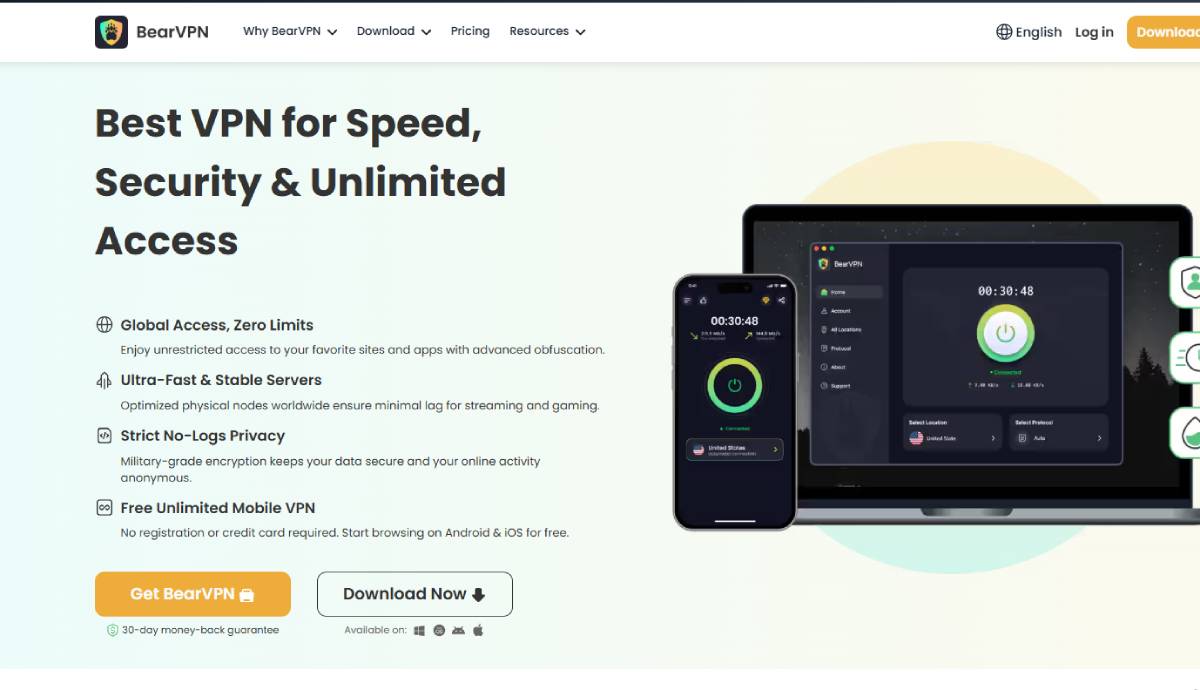
Bear VPN operates within the cybersecurity and network privacy market, providing encrypted internet connections designed to protect online communications, secure user data, and improve digital privacy.

August 3, 2026
|

The cybersecurity industry continues to expand as businesses and consumers prioritize secure internet access, data privacy, and remote connectivity. Bear VPN reflects growing demand for virtual private network (VPN) solutions that strengthen digital security, safeguard sensitive information, and support secure online operations across increasingly distributed digital environments.

Bear VPN operates within the cybersecurity and network privacy market, providing encrypted internet connections designed to protect online communications, secure user data, and improve digital privacy. VPN technologies have become increasingly important as organizations expand remote work, cloud adoption, and globally connected business operations.

Key stakeholders include enterprise IT teams, cybersecurity professionals, remote employees, consumers, cloud service providers, and regulated industries managing sensitive information. Demand for VPN solutions continues rising alongside increasing cyber threats, public Wi-Fi usage, and stricter privacy expectations.

The platform reflects broader industry priorities surrounding secure remote access, encrypted communications, identity protection, and digital resilience. Digital transformation has significantly expanded the cybersecurity attack surface, making secure connectivity a strategic priority for organizations worldwide. Hybrid work environments, cloud computing, and mobile workforces require businesses to protect users and corporate data regardless of physical location.

This development aligns with a broader trend across global markets where enterprises are investing heavily in cybersecurity technologies that secure network access, protect sensitive information, and support regulatory compliance. VPN services have evolved from consumer privacy tools into critical components of enterprise security strategies, often complementing Zero Trust architectures, identity management platforms, and endpoint protection systems.

Historically, organizations relied on traditional perimeter-based security models. Today, encrypted communications, secure remote access, continuous authentication, and cloud-native security solutions are increasingly essential. VPN technologies continue playing an important role within broader cybersecurity ecosystems designed to enhance operational resilience and reduce digital risk.

Cybersecurity analysts continue identifying secure connectivity as a fundamental requirement for modern digital infrastructure. Experts emphasize that VPN technologies remain valuable for protecting communications over untrusted networks, particularly when integrated with broader identity and access management frameworks.

Industry specialists also note that cybersecurity strategies are increasingly shifting toward Zero Trust models, where VPN solutions work alongside multi-factor authentication, endpoint detection, identity governance, and continuous monitoring to reduce organizational risk.

Analysts expect artificial intelligence to enhance network security through intelligent threat detection, adaptive access controls, anomaly monitoring, and automated security response capabilities. Organizations increasingly evaluate VPN providers based on encryption standards, privacy practices, scalability, regulatory compliance, cloud integration, and support for enterprise security architectures.

For businesses, VPN solutions improve secure remote access, strengthen cybersecurity posture, protect sensitive communications, and support regulatory compliance. Secure connectivity has become increasingly important for organizations managing distributed workforces and cloud-based operations.

Investors continue viewing cybersecurity as one of the fastest-growing enterprise technology markets due to rising cyber threats and accelerating digital transformation. Governments worldwide are also expanding cybersecurity regulations, data protection laws, and digital privacy requirements that encourage stronger network security practices.

For executives, investing in secure connectivity solutions forms an essential component of enterprise risk management, digital resilience, and long-term cybersecurity strategy. The future of secure connectivity will increasingly combine VPN technology with Zero Trust architectures, AI-powered threat detection, cloud-native security platforms, and identity-centric access controls. Decision-makers should monitor evolving cybersecurity regulations, encryption standards, and emerging network security innovations. Organizations that integrate secure connectivity with comprehensive cybersecurity governance will be better positioned to defend against increasingly sophisticated digital threats while supporting flexible global operations.

Source: Crozdesk
Date: August 3, 2026

  • Featured tools
Beautiful AI
Free

Beautiful AI is an AI-powered presentation platform that automates slide design and formatting, enabling users to create polished, on-brand presentations quickly.

#
Presentation
Learn more
Outplay AI
Free

Outplay AI is a dynamic sales engagement platform combining AI-powered outreach, multi-channel automation, and performance tracking to help teams optimize conversion and pipeline generation.

#
Sales
Learn more

Learn more about future of AI

Join 80,000+ Ai enthusiast getting weekly updates on exciting AI tools.
Thank you! Your submission has been received!
Oops! Something went wrong while submitting the form.

Bear VPN Strengthens Secure Digital Connectivity

August 3, 2026

Bear VPN operates within the cybersecurity and network privacy market, providing encrypted internet connections designed to protect online communications, secure user data, and improve digital privacy.

The cybersecurity industry continues to expand as businesses and consumers prioritize secure internet access, data privacy, and remote connectivity. Bear VPN reflects growing demand for virtual private network (VPN) solutions that strengthen digital security, safeguard sensitive information, and support secure online operations across increasingly distributed digital environments.

Bear VPN operates within the cybersecurity and network privacy market, providing encrypted internet connections designed to protect online communications, secure user data, and improve digital privacy. VPN technologies have become increasingly important as organizations expand remote work, cloud adoption, and globally connected business operations.

Key stakeholders include enterprise IT teams, cybersecurity professionals, remote employees, consumers, cloud service providers, and regulated industries managing sensitive information. Demand for VPN solutions continues rising alongside increasing cyber threats, public Wi-Fi usage, and stricter privacy expectations.

The platform reflects broader industry priorities surrounding secure remote access, encrypted communications, identity protection, and digital resilience. Digital transformation has significantly expanded the cybersecurity attack surface, making secure connectivity a strategic priority for organizations worldwide. Hybrid work environments, cloud computing, and mobile workforces require businesses to protect users and corporate data regardless of physical location.

This development aligns with a broader trend across global markets where enterprises are investing heavily in cybersecurity technologies that secure network access, protect sensitive information, and support regulatory compliance. VPN services have evolved from consumer privacy tools into critical components of enterprise security strategies, often complementing Zero Trust architectures, identity management platforms, and endpoint protection systems.

Historically, organizations relied on traditional perimeter-based security models. Today, encrypted communications, secure remote access, continuous authentication, and cloud-native security solutions are increasingly essential. VPN technologies continue playing an important role within broader cybersecurity ecosystems designed to enhance operational resilience and reduce digital risk.

Cybersecurity analysts continue identifying secure connectivity as a fundamental requirement for modern digital infrastructure. Experts emphasize that VPN technologies remain valuable for protecting communications over untrusted networks, particularly when integrated with broader identity and access management frameworks.

Industry specialists also note that cybersecurity strategies are increasingly shifting toward Zero Trust models, where VPN solutions work alongside multi-factor authentication, endpoint detection, identity governance, and continuous monitoring to reduce organizational risk.

Analysts expect artificial intelligence to enhance network security through intelligent threat detection, adaptive access controls, anomaly monitoring, and automated security response capabilities. Organizations increasingly evaluate VPN providers based on encryption standards, privacy practices, scalability, regulatory compliance, cloud integration, and support for enterprise security architectures.

For businesses, VPN solutions improve secure remote access, strengthen cybersecurity posture, protect sensitive communications, and support regulatory compliance. Secure connectivity has become increasingly important for organizations managing distributed workforces and cloud-based operations.

Investors continue viewing cybersecurity as one of the fastest-growing enterprise technology markets due to rising cyber threats and accelerating digital transformation. Governments worldwide are also expanding cybersecurity regulations, data protection laws, and digital privacy requirements that encourage stronger network security practices.

For executives, investing in secure connectivity solutions forms an essential component of enterprise risk management, digital resilience, and long-term cybersecurity strategy. The future of secure connectivity will increasingly combine VPN technology with Zero Trust architectures, AI-powered threat detection, cloud-native security platforms, and identity-centric access controls. Decision-makers should monitor evolving cybersecurity regulations, encryption standards, and emerging network security innovations. Organizations that integrate secure connectivity with comprehensive cybersecurity governance will be better positioned to defend against increasingly sophisticated digital threats while supporting flexible global operations.

Source: Crozdesk
Date: August 3, 2026

Promote Your Tool

Copy Embed Code

Similar Blogs

August 3, 2026
|

BusyBusy Enhances Construction Workforce Management

BusyBusy provides construction organizations with digital tools focused on employee time tracking, productivity monitoring, project management support, and workforce accountability.
Read more
August 3, 2026
|

Ease Transforms Digital Workforce Management

Ease provides organizations with digital tools designed to manage HR operations, employee information, benefits administration, and workforce processes through a unified platform.
Read more
August 3, 2026
|

WorksBuddy Advances Digital Workforce Solutions

WorksBuddy provides organizations with tools focused on managing workplace activities, employee engagement, operational workflows, and productivity processes through a centralized digital platform.
Read more
August 3, 2026
|

IconArchive Expands Digital Icon Resources

IconArchive operates within the digital asset and design resource landscape, providing a platform for discovering and sharing icon collections used across websites, applications, presentations, and software projects.
Read more
August 3, 2026
|

Zoho Inventory Strengthens Supply Chain Management

Zoho Inventory operates within the inventory and order management software market, offering cloud-based capabilities for inventory tracking, warehouse management, order processing, shipping integration, purchasing, and multi-channel sales management.
Read more
August 3, 2026
|

Kognic Accelerates Autonomous AI Data Management

Kognic operates within the AI data management and machine learning infrastructure market, providing platforms for data annotation, labeling, validation, and quality assurance used in developing autonomous systems.
Read more