
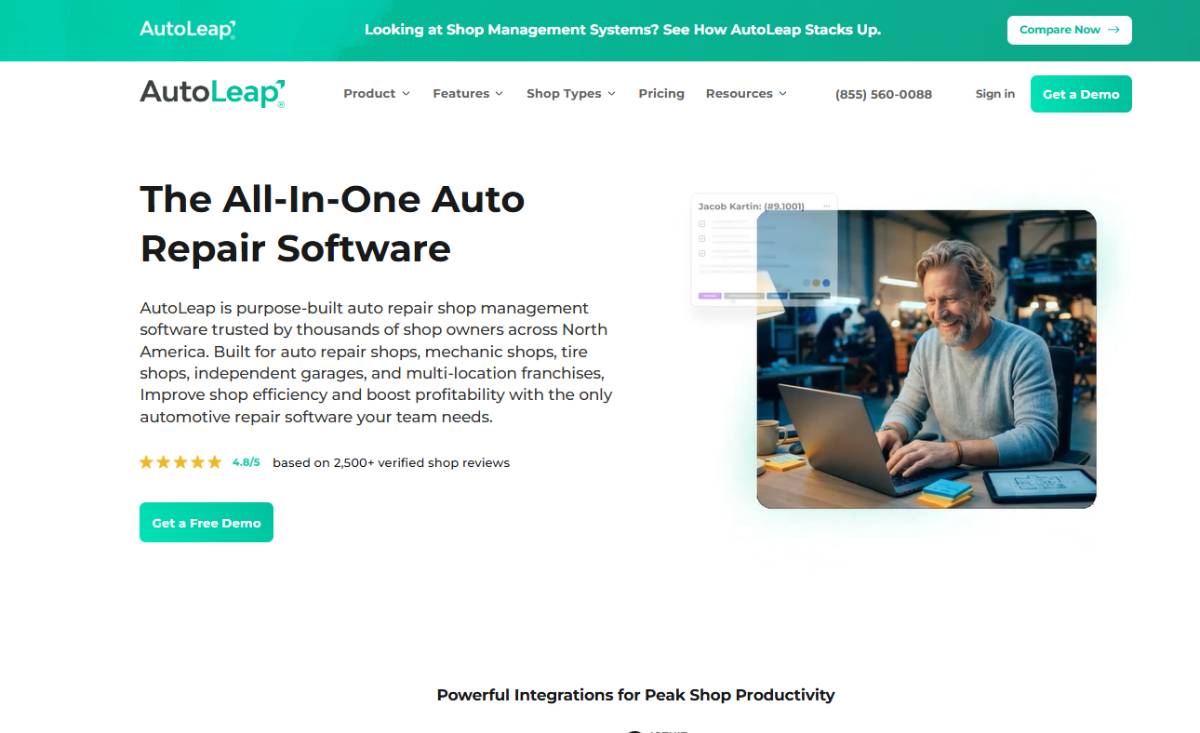
AutoLeap Transforms Digital Auto Repair

AutoLeap is positioned as an automotive repair management platform designed to help independent repair shops manage core operational activities digitally. Its capabilities span areas such as customer management, estimates, inspections, invoicing, payments, scheduling, communication, and reporting.

August 14, 2026
|

AutoLeap is strengthening the digital transformation of automotive repair operations by bringing essential shop-management functions into a unified software environment. Its approach reflects the auto-service industry’s growing shift toward cloud-based workflows, automation, and data-driven decision-making, affecting repair-shop owners, technicians, service advisors, and customers seeking faster, more transparent service.

AutoLeap is positioned as an automotive repair management platform designed to help independent repair shops manage core operational activities digitally. Its capabilities span areas such as customer management, estimates, inspections, invoicing, payments, scheduling, communication, and reporting.

The platform addresses a market where repair businesses increasingly need connected systems rather than disconnected administrative tools. By consolidating operational workflows, AutoLeap can help shops reduce manual processes and improve visibility across day-to-day activities.

The broader development reflects rising demand for technology that enables automotive businesses to operate more efficiently while maintaining stronger customer engagement and financial control.

The automotive aftermarket is undergoing a technology-driven transition as repair businesses face increasing operational complexity, technician shortages, rising customer expectations, and pressure to improve profitability. Traditionally, many independent repair shops relied on paper-based processes, spreadsheets, phone calls, and multiple disconnected applications.

Cloud-based shop-management platforms are changing that model by allowing businesses to centralize customer records, vehicle information, estimates, inspections, work orders, payments, and performance data. This shift is particularly significant for independent operators competing with larger dealership networks and increasingly sophisticated service chains.

AutoLeap's positioning fits within this wider modernization trend. Digital workflows can give shop owners greater visibility into revenue, technician productivity, customer retention, and operational bottlenecks. At the same time, greater reliance on connected software increases the importance of cybersecurity, data protection, system reliability, and employee adoption.

Industry observers generally view automotive service-management software as an important component of modernization because repair shops must balance technical work with increasingly complex administrative demands. Platforms such as AutoLeap illustrate how software is moving beyond basic scheduling toward integrated operational management.

From a management perspective, the strongest value proposition is likely to come from connecting processes that previously operated independently. Digital estimates, inspections, customer communications, invoicing, and reporting can create a more continuous flow of information between service advisors, technicians, management, and vehicle owners.

For executives, the strategic question is therefore not simply whether a shop should adopt software, but whether its technology stack can provide measurable improvements in productivity, customer experience, and profitability. The effectiveness of any platform will ultimately depend on implementation quality, employee adoption, data accuracy, integration capabilities, and the ability to translate operational information into actionable decisions.

For automotive repair businesses, digital management platforms can potentially reduce administrative workloads while improving operational visibility. Better-connected workflows may also help businesses respond more quickly to customers, monitor jobs, and identify revenue or productivity opportunities.

For investors and industry stakeholders, the broader trend signals continued technology adoption across the fragmented automotive aftermarket. Companies capable of combining automation with intuitive workflows may be better positioned as independent repair shops modernize.

Consumers may benefit from clearer estimates, digital inspections, faster communications, and more convenient payment experiences. However, increased digitization also places greater responsibility on businesses to protect customer and vehicle data.

From a policy perspective, cybersecurity, privacy, digital payment security, and responsible data management will remain important considerations as automotive service operations become increasingly software-dependent.

AutoLeap's trajectory will be closely tied to the continuing digitization of independent automotive repair businesses. Future developments across the sector are likely to emphasize automation, artificial intelligence, predictive analytics, mobile workflows, and deeper integrations with payments and other business systems.

For decision-makers, the key indicators will be measurable productivity gains, customer retention, adoption rates, integration depth, and data security. The larger trend is clear: automotive repair is increasingly becoming a technology-enabled business, not simply a mechanical service.

Source: Serchen
Date: August 14, 2026

  • Featured tools
Ai Fiesta
Paid

AI Fiesta is an all-in-one productivity platform that gives users access to multiple leading AI models through a single interface. It includes features like prompt enhancement, image generation, audio transcription and side-by-side model comparison.

#
Copywriting
#
Art Generator
Learn more
Writesonic AI
Free

Writesonic AI is a versatile AI writing platform designed for marketers, entrepreneurs, and content creators. It helps users create blog posts, ad copies, product descriptions, social media posts, and more with ease. With advanced AI models and user-friendly tools, Writesonic streamlines content production and saves time for busy professionals.

#
Copywriting
Learn more

Learn more about future of AI

Join 80,000+ Ai enthusiast getting weekly updates on exciting AI tools.
Thank you! Your submission has been received!
Oops! Something went wrong while submitting the form.

AutoLeap Transforms Digital Auto Repair

August 14, 2026

AutoLeap is positioned as an automotive repair management platform designed to help independent repair shops manage core operational activities digitally. Its capabilities span areas such as customer management, estimates, inspections, invoicing, payments, scheduling, communication, and reporting.

AutoLeap is strengthening the digital transformation of automotive repair operations by bringing essential shop-management functions into a unified software environment. Its approach reflects the auto-service industry’s growing shift toward cloud-based workflows, automation, and data-driven decision-making, affecting repair-shop owners, technicians, service advisors, and customers seeking faster, more transparent service.

AutoLeap is positioned as an automotive repair management platform designed to help independent repair shops manage core operational activities digitally. Its capabilities span areas such as customer management, estimates, inspections, invoicing, payments, scheduling, communication, and reporting.

The platform addresses a market where repair businesses increasingly need connected systems rather than disconnected administrative tools. By consolidating operational workflows, AutoLeap can help shops reduce manual processes and improve visibility across day-to-day activities.

The broader development reflects rising demand for technology that enables automotive businesses to operate more efficiently while maintaining stronger customer engagement and financial control.

The automotive aftermarket is undergoing a technology-driven transition as repair businesses face increasing operational complexity, technician shortages, rising customer expectations, and pressure to improve profitability. Traditionally, many independent repair shops relied on paper-based processes, spreadsheets, phone calls, and multiple disconnected applications.

Cloud-based shop-management platforms are changing that model by allowing businesses to centralize customer records, vehicle information, estimates, inspections, work orders, payments, and performance data. This shift is particularly significant for independent operators competing with larger dealership networks and increasingly sophisticated service chains.

AutoLeap's positioning fits within this wider modernization trend. Digital workflows can give shop owners greater visibility into revenue, technician productivity, customer retention, and operational bottlenecks. At the same time, greater reliance on connected software increases the importance of cybersecurity, data protection, system reliability, and employee adoption.

Industry observers generally view automotive service-management software as an important component of modernization because repair shops must balance technical work with increasingly complex administrative demands. Platforms such as AutoLeap illustrate how software is moving beyond basic scheduling toward integrated operational management.

From a management perspective, the strongest value proposition is likely to come from connecting processes that previously operated independently. Digital estimates, inspections, customer communications, invoicing, and reporting can create a more continuous flow of information between service advisors, technicians, management, and vehicle owners.

For executives, the strategic question is therefore not simply whether a shop should adopt software, but whether its technology stack can provide measurable improvements in productivity, customer experience, and profitability. The effectiveness of any platform will ultimately depend on implementation quality, employee adoption, data accuracy, integration capabilities, and the ability to translate operational information into actionable decisions.

For automotive repair businesses, digital management platforms can potentially reduce administrative workloads while improving operational visibility. Better-connected workflows may also help businesses respond more quickly to customers, monitor jobs, and identify revenue or productivity opportunities.

For investors and industry stakeholders, the broader trend signals continued technology adoption across the fragmented automotive aftermarket. Companies capable of combining automation with intuitive workflows may be better positioned as independent repair shops modernize.

Consumers may benefit from clearer estimates, digital inspections, faster communications, and more convenient payment experiences. However, increased digitization also places greater responsibility on businesses to protect customer and vehicle data.

From a policy perspective, cybersecurity, privacy, digital payment security, and responsible data management will remain important considerations as automotive service operations become increasingly software-dependent.

AutoLeap's trajectory will be closely tied to the continuing digitization of independent automotive repair businesses. Future developments across the sector are likely to emphasize automation, artificial intelligence, predictive analytics, mobile workflows, and deeper integrations with payments and other business systems.

For decision-makers, the key indicators will be measurable productivity gains, customer retention, adoption rates, integration depth, and data security. The larger trend is clear: automotive repair is increasingly becoming a technology-enabled business, not simply a mechanical service.

Source: Serchen
Date: August 14, 2026

Promote Your Tool

Copy Embed Code

Similar Blogs

August 14, 2026
|

Benefitfocus Expands Digital Benefits Administration

Benefitfocus provides cloud-based technology covering benefits enrollment, administration, communications, billing, payments and data exchange.
Read more
August 14, 2026
|

Travel Agent Revenue Models Evolve Digitally

Travel agencies can earn commissions when customers book hotels, cruises, tours, vacation packages and other travel products through them. Suppliers may pay agents for generating bookings, making commissions a traditional component of agency revenue.
Read more
August 14, 2026
|

Sofon Advances Guided Selling CPQ Automation

Sofon's platform combines guided selling, product configuration, pricing, quotation and sales-management capabilities. Guided questionnaires help sales teams identify customer requirements and translate them into suitable product configurations.
Read more
August 14, 2026
|

WellRyde Advances Medical Transportation Management

WellRyde provides technology for managing non-emergency medical transportation operations, including trip scheduling, dispatch coordination, transportation-provider management and reporting.
Read more
August 14, 2026
|

Review WAVE Advances Digital Patient Engagement

Review WAVE provides healthcare practices with tools for online appointment scheduling, two-way texting, automated appointment reminders, digital forms, web chat, marketing campaigns and online review generation.
Read more
August 14, 2026
|

Edgenuity Expands Digital Virtual Education

Edgenuity provides digital curriculum and learning solutions covering core academic subjects, electives, Advanced Placement and career-oriented education.
Read more