
Asus Launches Secondary Touchscreen Display Push

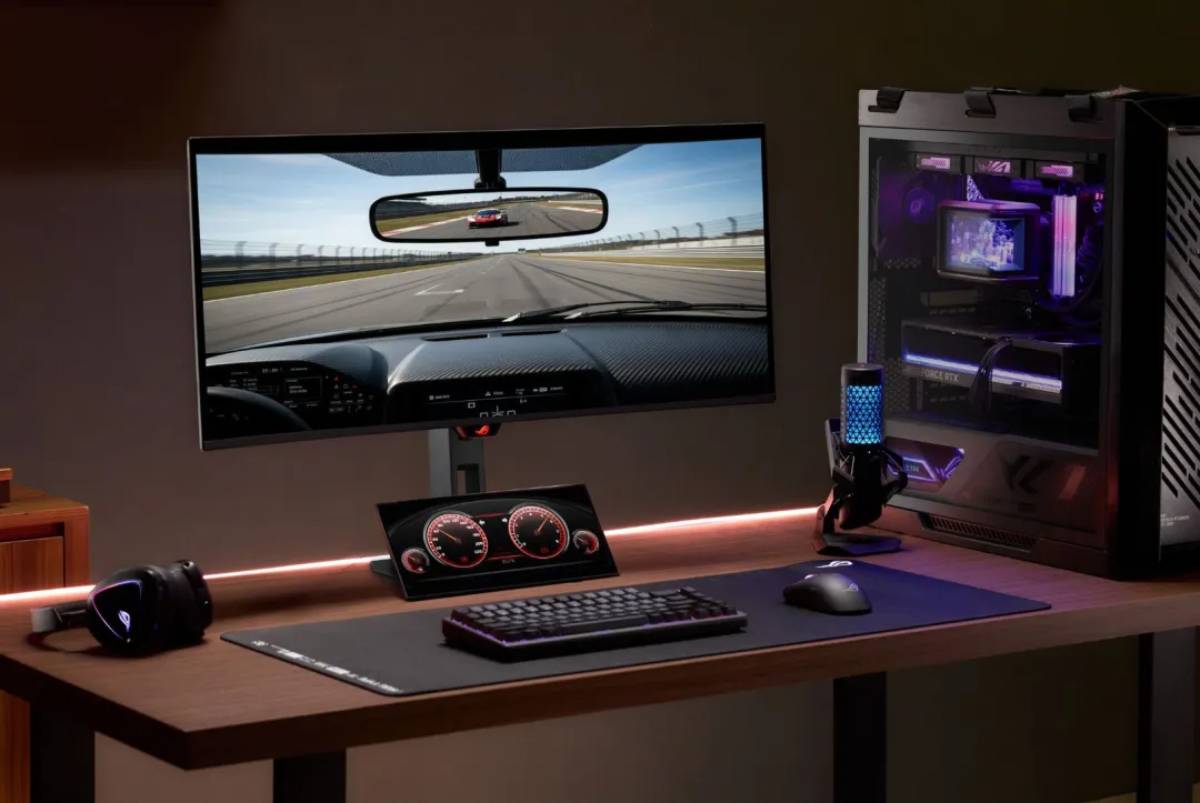
Asus has introduced a secondary touchscreen display designed to enhance workflow efficiency and real-time content control for creators and streamers.

May 11, 2026
|
Image Source:  The Verge

Asus is advancing deeper into the creator hardware segment with a new secondary touchscreen display aimed at competing with Elgato’s ecosystem. The move reflects growing demand for multi-screen productivity tools among streamers, gamers, and digital creators, signaling intensified competition in the peripheral market and expanding opportunities in modular computing accessories.

Asus has introduced a secondary touchscreen display designed to enhance workflow efficiency and real-time content control for creators and streamers. The device integrates as an auxiliary screen, enabling multitasking functions such as monitoring, control dashboards, and interactive overlays.

The product positions Asus in direct competition with Elgato, a dominant player in creator-focused hardware ecosystems. This expansion reflects Asus’s broader strategy to diversify beyond traditional PC hardware into creator-centric tools. The launch aligns with rising demand for multi-display setups in gaming, streaming, and professional content production environments, where real-time control and interface flexibility are increasingly essential.

The creator economy has accelerated demand for specialized hardware designed to optimize digital production workflows. Secondary displays, stream decks, and modular control surfaces have become essential tools for streamers, gamers, and professional content creators. This shift reflects a broader transformation in personal computing, where productivity is increasingly defined by multi-screen and adaptive interface environments.

Asus’s entry into this segment highlights the convergence of gaming hardware and content creation tools. Traditionally, PC manufacturers focused on core performance components such as GPUs and motherboards. However, the rise of streaming platforms and creator monetization models has expanded the value chain into peripheral ecosystems. Companies are now competing not only on raw hardware performance but also on usability, workflow optimization, and ecosystem integration tailored for digital creators.

Industry analysts note that the creator hardware market is evolving rapidly, driven by the professionalization of streaming and content production. One technology market observer stated that “peripheral innovation is becoming a key differentiator as computing hardware becomes increasingly standardized.”

Experts suggest that secondary displays and control surfaces significantly enhance productivity for live content creators, enabling real-time interaction without disrupting primary workflows. However, analysts also caution that the market is becoming crowded, with differentiation increasingly dependent on software integration and ecosystem compatibility.

Some industry voices highlight that Asus’s entry could intensify competition with established players like Elgato by leveraging its broader hardware distribution network. Success will depend on whether Asus can build a cohesive software layer that complements its hardware offerings and integrates seamlessly into creator workflows.

For businesses, Asus’s move reflects expanding monetization opportunities within the creator economy, where hardware and software integration increasingly define competitive advantage. Peripheral manufacturers may need to accelerate ecosystem development rather than rely solely on standalone product innovation.

For investors, the creator tools segment represents a high-growth niche within consumer electronics, driven by sustained demand from gaming, streaming, and digital production markets. On the consumer side, improved workflow tools enhance productivity and content quality, lowering barriers for entry-level creators.

While regulatory implications remain limited, increasing reliance on integrated digital ecosystems may eventually raise considerations around platform interoperability and data synchronization across creator tools.

The creator hardware market is expected to continue expanding as content production becomes more decentralized and professionalized. Future competition will likely focus on software ecosystems, AI-assisted workflow tools, and cross-device integration. Asus’s success will depend on its ability to build a compelling ecosystem around its hardware, competing not only on functionality but also on seamless creator experience design.

Source: The Verge
Date: 11 May 2026

  • Featured tools
WellSaid Ai
Free

WellSaid AI is an advanced text-to-speech platform that transforms written text into lifelike, human-quality voiceovers.

#
Text to Speech
Learn more
Tome AI
Free

Tome AI is an AI-powered storytelling and presentation tool designed to help users create compelling narratives and presentations quickly and efficiently. It leverages advanced AI technologies to generate content, images, and animations based on user input.

#
Presentation
#
Startup Tools
Learn more

Learn more about future of AI

Join 80,000+ Ai enthusiast getting weekly updates on exciting AI tools.
Thank you! Your submission has been received!
Oops! Something went wrong while submitting the form.

Asus Launches Secondary Touchscreen Display Push

May 11, 2026

Asus has introduced a secondary touchscreen display designed to enhance workflow efficiency and real-time content control for creators and streamers.

Image Source:  The Verge

Asus is advancing deeper into the creator hardware segment with a new secondary touchscreen display aimed at competing with Elgato’s ecosystem. The move reflects growing demand for multi-screen productivity tools among streamers, gamers, and digital creators, signaling intensified competition in the peripheral market and expanding opportunities in modular computing accessories.

Asus has introduced a secondary touchscreen display designed to enhance workflow efficiency and real-time content control for creators and streamers. The device integrates as an auxiliary screen, enabling multitasking functions such as monitoring, control dashboards, and interactive overlays.

The product positions Asus in direct competition with Elgato, a dominant player in creator-focused hardware ecosystems. This expansion reflects Asus’s broader strategy to diversify beyond traditional PC hardware into creator-centric tools. The launch aligns with rising demand for multi-display setups in gaming, streaming, and professional content production environments, where real-time control and interface flexibility are increasingly essential.

The creator economy has accelerated demand for specialized hardware designed to optimize digital production workflows. Secondary displays, stream decks, and modular control surfaces have become essential tools for streamers, gamers, and professional content creators. This shift reflects a broader transformation in personal computing, where productivity is increasingly defined by multi-screen and adaptive interface environments.

Asus’s entry into this segment highlights the convergence of gaming hardware and content creation tools. Traditionally, PC manufacturers focused on core performance components such as GPUs and motherboards. However, the rise of streaming platforms and creator monetization models has expanded the value chain into peripheral ecosystems. Companies are now competing not only on raw hardware performance but also on usability, workflow optimization, and ecosystem integration tailored for digital creators.

Industry analysts note that the creator hardware market is evolving rapidly, driven by the professionalization of streaming and content production. One technology market observer stated that “peripheral innovation is becoming a key differentiator as computing hardware becomes increasingly standardized.”

Experts suggest that secondary displays and control surfaces significantly enhance productivity for live content creators, enabling real-time interaction without disrupting primary workflows. However, analysts also caution that the market is becoming crowded, with differentiation increasingly dependent on software integration and ecosystem compatibility.

Some industry voices highlight that Asus’s entry could intensify competition with established players like Elgato by leveraging its broader hardware distribution network. Success will depend on whether Asus can build a cohesive software layer that complements its hardware offerings and integrates seamlessly into creator workflows.

For businesses, Asus’s move reflects expanding monetization opportunities within the creator economy, where hardware and software integration increasingly define competitive advantage. Peripheral manufacturers may need to accelerate ecosystem development rather than rely solely on standalone product innovation.

For investors, the creator tools segment represents a high-growth niche within consumer electronics, driven by sustained demand from gaming, streaming, and digital production markets. On the consumer side, improved workflow tools enhance productivity and content quality, lowering barriers for entry-level creators.

While regulatory implications remain limited, increasing reliance on integrated digital ecosystems may eventually raise considerations around platform interoperability and data synchronization across creator tools.

The creator hardware market is expected to continue expanding as content production becomes more decentralized and professionalized. Future competition will likely focus on software ecosystems, AI-assisted workflow tools, and cross-device integration. Asus’s success will depend on its ability to build a compelling ecosystem around its hardware, competing not only on functionality but also on seamless creator experience design.

Source: The Verge
Date: 11 May 2026

Promote Your Tool

Copy Embed Code

Similar Blogs

June 23, 2026
|

Sokin Secures European Payments License

Sokin has acquired Norwegian fintech firm Settle in a transaction that provides access to a valuable Electronic Money Institution (EMI) license.
Read more
June 23, 2026
|

Twin Prime Bets Defence AI

Twin Prime has secured $10 million in fresh funding to expand its defence-focused AI systems, which prioritize sensor fusion, detection, and real-time environmental interpretation over generative or chatbot-based models.
Read more
June 23, 2026
|

Northzone Backs Physical AI Shift

Northzone has appointed a new partner to lead its physical AI investment strategy, marking a deliberate shift toward embodied intelligence—systems that interact directly with physical environments.
Read more
June 23, 2026
|

Switzerland Hosts Iran US Technical Talks

The upcoming technical-level discussions between Iranian and US representatives will focus on procedural and issue-specific frameworks rather than high-level political agreements.
Read more
June 23, 2026
|

Switzerland Extends Ukrainian Protection Status

Swiss federal authorities are reviewing the possibility of extending S protection status, which grants temporary residence rights and access to essential services for Ukrainian nationals fleeing the war.
Read more
June 23, 2026
|

Swiss FM Engages Iran Diplomacy

Swiss Foreign Minister Ignazio Cassis held formal discussions with Iran’s foreign minister, focusing on bilateral relations and broader regional security dynamics.
Read more