
Apple Upgrades Vision Pro AI Spatial Intelligence

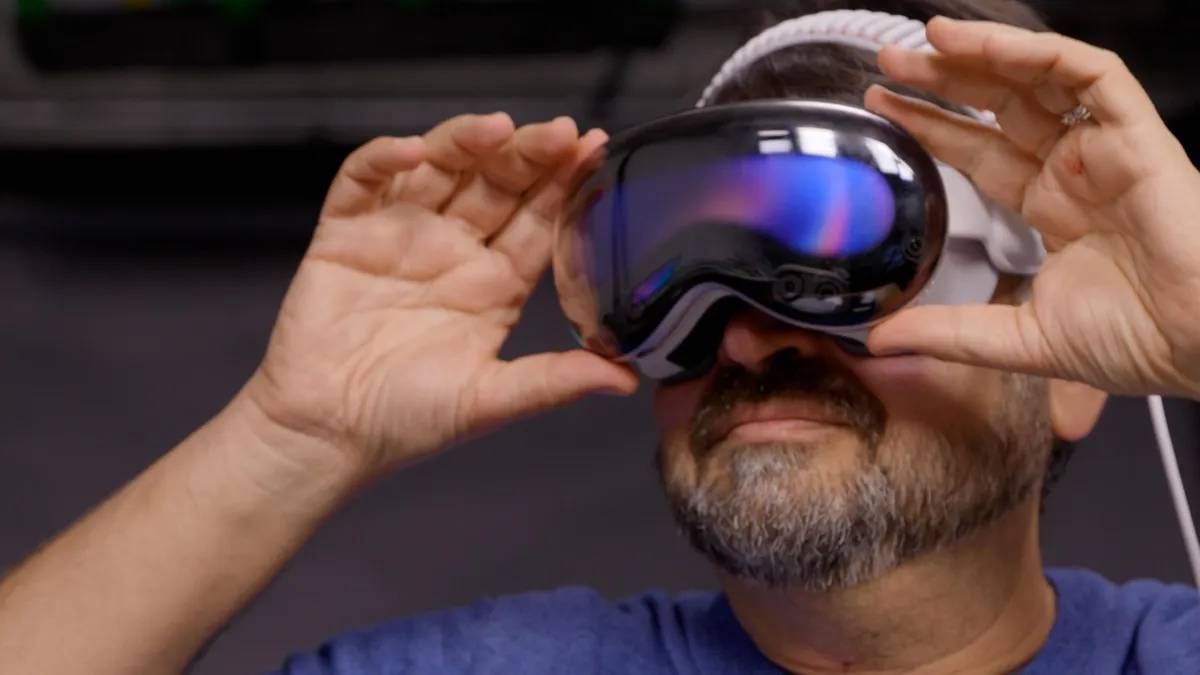
Apple’s Vision Pro will soon receive AI-powered enhancements that allow the device to better interpret and interact with real-world environments.

June 9, 2026
|
Image Source: CNET

A major development unfolded in the spatial computing and consumer technology sector as Apple announced plans to integrate advanced artificial intelligence capabilities into its Vision Pro headset through an upcoming visionOS update. The enhancement is designed to enable real-time environmental understanding, signaling a strategic shift toward AI-driven spatial intelligence with implications for mixed reality computing, enterprise applications, and next-generation user interfaces.

Apple’s Vision Pro will soon receive AI-powered enhancements that allow the device to better interpret and interact with real-world environments. The upgrade is expected to improve object recognition, spatial mapping, and contextual awareness, enabling more immersive and responsive mixed reality experiences.

The update will be delivered through visionOS, Apple’s operating system for its spatial computing platform. It is designed to strengthen the device’s positioning in both consumer and enterprise markets by expanding use cases beyond entertainment into productivity, design, training, and collaboration.

Key stakeholders include Apple’s hardware and software divisions, enterprise developers, spatial computing application creators, and early adopters of mixed reality technology. The update reflects Apple’s broader strategy of embedding AI across its ecosystem, from mobile devices to wearable computing platforms.

The development aligns with a broader industry trend where artificial intelligence is becoming central to spatial computing and augmented reality systems. Over the past several years, companies such as Apple, Meta, and Microsoft have invested heavily in mixed reality platforms aimed at redefining how users interact with digital environments.

Apple introduced Vision Pro as part of its long-term vision for spatial computing, positioning it as a premium device for immersive digital interaction. However, widespread adoption has been limited by high costs and evolving application ecosystems. The integration of AI represents a critical step toward making the platform more intuitive, adaptive, and practically useful.

Globally, the convergence of AI and spatial computing is expected to transform industries such as architecture, healthcare, manufacturing, and education. These sectors increasingly rely on real-time visualization and contextual data interpretation, which AI-enhanced mixed reality systems can support.

Historically, technological shifts such as the transition from desktop to mobile computing have been driven by improvements in user interface intelligence. The integration of AI into Vision Pro represents a similar inflection point in the evolution of human-computer interaction.

Technology analysts suggest that AI integration could significantly improve Vision Pro’s usability by reducing user friction and enabling more natural interaction with digital environments. Spatial awareness powered by AI is seen as a key differentiator in the next phase of mixed reality competition.

Industry observers note that Apple’s approach emphasizes on-device intelligence, which could provide advantages in privacy, latency, and performance compared to cloud-reliant systems. This aligns with Apple’s broader positioning around secure and private computing experiences.

Experts also highlight that the success of Vision Pro will depend heavily on the development of a strong application ecosystem. AI capabilities may help accelerate developer interest by enabling more sophisticated and practical use cases.

However, some analysts caution that adoption challenges remain, including device cost, limited mainstream content availability, and competition from more affordable mixed reality alternatives. For businesses, AI-enhanced Vision Pro could unlock new opportunities in remote collaboration, design visualization, training simulations, and digital workflow transformation. Enterprises may increasingly explore spatial computing as a productivity tool rather than a niche technology.

For investors, the development signals Apple’s continued investment in long-term platform innovation. While Vision Pro remains a relatively early-stage product category, AI integration could improve adoption prospects and ecosystem expansion.

For policymakers, the rise of AI-powered spatial computing raises questions around data privacy, environmental scanning, and the collection of real-world spatial data. Regulatory frameworks may need to evolve to address how immersive devices capture and process sensitive environmental information.

Analysts suggest that AI will be a defining factor in determining whether mixed reality becomes a mainstream computing platform or remains a niche segment. Apple is expected to continue refining Vision Pro’s capabilities through iterative visionOS updates, with AI playing a central role in future enhancements. Decision-makers should monitor developer adoption, enterprise deployment trends, and competitive responses from other spatial computing platforms.

While the integration of AI marks a significant advancement, long-term success will depend on ecosystem growth, affordability, and real-world use case expansion. The next phase will determine whether spatial computing becomes a core computing platform or remains an emerging category.

Source: CNET
Date: June 2026

  • Featured tools
WellSaid Ai
Free

WellSaid AI is an advanced text-to-speech platform that transforms written text into lifelike, human-quality voiceovers.

#
Text to Speech
Learn more
Writesonic AI
Free

Writesonic AI is a versatile AI writing platform designed for marketers, entrepreneurs, and content creators. It helps users create blog posts, ad copies, product descriptions, social media posts, and more with ease. With advanced AI models and user-friendly tools, Writesonic streamlines content production and saves time for busy professionals.

#
Copywriting
Learn more

Learn more about future of AI

Join 80,000+ Ai enthusiast getting weekly updates on exciting AI tools.
Thank you! Your submission has been received!
Oops! Something went wrong while submitting the form.

Apple Upgrades Vision Pro AI Spatial Intelligence

June 9, 2026

Apple’s Vision Pro will soon receive AI-powered enhancements that allow the device to better interpret and interact with real-world environments.

Image Source: CNET

A major development unfolded in the spatial computing and consumer technology sector as Apple announced plans to integrate advanced artificial intelligence capabilities into its Vision Pro headset through an upcoming visionOS update. The enhancement is designed to enable real-time environmental understanding, signaling a strategic shift toward AI-driven spatial intelligence with implications for mixed reality computing, enterprise applications, and next-generation user interfaces.

Apple’s Vision Pro will soon receive AI-powered enhancements that allow the device to better interpret and interact with real-world environments. The upgrade is expected to improve object recognition, spatial mapping, and contextual awareness, enabling more immersive and responsive mixed reality experiences.

The update will be delivered through visionOS, Apple’s operating system for its spatial computing platform. It is designed to strengthen the device’s positioning in both consumer and enterprise markets by expanding use cases beyond entertainment into productivity, design, training, and collaboration.

Key stakeholders include Apple’s hardware and software divisions, enterprise developers, spatial computing application creators, and early adopters of mixed reality technology. The update reflects Apple’s broader strategy of embedding AI across its ecosystem, from mobile devices to wearable computing platforms.

The development aligns with a broader industry trend where artificial intelligence is becoming central to spatial computing and augmented reality systems. Over the past several years, companies such as Apple, Meta, and Microsoft have invested heavily in mixed reality platforms aimed at redefining how users interact with digital environments.

Apple introduced Vision Pro as part of its long-term vision for spatial computing, positioning it as a premium device for immersive digital interaction. However, widespread adoption has been limited by high costs and evolving application ecosystems. The integration of AI represents a critical step toward making the platform more intuitive, adaptive, and practically useful.

Globally, the convergence of AI and spatial computing is expected to transform industries such as architecture, healthcare, manufacturing, and education. These sectors increasingly rely on real-time visualization and contextual data interpretation, which AI-enhanced mixed reality systems can support.

Historically, technological shifts such as the transition from desktop to mobile computing have been driven by improvements in user interface intelligence. The integration of AI into Vision Pro represents a similar inflection point in the evolution of human-computer interaction.

Technology analysts suggest that AI integration could significantly improve Vision Pro’s usability by reducing user friction and enabling more natural interaction with digital environments. Spatial awareness powered by AI is seen as a key differentiator in the next phase of mixed reality competition.

Industry observers note that Apple’s approach emphasizes on-device intelligence, which could provide advantages in privacy, latency, and performance compared to cloud-reliant systems. This aligns with Apple’s broader positioning around secure and private computing experiences.

Experts also highlight that the success of Vision Pro will depend heavily on the development of a strong application ecosystem. AI capabilities may help accelerate developer interest by enabling more sophisticated and practical use cases.

However, some analysts caution that adoption challenges remain, including device cost, limited mainstream content availability, and competition from more affordable mixed reality alternatives. For businesses, AI-enhanced Vision Pro could unlock new opportunities in remote collaboration, design visualization, training simulations, and digital workflow transformation. Enterprises may increasingly explore spatial computing as a productivity tool rather than a niche technology.

For investors, the development signals Apple’s continued investment in long-term platform innovation. While Vision Pro remains a relatively early-stage product category, AI integration could improve adoption prospects and ecosystem expansion.

For policymakers, the rise of AI-powered spatial computing raises questions around data privacy, environmental scanning, and the collection of real-world spatial data. Regulatory frameworks may need to evolve to address how immersive devices capture and process sensitive environmental information.

Analysts suggest that AI will be a defining factor in determining whether mixed reality becomes a mainstream computing platform or remains a niche segment. Apple is expected to continue refining Vision Pro’s capabilities through iterative visionOS updates, with AI playing a central role in future enhancements. Decision-makers should monitor developer adoption, enterprise deployment trends, and competitive responses from other spatial computing platforms.

While the integration of AI marks a significant advancement, long-term success will depend on ecosystem growth, affordability, and real-world use case expansion. The next phase will determine whether spatial computing becomes a core computing platform or remains an emerging category.

Source: CNET
Date: June 2026

Promote Your Tool

Copy Embed Code

Similar Blogs

June 9, 2026
|

Apple Hybrid AI Strategy Privacy Focus

Apple’s latest AI framework, revealed at WWDC 2026, incorporates advanced model capabilities influenced by Google’s Gemini ecosystem while adapting them for Apple’s proprietary infrastructure.
Read more
June 9, 2026
|

Apple Fitness Plus AI Coaching Expansion

Apple’s latest Fitness+ update brings Spanish language support to its AI-driven Workout Buddy feature, which provides real-time coaching and motivational guidance during workouts.
Read more
June 9, 2026
|

Apple Overhauls AI Strategy WWDC2026 Ecosystem

Apple introduced a broad expansion of its “Apple Intelligence” framework, embedding AI more deeply into iOS, iPadOS, macOS, and visionOS.
Read more
June 9, 2026
|

Apple Expands iPadOS AI Productivity Ecosystem

Apple’s iPadOS 27 introduces a new layer of system-wide intelligence designed to improve multitasking, content generation, and contextual assistance across iPad devices.
Read more
June 9, 2026
|

Apple Upgrades Vision Pro AI Spatial Intelligence

Apple’s Vision Pro will soon receive AI-powered enhancements that allow the device to better interpret and interact with real-world environments.
Read more
June 9, 2026
|

Instagram Expands Profile Grid Customization Feature

Instagram’s new feature enables users to manually rearrange the order of posts displayed on their profile grid, moving away from the traditional chronological layout.
Read more