
Apple Unveils AI-Powered Siri Platform

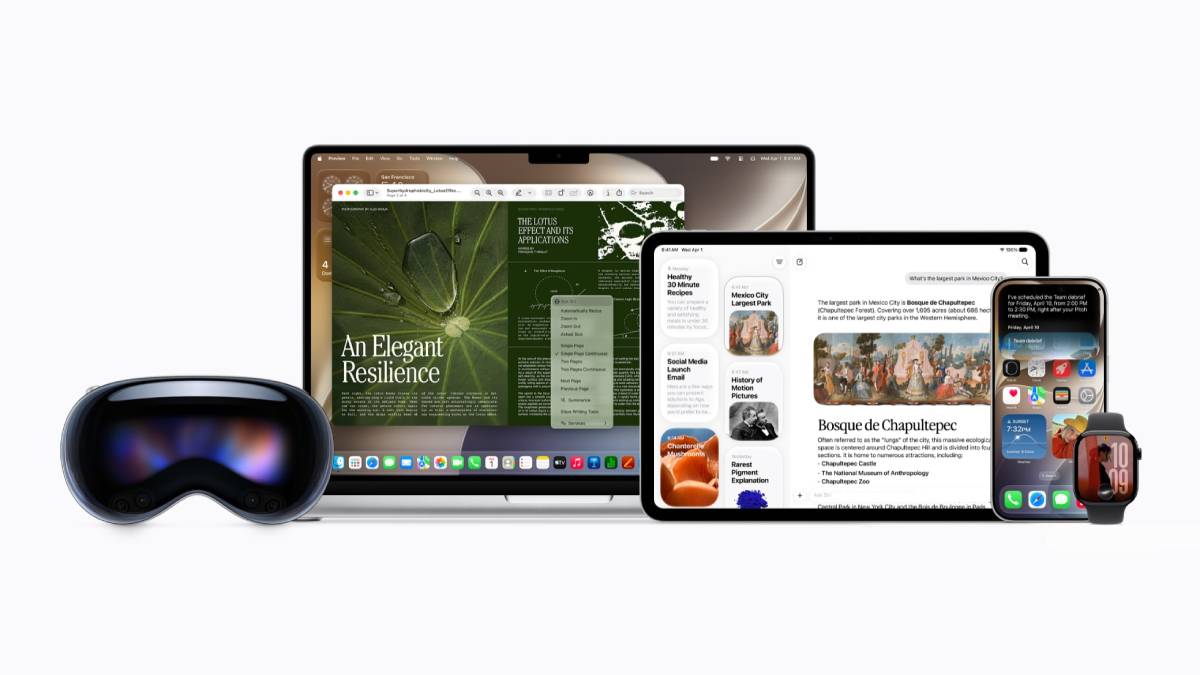
Apple unveiled Siri AI during its 2026 Worldwide Developers Conference (WWDC), positioning the upgraded assistant as a cornerstone of its broader Apple Intelligence strategy.

June 10, 2026
|
Image Source: Apple Newsroom

A major development in the global artificial intelligence landscape unfolded as Apple introduced Siri AI, a significantly more capable and personalized digital assistant designed to understand context, perform complex tasks, and interact seamlessly across apps and devices. The launch marks Apple's most ambitious AI push yet, carrying major implications for consumers, enterprise software ecosystems, and the broader competitive dynamics of the technology industry.

Apple unveiled Siri AI during its 2026 Worldwide Developers Conference (WWDC), positioning the upgraded assistant as a cornerstone of its broader Apple Intelligence strategy. The new system leverages advanced generative AI capabilities to provide more natural conversations, deeper personalization, and improved contextual understanding.

According to Apple, Siri AI can access user-approved personal information across messages, emails, calendars, files, and applications to deliver highly customized assistance. The assistant can also execute multi-step actions across apps, reducing the need for manual navigation and enhancing productivity.

The rollout is expected to begin later this year across supported iPhone, iPad, Mac, Apple Watch, and Vision Pro devices. The launch places Apple in more direct competition with AI assistants offered by Microsoft, Google, OpenAI, and other technology leaders.

The announcement comes as global technology companies accelerate efforts to transform generative AI from standalone chatbots into integrated personal intelligence platforms. Over the past three years, AI competition has expanded beyond model performance to focus on ecosystem integration, user engagement, and device-level experiences.

Apple entered the generative AI race later than several competitors, prompting investor concerns about whether the company could maintain its leadership position in consumer technology. The launch of Apple Intelligence in 2025 represented the company's first major response, emphasizing privacy-focused AI powered by on-device processing and private cloud infrastructure.

The development aligns with a broader trend across global markets where technology firms are seeking to embed AI deeply into operating systems, productivity tools, and consumer devices. As smartphones mature and hardware innovation slows, AI-driven experiences are increasingly viewed as the next major growth catalyst for device makers and software providers.

For Apple, Siri AI represents a strategic effort to strengthen customer loyalty, expand service revenues, and reinforce the value of its tightly integrated ecosystem. Apple executives described Siri AI as a fundamental evolution of the digital assistant concept, emphasizing its ability to understand personal context while maintaining the company’s longstanding privacy commitments. The company highlighted a hybrid architecture that combines on-device intelligence with secure cloud processing when additional computational power is required.

Industry analysts view the launch as one of Apple’s most important software announcements in years. Many believe the company’s competitive advantage lies not in creating the most powerful standalone AI model but in integrating AI across more than two billion active devices worldwide.

Technology experts note that Apple's privacy-first positioning could resonate strongly with consumers and enterprise customers concerned about data security. However, analysts also caution that Apple faces intense competition from rivals that continue to invest heavily in large language models, AI agents, and cloud-based intelligence platforms.

Market observers suggest the success of Siri AI will depend not only on technical capabilities but also on user adoption, reliability, and developer participation across Apple's ecosystem.

For businesses, Siri AI could accelerate the adoption of AI-powered workflows across enterprise mobility, communications, customer service, and productivity applications. Companies operating within Apple's ecosystem may gain new opportunities to create AI-enabled services and experiences.

Investors are likely to view the launch as a critical indicator of Apple's ability to compete effectively in the AI era. Strong adoption could support growth in hardware upgrades, subscription services, and developer revenues.

For consumers, the technology promises more intuitive digital interactions and personalized assistance, although questions surrounding data access, transparency, and user control will remain central.

From a policy perspective, the launch reinforces ongoing debates about AI governance, privacy standards, cross-platform interoperability, and the responsibilities of technology giants managing increasingly powerful personal data ecosystems.

Attention will now turn to the real-world performance of Siri AI as Apple begins its phased rollout across devices and regions. Investors, regulators, developers, and consumers will closely monitor adoption rates, privacy safeguards, and competitive responses from rival technology firms.

As AI becomes the primary interface between users and digital services, Apple's latest move may signal the beginning of a new era where personal intelligence platforms become the central battleground of the global technology industry.

Source: Apple Newsroom
Date:
June 10, 2026

  • Featured tools
Twistly AI
Paid

Twistly AI is a PowerPoint add-in that allows users to generate full slide decks, improve existing presentations, and convert various content types into polished slides directly within Microsoft PowerPoint.It streamlines presentation creation using AI-powered text analysis, image generation and content conversion.

#
Presentation
Learn more
Hostinger Horizons
Freemium

Hostinger Horizons is an AI-powered platform that allows users to build and deploy custom web applications without writing code. It packs hosting, domain management and backend integration into a unified tool for rapid app creation.

#
Startup Tools
#
Coding
#
Project Management
Learn more

Learn more about future of AI

Join 80,000+ Ai enthusiast getting weekly updates on exciting AI tools.
Thank you! Your submission has been received!
Oops! Something went wrong while submitting the form.

Apple Unveils AI-Powered Siri Platform

June 10, 2026

Apple unveiled Siri AI during its 2026 Worldwide Developers Conference (WWDC), positioning the upgraded assistant as a cornerstone of its broader Apple Intelligence strategy.

Image Source: Apple Newsroom

A major development in the global artificial intelligence landscape unfolded as Apple introduced Siri AI, a significantly more capable and personalized digital assistant designed to understand context, perform complex tasks, and interact seamlessly across apps and devices. The launch marks Apple's most ambitious AI push yet, carrying major implications for consumers, enterprise software ecosystems, and the broader competitive dynamics of the technology industry.

Apple unveiled Siri AI during its 2026 Worldwide Developers Conference (WWDC), positioning the upgraded assistant as a cornerstone of its broader Apple Intelligence strategy. The new system leverages advanced generative AI capabilities to provide more natural conversations, deeper personalization, and improved contextual understanding.

According to Apple, Siri AI can access user-approved personal information across messages, emails, calendars, files, and applications to deliver highly customized assistance. The assistant can also execute multi-step actions across apps, reducing the need for manual navigation and enhancing productivity.

The rollout is expected to begin later this year across supported iPhone, iPad, Mac, Apple Watch, and Vision Pro devices. The launch places Apple in more direct competition with AI assistants offered by Microsoft, Google, OpenAI, and other technology leaders.

The announcement comes as global technology companies accelerate efforts to transform generative AI from standalone chatbots into integrated personal intelligence platforms. Over the past three years, AI competition has expanded beyond model performance to focus on ecosystem integration, user engagement, and device-level experiences.

Apple entered the generative AI race later than several competitors, prompting investor concerns about whether the company could maintain its leadership position in consumer technology. The launch of Apple Intelligence in 2025 represented the company's first major response, emphasizing privacy-focused AI powered by on-device processing and private cloud infrastructure.

The development aligns with a broader trend across global markets where technology firms are seeking to embed AI deeply into operating systems, productivity tools, and consumer devices. As smartphones mature and hardware innovation slows, AI-driven experiences are increasingly viewed as the next major growth catalyst for device makers and software providers.

For Apple, Siri AI represents a strategic effort to strengthen customer loyalty, expand service revenues, and reinforce the value of its tightly integrated ecosystem. Apple executives described Siri AI as a fundamental evolution of the digital assistant concept, emphasizing its ability to understand personal context while maintaining the company’s longstanding privacy commitments. The company highlighted a hybrid architecture that combines on-device intelligence with secure cloud processing when additional computational power is required.

Industry analysts view the launch as one of Apple’s most important software announcements in years. Many believe the company’s competitive advantage lies not in creating the most powerful standalone AI model but in integrating AI across more than two billion active devices worldwide.

Technology experts note that Apple's privacy-first positioning could resonate strongly with consumers and enterprise customers concerned about data security. However, analysts also caution that Apple faces intense competition from rivals that continue to invest heavily in large language models, AI agents, and cloud-based intelligence platforms.

Market observers suggest the success of Siri AI will depend not only on technical capabilities but also on user adoption, reliability, and developer participation across Apple's ecosystem.

For businesses, Siri AI could accelerate the adoption of AI-powered workflows across enterprise mobility, communications, customer service, and productivity applications. Companies operating within Apple's ecosystem may gain new opportunities to create AI-enabled services and experiences.

Investors are likely to view the launch as a critical indicator of Apple's ability to compete effectively in the AI era. Strong adoption could support growth in hardware upgrades, subscription services, and developer revenues.

For consumers, the technology promises more intuitive digital interactions and personalized assistance, although questions surrounding data access, transparency, and user control will remain central.

From a policy perspective, the launch reinforces ongoing debates about AI governance, privacy standards, cross-platform interoperability, and the responsibilities of technology giants managing increasingly powerful personal data ecosystems.

Attention will now turn to the real-world performance of Siri AI as Apple begins its phased rollout across devices and regions. Investors, regulators, developers, and consumers will closely monitor adoption rates, privacy safeguards, and competitive responses from rival technology firms.

As AI becomes the primary interface between users and digital services, Apple's latest move may signal the beginning of a new era where personal intelligence platforms become the central battleground of the global technology industry.

Source: Apple Newsroom
Date:
June 10, 2026

Promote Your Tool

Copy Embed Code

Similar Blogs

June 19, 2026
|

Apple iPhone Camera Controls Expand AI

The report outlines how users can modify or disable AI-assisted camera functions on Apple iPhone devices, particularly features that influence image processing and computational enhancements.
Read more
June 19, 2026
|

Samsung Expands Galaxy AI Controls Push

The guide details how users can adjust or disable AI-driven features on Samsung Galaxy smartphones, including tools integrated into Samsung Galaxy smartphones.
Read more
June 19, 2026
|

Google Expands Smart Home Ecosystem

The latest compilation of Google voice commands focuses on how users can interact with Google Assistant and connected smart home systems. Commands span entertainment, home automation, productivity, navigation.
Read more
June 19, 2026
|

AI Dating Apps Face User Backlash

Survey data indicates that while adoption of AI-based dating assistants and companion tools is increasing, user sentiment is becoming increasingly polarized.
Read more
June 19, 2026
|

Apple Signals Price Hikes Amid Cost Pressures

Apple CEO Tim Cook indicated that escalating costs tied to components such as memory, advanced processors, and logistics are becoming structurally embedded across the company’s manufacturing pipeline.
Read more
June 19, 2026
|

Adobe Embeds AI Assistants Across Tools

Adobe is positioning these assistants as task-oriented agents capable of handling repetitive editing workflows such as object removal.
Read more