



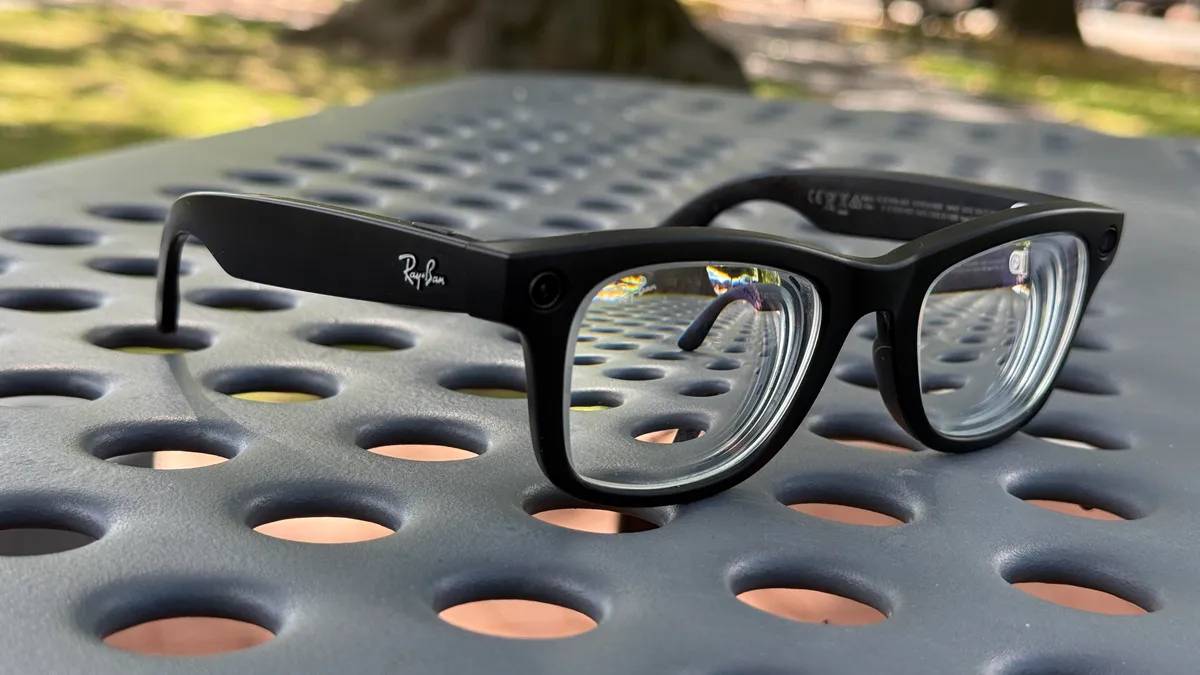
A significant setback in Apple’s augmented reality roadmap has emerged as reports indicate that its long-anticipated smart glasses project has been delayed until late 2027. The delay underscores the technical complexity of wearable AR devices and highlights intensifying competition in the race to define the next generation of consumer computing platforms.
Apple’s smart glasses project, widely viewed as a cornerstone of its future augmented reality strategy, has reportedly been pushed back due to ongoing development challenges. The device, originally expected to arrive earlier, is now projected for a late 2027 launch timeline.
The delay is believed to stem from unresolved engineering challenges related to display technology, power efficiency, and miniaturization of advanced components required for lightweight wearable AR systems. These technical constraints remain among the most difficult hurdles in consumer augmented reality development.
Apple continues to invest in its AR ecosystem, including software frameworks and hardware prototypes, as part of a broader strategy to transition toward spatial computing devices that blend digital content with real-world environments.
The postponement comes as competitors across the technology industry accelerate investments in mixed reality, wearable computing, and AI-enhanced spatial interfaces. The development aligns with a broader trend across global technology markets where augmented reality is emerging as the next major computing platform after smartphones and mobile devices.
For years, Apple has been positioning itself as a leader in spatial computing, most recently through its Vision Pro headset. However, smart glasses represent a more ambitious long-term goal: lightweight, everyday wearable devices that integrate digital information seamlessly into real-world environments.
The transition from headsets to glasses is widely considered one of the most technically challenging frontiers in consumer electronics. Key obstacles include achieving sufficient battery life, maintaining high-quality visual output in compact form factors, and integrating advanced sensors without compromising design or usability.
Globally, major technology firms are investing heavily in AR and wearable AI systems, seeing them as potential successors to smartphones. Companies such as Meta and others have also explored smart glasses and mixed-reality platforms, intensifying competition in this emerging category.
Historically, shifts in personal computing from desktops to smartphones have been driven by breakthroughs in portability, usability, and ecosystem integration. Smart glasses represent the next potential evolution, but widespread adoption depends on overcoming significant hardware and user-experience barriers.
Industry analysts view the delay as a reflection of the inherent difficulty in scaling AR hardware for mass-market adoption. Experts suggest that while software and AI integration have advanced rapidly, hardware miniaturization remains a bottleneck for consumer-grade smart glasses.
Technology strategists note that Apple’s cautious approach may reflect its long-standing product philosophy of prioritizing maturity and user experience over early market entry. Rather than rushing to release incomplete hardware, the company appears focused on ensuring that AR glasses meet its design and performance standards.
Market observers highlight that delays in flagship hardware programs are not uncommon in emerging categories, particularly where multiple technological breakthroughs must converge simultaneously.
Analysts also point out that AI advancements could eventually accelerate the development of smart glasses by enabling more efficient on-device processing, improved user interfaces, and context-aware computing capabilities.
Industry experts emphasize that the eventual success of smart glasses will depend not only on hardware readiness but also on ecosystem integration, application development, and consumer acceptance of always-on wearable devices.
For businesses, the delay signals that large-scale adoption of AR-based workflows and wearable computing may take longer than initially expected. Companies investing in spatial computing strategies may need to extend timelines for integration and deployment.
For investors, the postponement reflects ongoing uncertainty in the AR hardware market, where long-term potential remains high but near-term commercialization is constrained by technical barriers.
For consumers, the delay means continued reliance on smartphones and existing devices as the primary interface for digital interaction, with AR wearables remaining an emerging rather than immediate category.
For competitors, Apple’s timeline shift may provide an opportunity for alternative AR and smart glasses developers to experiment with early market positioning. The next phase of AR development will depend on breakthroughs in display technology, battery efficiency, and AI integration. Decision-makers should monitor progress in wearable computing hardware and ecosystem readiness across major technology firms.
While Apple’s delay may slow near-term expectations, the strategic direction of the industry remains unchanged: smart glasses are widely viewed as a potential successor to smartphones. The timing of that transition, however, now appears further out than previously anticipated.
Source: CNET
Date: June 2, 2026


