
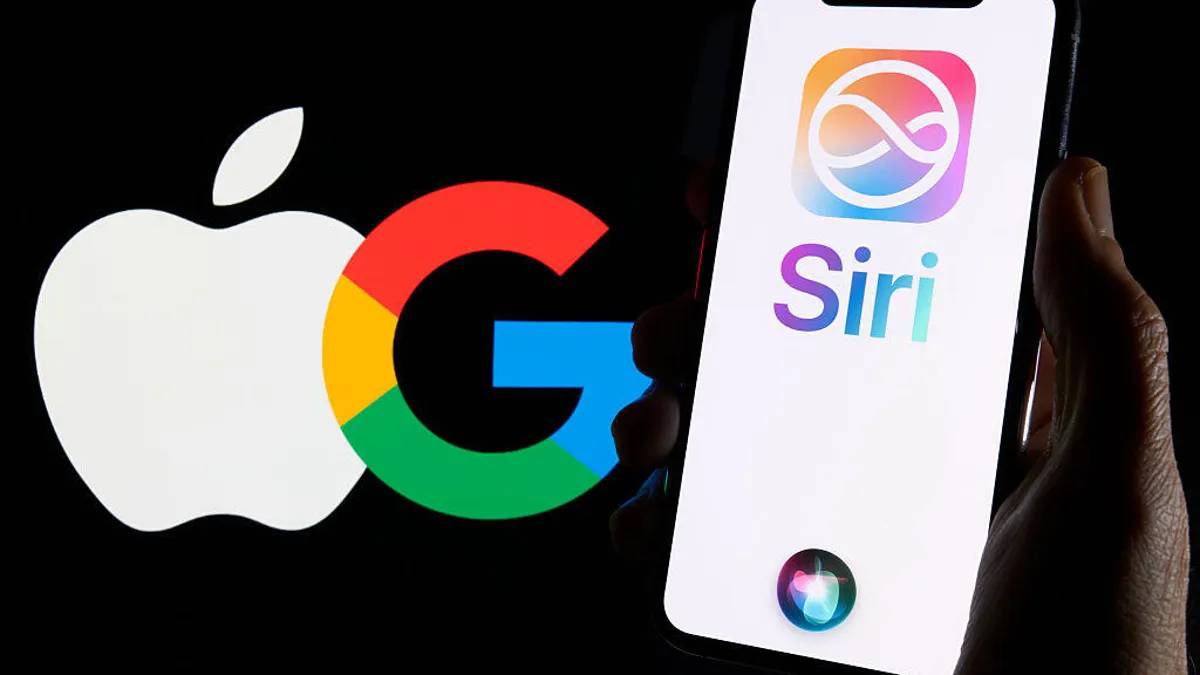
Apple Siri Strategy Leans Google Gemini AI

Reports suggest Apple is exploring deep integration of Google’s Gemini AI to power a more advanced version of Siri in upcoming iOS releases.

May 19, 2026
|

Apple’s reported plan to integrate Google’s Gemini AI into its next-generation Siri assistant marks a significant recalibration in its AI strategy. The move underscores intensifying competition in the generative AI space and signals a pragmatic shift toward external AI partnerships, with implications for platform control, user experience, and global tech competition.

Reports suggest Apple is exploring deep integration of Google’s Gemini AI to power a more advanced version of Siri in upcoming iOS releases. This would represent one of the most notable cross-ecosystem collaborations between two major technology rivals.

Key stakeholders include Apple, Google, and users within the global iOS ecosystem. The timeline points toward future iOS iterations where Siri undergoes a significant functional overhaul.

The development highlights Apple’s internal challenges in rapidly scaling its own large language model capabilities. Market observers see this as a strategic outsourcing of frontier AI capabilities to accelerate product competitiveness in voice and assistant technologies.

The AI assistant market has become a central battleground for big tech firms, with companies racing to embed generative AI into consumer-facing platforms. Apple, traditionally known for tightly controlled in-house ecosystems, has taken a more cautious approach to large-scale AI deployment compared to competitors like Google and Microsoft.

Google’s Gemini model has emerged as a leading frontier AI system, widely deployed across search, cloud, and productivity tools. Apple’s reported reliance on Gemini reflects broader industry dynamics where even vertically integrated firms are selectively partnering to access advanced AI capabilities.

Historically, Siri has lagged behind competing assistants in contextual reasoning and conversational depth. The integration of external AI models suggests Apple is prioritizing performance parity over full-stack ownership in the short term, while potentially continuing internal AI development in parallel.

Industry analysts suggest that Apple’s potential reliance on Google’s AI marks a pragmatic but strategically sensitive shift, given the competitive tension between the two firms in mobile ecosystems, search, and services.

Technology strategists argue that hybrid AI architectures combining proprietary systems with external large language models are becoming increasingly common as firms race to meet user expectations.

Some experts view the move as evidence that frontier AI development is consolidating around a small number of foundational model providers, effectively turning them into infrastructure layers for the broader tech industry.

While official statements from Apple and Google remain limited, industry commentary emphasizes that such partnerships typically involve strict data governance and segmentation to preserve user privacy and platform integrity.

For businesses, Apple’s move could accelerate enterprise adoption of AI assistants embedded within mobile ecosystems, improving productivity and voice-driven workflows. It may also reshape developer expectations around AI integration standards across platforms.

For investors, the partnership signals both opportunity and dependency Apple gains AI acceleration, while Google strengthens its position as a foundational AI infrastructure provider.

From a regulatory perspective, increased cross-ecosystem AI integration may draw scrutiny over data handling, competition dynamics, and platform concentration. Analysts warn that reliance on third-party AI could redefine competitive boundaries in consumer technology, shifting value from hardware differentiation toward AI model ownership and control.

The next phase will focus on how deeply Gemini is integrated into Siri and whether Apple eventually transitions toward a hybrid or fully proprietary AI model. Key uncertainties include user data governance, latency performance, and competitive response from Microsoft and Amazon. The broader trajectory suggests that AI assistants will increasingly depend on shared foundational models across competing ecosystems.

Source: CNET
Date: 19 May 2026

  • Featured tools
Surfer AI
Free

Surfer AI is an AI-powered content creation assistant built into the Surfer SEO platform, designed to generate SEO-optimized articles from prompts, leveraging data from search results to inform tone, structure, and relevance.

#
SEO
Learn more
Tome AI
Free

Tome AI is an AI-powered storytelling and presentation tool designed to help users create compelling narratives and presentations quickly and efficiently. It leverages advanced AI technologies to generate content, images, and animations based on user input.

#
Presentation
#
Startup Tools
Learn more

Learn more about future of AI

Join 80,000+ Ai enthusiast getting weekly updates on exciting AI tools.
Thank you! Your submission has been received!
Oops! Something went wrong while submitting the form.

Apple Siri Strategy Leans Google Gemini AI

May 19, 2026

Reports suggest Apple is exploring deep integration of Google’s Gemini AI to power a more advanced version of Siri in upcoming iOS releases.

Apple’s reported plan to integrate Google’s Gemini AI into its next-generation Siri assistant marks a significant recalibration in its AI strategy. The move underscores intensifying competition in the generative AI space and signals a pragmatic shift toward external AI partnerships, with implications for platform control, user experience, and global tech competition.

Reports suggest Apple is exploring deep integration of Google’s Gemini AI to power a more advanced version of Siri in upcoming iOS releases. This would represent one of the most notable cross-ecosystem collaborations between two major technology rivals.

Key stakeholders include Apple, Google, and users within the global iOS ecosystem. The timeline points toward future iOS iterations where Siri undergoes a significant functional overhaul.

The development highlights Apple’s internal challenges in rapidly scaling its own large language model capabilities. Market observers see this as a strategic outsourcing of frontier AI capabilities to accelerate product competitiveness in voice and assistant technologies.

The AI assistant market has become a central battleground for big tech firms, with companies racing to embed generative AI into consumer-facing platforms. Apple, traditionally known for tightly controlled in-house ecosystems, has taken a more cautious approach to large-scale AI deployment compared to competitors like Google and Microsoft.

Google’s Gemini model has emerged as a leading frontier AI system, widely deployed across search, cloud, and productivity tools. Apple’s reported reliance on Gemini reflects broader industry dynamics where even vertically integrated firms are selectively partnering to access advanced AI capabilities.

Historically, Siri has lagged behind competing assistants in contextual reasoning and conversational depth. The integration of external AI models suggests Apple is prioritizing performance parity over full-stack ownership in the short term, while potentially continuing internal AI development in parallel.

Industry analysts suggest that Apple’s potential reliance on Google’s AI marks a pragmatic but strategically sensitive shift, given the competitive tension between the two firms in mobile ecosystems, search, and services.

Technology strategists argue that hybrid AI architectures combining proprietary systems with external large language models are becoming increasingly common as firms race to meet user expectations.

Some experts view the move as evidence that frontier AI development is consolidating around a small number of foundational model providers, effectively turning them into infrastructure layers for the broader tech industry.

While official statements from Apple and Google remain limited, industry commentary emphasizes that such partnerships typically involve strict data governance and segmentation to preserve user privacy and platform integrity.

For businesses, Apple’s move could accelerate enterprise adoption of AI assistants embedded within mobile ecosystems, improving productivity and voice-driven workflows. It may also reshape developer expectations around AI integration standards across platforms.

For investors, the partnership signals both opportunity and dependency Apple gains AI acceleration, while Google strengthens its position as a foundational AI infrastructure provider.

From a regulatory perspective, increased cross-ecosystem AI integration may draw scrutiny over data handling, competition dynamics, and platform concentration. Analysts warn that reliance on third-party AI could redefine competitive boundaries in consumer technology, shifting value from hardware differentiation toward AI model ownership and control.

The next phase will focus on how deeply Gemini is integrated into Siri and whether Apple eventually transitions toward a hybrid or fully proprietary AI model. Key uncertainties include user data governance, latency performance, and competitive response from Microsoft and Amazon. The broader trajectory suggests that AI assistants will increasingly depend on shared foundational models across competing ecosystems.

Source: CNET
Date: 19 May 2026

Promote Your Tool

Copy Embed Code

Similar Blogs

June 23, 2026
|

Sokin Secures European Payments License

Sokin has acquired Norwegian fintech firm Settle in a transaction that provides access to a valuable Electronic Money Institution (EMI) license.
Read more
June 23, 2026
|

Twin Prime Bets Defence AI

Twin Prime has secured $10 million in fresh funding to expand its defence-focused AI systems, which prioritize sensor fusion, detection, and real-time environmental interpretation over generative or chatbot-based models.
Read more
June 23, 2026
|

Northzone Backs Physical AI Shift

Northzone has appointed a new partner to lead its physical AI investment strategy, marking a deliberate shift toward embodied intelligence—systems that interact directly with physical environments.
Read more
June 23, 2026
|

Switzerland Hosts Iran US Technical Talks

The upcoming technical-level discussions between Iranian and US representatives will focus on procedural and issue-specific frameworks rather than high-level political agreements.
Read more
June 23, 2026
|

Switzerland Extends Ukrainian Protection Status

Swiss federal authorities are reviewing the possibility of extending S protection status, which grants temporary residence rights and access to essential services for Ukrainian nationals fleeing the war.
Read more
June 23, 2026
|

Swiss FM Engages Iran Diplomacy

Swiss Foreign Minister Ignazio Cassis held formal discussions with Iran’s foreign minister, focusing on bilateral relations and broader regional security dynamics.
Read more