
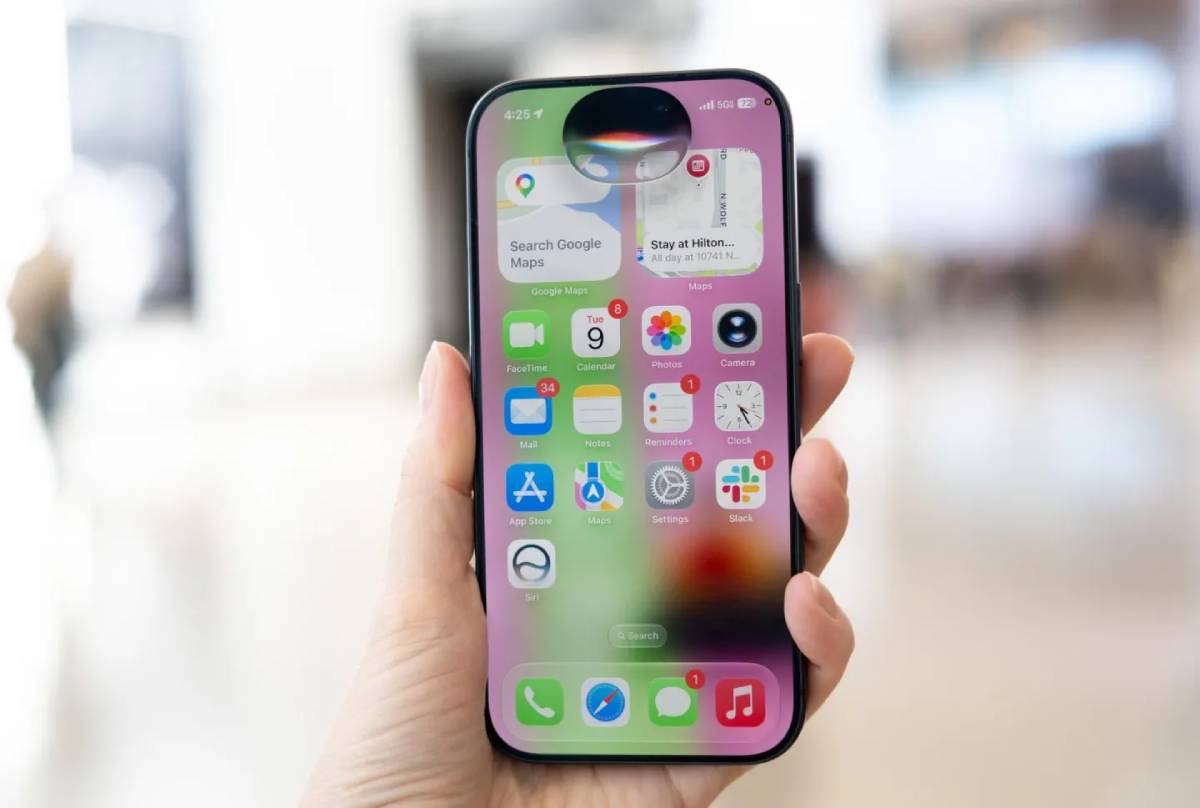
Apple Siri AI Upgrade Signals Shift

Early hands-on evaluations of Apple’s new Siri AI, built on Apple Intelligence and expected to expand across future iOS releases, indicate that the assistant now demonstrates significantly improved contextual understanding and task execution capabilities.

July 29, 2026
|
Image Source: The Verge

A notable shift in consumer artificial intelligence is emerging as early testing of Apple’s upgraded Siri AI suggests meaningful improvements in functionality, responsiveness, and real-world usability. The development signals Apple’s renewed push to compete in the rapidly evolving AI assistant market, with implications for consumer technology, platform ecosystems, and global competition in generative AI services.

Early hands-on evaluations of Apple’s new Siri AI, built on Apple Intelligence and expected to expand across future iOS releases, indicate that the assistant now demonstrates significantly improved contextual understanding and task execution capabilities. The system is designed to integrate more deeply across apps, enabling users to perform complex multi-step actions using natural language commands.

The upgrade represents Apple’s most substantial attempt in years to reposition Siri as a competitive AI assistant amid rising pressure from OpenAI, Google, Microsoft, and Amazon in the generative AI space. The assistant is expected to function across messaging, productivity, search, and device management tasks within the Apple ecosystem.

The rollout is being positioned as part of a broader transition toward on-device and hybrid AI processing, emphasizing privacy, speed, and tighter integration with Apple hardware.

The development comes at a critical moment in the global AI assistant market, where competition is rapidly intensifying. Since the launch of generative AI systems, user expectations for digital assistants have evolved significantly, with a growing demand for conversational intelligence, task automation, and cross-application functionality.

The development aligns with a broader trend across global markets where technology companies are embedding AI directly into operating systems rather than offering it as standalone applications. Microsoft’s Copilot integration, Google’s Gemini ecosystem, and Amazon’s Alexa upgrades all reflect this shift toward system-level AI integration.

Historically, Siri was one of the first mainstream voice assistants but gradually fell behind competitors in capability and flexibility. Apple’s renewed focus on AI represents an effort to regain leadership in a category that is becoming central to device ecosystems, software platforms, and user engagement strategies.

At the same time, geopolitical and regulatory considerations around AI privacy, data processing, and on-device computing are shaping how companies design and deploy assistant technologies. Apple’s emphasis on privacy-centric AI processing is a key differentiator in this evolving landscape.

Industry analysts suggest that Apple’s improvements to Siri reflect a broader strategic pivot toward embedding generative AI deeply into its ecosystem rather than relying on external AI platforms. This approach may strengthen user retention and reinforce Apple’s hardware-software integration advantage.

Technology experts note that while early tests indicate improved performance, the long-term competitiveness of Siri will depend on its ability to match or exceed the flexibility and reasoning capabilities of leading AI models from OpenAI and Google.

Productivity specialists argue that AI assistants are becoming central to how users interact with digital devices, shifting from passive voice tools to active workflow managers capable of executing multi-step tasks across applications.

Market observers also highlight that Apple’s approach prioritizes privacy and on-device processing, which may limit some capabilities compared to cloud-heavy competitors but could appeal strongly to enterprise and privacy-conscious consumers.

Overall sentiment suggests cautious optimism, with recognition that Apple is entering the AI race later but with significant ecosystem advantages. For businesses, improved AI assistants could reshape productivity tools, mobile workflows, and enterprise software integration. Companies developing apps within the Apple ecosystem may need to adapt to new AI-driven interaction models that reduce reliance on traditional user interfaces.

For investors, Apple’s AI progress is seen as a key factor in sustaining long-term services revenue growth and strengthening device ecosystem lock-in. AI capability is increasingly viewed as a core driver of smartphone and operating system differentiation.

For consumers, the upgrade promises more seamless interactions, improved automation, and reduced friction in everyday digital tasks, potentially redefining expectations for mobile assistants.

For policymakers, the expansion of AI into core operating systems raises ongoing questions about data privacy, platform dominance, and competitive fairness in mobile ecosystems.

Attention will now focus on the full rollout of Siri AI across Apple devices and its performance relative to competing AI assistants. Key uncertainties remain around feature completeness, global availability, and integration depth across third-party applications.

As AI assistants become foundational to operating systems, the competition between Apple, Google, Microsoft, and emerging AI-first companies is expected to intensify, shaping the next major phase of consumer technology evolution.

Source: The Verge
Date:
June 2026

  • Featured tools
Writesonic AI
Free

Writesonic AI is a versatile AI writing platform designed for marketers, entrepreneurs, and content creators. It helps users create blog posts, ad copies, product descriptions, social media posts, and more with ease. With advanced AI models and user-friendly tools, Writesonic streamlines content production and saves time for busy professionals.

#
Copywriting
Learn more
Surfer AI
Free

Surfer AI is an AI-powered content creation assistant built into the Surfer SEO platform, designed to generate SEO-optimized articles from prompts, leveraging data from search results to inform tone, structure, and relevance.

#
SEO
Learn more

Learn more about future of AI

Join 80,000+ Ai enthusiast getting weekly updates on exciting AI tools.
Thank you! Your submission has been received!
Oops! Something went wrong while submitting the form.

Apple Siri AI Upgrade Signals Shift

July 29, 2026

Early hands-on evaluations of Apple’s new Siri AI, built on Apple Intelligence and expected to expand across future iOS releases, indicate that the assistant now demonstrates significantly improved contextual understanding and task execution capabilities.

Image Source: The Verge

A notable shift in consumer artificial intelligence is emerging as early testing of Apple’s upgraded Siri AI suggests meaningful improvements in functionality, responsiveness, and real-world usability. The development signals Apple’s renewed push to compete in the rapidly evolving AI assistant market, with implications for consumer technology, platform ecosystems, and global competition in generative AI services.

Early hands-on evaluations of Apple’s new Siri AI, built on Apple Intelligence and expected to expand across future iOS releases, indicate that the assistant now demonstrates significantly improved contextual understanding and task execution capabilities. The system is designed to integrate more deeply across apps, enabling users to perform complex multi-step actions using natural language commands.

The upgrade represents Apple’s most substantial attempt in years to reposition Siri as a competitive AI assistant amid rising pressure from OpenAI, Google, Microsoft, and Amazon in the generative AI space. The assistant is expected to function across messaging, productivity, search, and device management tasks within the Apple ecosystem.

The rollout is being positioned as part of a broader transition toward on-device and hybrid AI processing, emphasizing privacy, speed, and tighter integration with Apple hardware.

The development comes at a critical moment in the global AI assistant market, where competition is rapidly intensifying. Since the launch of generative AI systems, user expectations for digital assistants have evolved significantly, with a growing demand for conversational intelligence, task automation, and cross-application functionality.

The development aligns with a broader trend across global markets where technology companies are embedding AI directly into operating systems rather than offering it as standalone applications. Microsoft’s Copilot integration, Google’s Gemini ecosystem, and Amazon’s Alexa upgrades all reflect this shift toward system-level AI integration.

Historically, Siri was one of the first mainstream voice assistants but gradually fell behind competitors in capability and flexibility. Apple’s renewed focus on AI represents an effort to regain leadership in a category that is becoming central to device ecosystems, software platforms, and user engagement strategies.

At the same time, geopolitical and regulatory considerations around AI privacy, data processing, and on-device computing are shaping how companies design and deploy assistant technologies. Apple’s emphasis on privacy-centric AI processing is a key differentiator in this evolving landscape.

Industry analysts suggest that Apple’s improvements to Siri reflect a broader strategic pivot toward embedding generative AI deeply into its ecosystem rather than relying on external AI platforms. This approach may strengthen user retention and reinforce Apple’s hardware-software integration advantage.

Technology experts note that while early tests indicate improved performance, the long-term competitiveness of Siri will depend on its ability to match or exceed the flexibility and reasoning capabilities of leading AI models from OpenAI and Google.

Productivity specialists argue that AI assistants are becoming central to how users interact with digital devices, shifting from passive voice tools to active workflow managers capable of executing multi-step tasks across applications.

Market observers also highlight that Apple’s approach prioritizes privacy and on-device processing, which may limit some capabilities compared to cloud-heavy competitors but could appeal strongly to enterprise and privacy-conscious consumers.

Overall sentiment suggests cautious optimism, with recognition that Apple is entering the AI race later but with significant ecosystem advantages. For businesses, improved AI assistants could reshape productivity tools, mobile workflows, and enterprise software integration. Companies developing apps within the Apple ecosystem may need to adapt to new AI-driven interaction models that reduce reliance on traditional user interfaces.

For investors, Apple’s AI progress is seen as a key factor in sustaining long-term services revenue growth and strengthening device ecosystem lock-in. AI capability is increasingly viewed as a core driver of smartphone and operating system differentiation.

For consumers, the upgrade promises more seamless interactions, improved automation, and reduced friction in everyday digital tasks, potentially redefining expectations for mobile assistants.

For policymakers, the expansion of AI into core operating systems raises ongoing questions about data privacy, platform dominance, and competitive fairness in mobile ecosystems.

Attention will now focus on the full rollout of Siri AI across Apple devices and its performance relative to competing AI assistants. Key uncertainties remain around feature completeness, global availability, and integration depth across third-party applications.

As AI assistants become foundational to operating systems, the competition between Apple, Google, Microsoft, and emerging AI-first companies is expected to intensify, shaping the next major phase of consumer technology evolution.

Source: The Verge
Date:
June 2026

Promote Your Tool

Copy Embed Code

Similar Blogs

July 29, 2026
|

EmulationStation Enhances Retro Gaming Experience

EmulationStation is a front-end interface designed to organize and present video game emulation libraries through a streamlined user experience.
Read more
July 29, 2026
|

Tomoson Expands Influencer Marketing Collaboration

Tomoson operates as an influencer marketing platform designed to help brands collaborate with content creators and manage promotional campaigns.
Read more
July 29, 2026
|

ZeroBin.net Advances Secure Data Sharing

ZeroBin.net operates as a privacy-oriented platform that allows users to share encrypted information through temporary digital channels.
Read more
July 29, 2026
|

Gaia Expands Digital Knowledge Access

Gaia operates within the broader category of digital platforms focused on information discovery, organization, and knowledge accessibility.
Read more
July 29, 2026
|

MailDrop Expands Privacy Email Solutions

MailDrop operates as a temporary email service designed to help users create disposable email addresses for online registrations and digital interactions.
Read more
July 29, 2026
|

MacX YouTube Downloader Enhances Video Management

MacX YouTube Downloader is a multimedia software solution designed to support video downloading, conversion, and management from online platforms.
Read more