
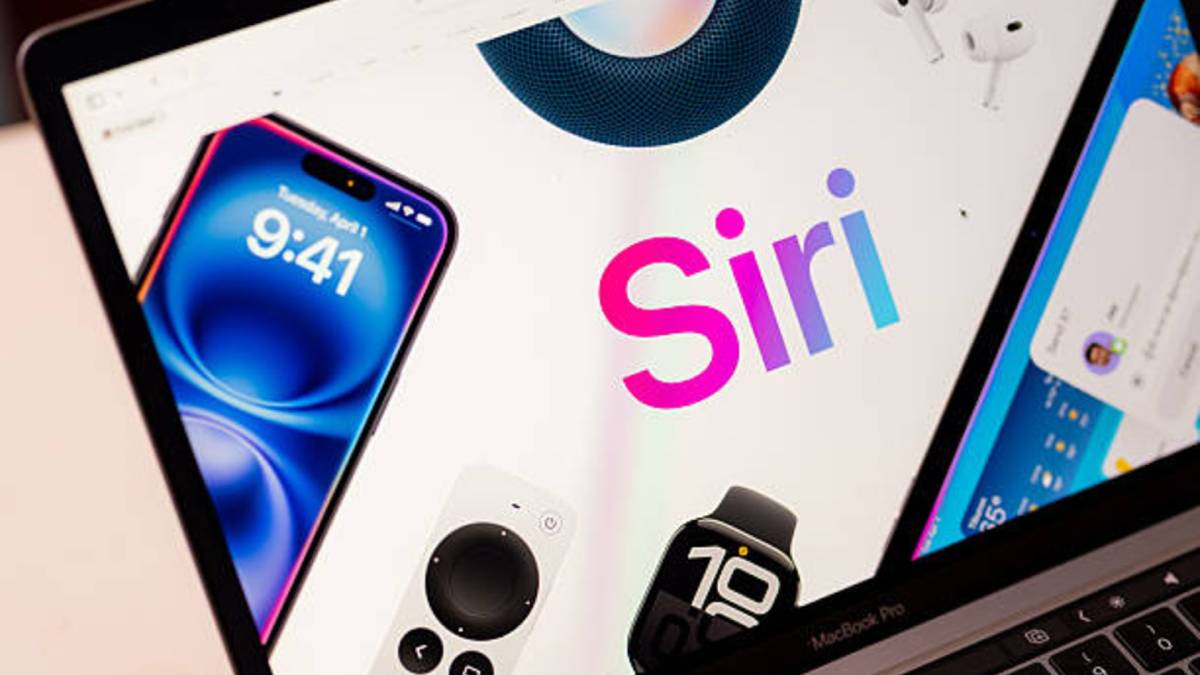
Apple Signals AI Reset With Siri Overhaul

Apple is reportedly preparing a major upgrade to Siri as part of its iOS 27 rollout, transforming the assistant into a more central and interactive AI interface. Key features include a dedicated Siri app, a redesigned user experience.

March 25, 2026
|

A major development unfolded as Apple Inc. plans a sweeping AI reboot centered on Siri, introducing a standalone app, redesigned interface, and a new “Ask Siri” button in iOS 27. The move signals Apple’s renewed push in generative AI, with implications for consumers, developers, and global competition.

Apple is reportedly preparing a major upgrade to Siri as part of its iOS 27 rollout, transforming the assistant into a more central and interactive AI interface. Key features include a dedicated Siri app, a redesigned user experience, and a prominent “Ask Siri” button integrated across the operating system.

The overhaul aims to make AI interactions more seamless and visible, positioning Siri as a core entry point for AI-powered tasks. The update is expected to roll out alongside broader system enhancements, potentially within Apple’s next annual software cycle. Stakeholders include developers, enterprise users, and Apple’s global consumer base, as the company seeks to close the gap with competitors in the AI assistant space.

The development aligns with a broader trend across global markets where major technology companies are racing to integrate generative AI into core products and platforms. Voice assistants, once limited to basic commands, are now evolving into intelligent agents capable of handling complex, multi-step tasks.

Apple has historically taken a more measured approach to AI compared to rivals, prioritizing privacy and on-device processing. However, the rapid rise of AI-driven interfaces has increased pressure on the company to accelerate innovation in this space.

Competitors have already embedded advanced AI capabilities into search, productivity tools, and operating systems, reshaping user expectations. Apple’s planned Siri reboot reflects a strategic effort to reposition itself in this evolving landscape, leveraging its ecosystem of devices and services to deliver a differentiated AI experience.

Industry analysts view Apple’s Siri overhaul as a critical step in regaining momentum in the AI race. Experts suggest that integrating AI more deeply into the operating system could enhance user engagement and strengthen ecosystem lock-in.

Market observers note that Apple’s emphasis on interface design and user experience could differentiate its approach, particularly if it successfully balances advanced AI capabilities with privacy protections. The introduction of a dedicated app and system-wide access points indicates a shift toward making AI more visible and accessible.

Analysts also highlight potential challenges, including the need to match or exceed the capabilities of competing AI assistants while maintaining Apple’s performance and security standards. The success of this initiative will likely depend on execution, developer adoption, and real-world usability.

For businesses, Apple’s AI reboot could reshape how users interact with apps and services, creating new opportunities for developers to integrate AI-driven features. Companies may need to adapt their mobile strategies to align with more conversational and agent-based interfaces.

Investors are likely to see this as a pivotal moment in Apple’s AI strategy, with potential implications for revenue growth and competitive positioning. For consumers, the changes could significantly enhance usability and productivity.

From a policy perspective, Apple’s focus on privacy-centric AI may influence regulatory discussions around data usage, transparency, and user control particularly as governments scrutinize the expanding role of AI in everyday technology.

Looking ahead, Apple’s Siri transformation will be closely watched as a test of its ability to compete in the rapidly evolving AI landscape. Key factors include feature performance, user adoption, and developer ecosystem engagement.

Decision-makers should monitor the iOS 27 rollout and subsequent updates. As AI becomes central to operating systems, Apple’s execution could redefine its role in the next phase of digital interaction.

Source: Bloomberg
Date: March 24, 2026

  • Featured tools
Surfer AI
Free

Surfer AI is an AI-powered content creation assistant built into the Surfer SEO platform, designed to generate SEO-optimized articles from prompts, leveraging data from search results to inform tone, structure, and relevance.

#
SEO
Learn more
Twistly AI
Paid

Twistly AI is a PowerPoint add-in that allows users to generate full slide decks, improve existing presentations, and convert various content types into polished slides directly within Microsoft PowerPoint.It streamlines presentation creation using AI-powered text analysis, image generation and content conversion.

#
Presentation
Learn more

Learn more about future of AI

Join 80,000+ Ai enthusiast getting weekly updates on exciting AI tools.
Thank you! Your submission has been received!
Oops! Something went wrong while submitting the form.

Apple Signals AI Reset With Siri Overhaul

March 25, 2026

Apple is reportedly preparing a major upgrade to Siri as part of its iOS 27 rollout, transforming the assistant into a more central and interactive AI interface. Key features include a dedicated Siri app, a redesigned user experience.

A major development unfolded as Apple Inc. plans a sweeping AI reboot centered on Siri, introducing a standalone app, redesigned interface, and a new “Ask Siri” button in iOS 27. The move signals Apple’s renewed push in generative AI, with implications for consumers, developers, and global competition.

Apple is reportedly preparing a major upgrade to Siri as part of its iOS 27 rollout, transforming the assistant into a more central and interactive AI interface. Key features include a dedicated Siri app, a redesigned user experience, and a prominent “Ask Siri” button integrated across the operating system.

The overhaul aims to make AI interactions more seamless and visible, positioning Siri as a core entry point for AI-powered tasks. The update is expected to roll out alongside broader system enhancements, potentially within Apple’s next annual software cycle. Stakeholders include developers, enterprise users, and Apple’s global consumer base, as the company seeks to close the gap with competitors in the AI assistant space.

The development aligns with a broader trend across global markets where major technology companies are racing to integrate generative AI into core products and platforms. Voice assistants, once limited to basic commands, are now evolving into intelligent agents capable of handling complex, multi-step tasks.

Apple has historically taken a more measured approach to AI compared to rivals, prioritizing privacy and on-device processing. However, the rapid rise of AI-driven interfaces has increased pressure on the company to accelerate innovation in this space.

Competitors have already embedded advanced AI capabilities into search, productivity tools, and operating systems, reshaping user expectations. Apple’s planned Siri reboot reflects a strategic effort to reposition itself in this evolving landscape, leveraging its ecosystem of devices and services to deliver a differentiated AI experience.

Industry analysts view Apple’s Siri overhaul as a critical step in regaining momentum in the AI race. Experts suggest that integrating AI more deeply into the operating system could enhance user engagement and strengthen ecosystem lock-in.

Market observers note that Apple’s emphasis on interface design and user experience could differentiate its approach, particularly if it successfully balances advanced AI capabilities with privacy protections. The introduction of a dedicated app and system-wide access points indicates a shift toward making AI more visible and accessible.

Analysts also highlight potential challenges, including the need to match or exceed the capabilities of competing AI assistants while maintaining Apple’s performance and security standards. The success of this initiative will likely depend on execution, developer adoption, and real-world usability.

For businesses, Apple’s AI reboot could reshape how users interact with apps and services, creating new opportunities for developers to integrate AI-driven features. Companies may need to adapt their mobile strategies to align with more conversational and agent-based interfaces.

Investors are likely to see this as a pivotal moment in Apple’s AI strategy, with potential implications for revenue growth and competitive positioning. For consumers, the changes could significantly enhance usability and productivity.

From a policy perspective, Apple’s focus on privacy-centric AI may influence regulatory discussions around data usage, transparency, and user control particularly as governments scrutinize the expanding role of AI in everyday technology.

Looking ahead, Apple’s Siri transformation will be closely watched as a test of its ability to compete in the rapidly evolving AI landscape. Key factors include feature performance, user adoption, and developer ecosystem engagement.

Decision-makers should monitor the iOS 27 rollout and subsequent updates. As AI becomes central to operating systems, Apple’s execution could redefine its role in the next phase of digital interaction.

Source: Bloomberg
Date: March 24, 2026

Promote Your Tool

Copy Embed Code

Similar Blogs

March 25, 2026
|

Retailers Split on AI Checkout Adoption

Retailers are testing AI checkout options integrated with platforms like Google’s Gemini and ChatGPT, aiming to streamline transactions, reduce labor costs, and personalize shopping experiences. Gap recently launched a pilot allowing AI-assisted checkout.
Read more
March 25, 2026
|

HP Rolls Out AI Enhancements, Challenges Apple

HP’s updates introduce AI-powered features for PCs, printers, and enterprise software, including generative AI capabilities, predictive analytics, and automation tools designed to enhance productivity.
Read more
March 25, 2026
|

Google Expands AI Robotics With Agile Partnership

The partnership enables Google to integrate its AI platforms into Agile Robots’ advanced robotic systems, enhancing agility, perception, and decision-making capabilities. Joint research initiatives aim to accelerate deployment in manufacturing, logistics, and service industries.
Read more
March 25, 2026
|

AI Governance Gains Clarity With New Reporting

The proposal outlines a comprehensive AI policy framework that integrates enterprise reporting standards and enhanced transparency measures. Key features include guidelines for data usage, ethical AI deployment, and stakeholder accountability.
Read more
March 25, 2026
|

Meta CTO Leads AI Tools Initiative for Productivity

Meta has launched a companywide program to integrate AI platforms into employee workflows, enabling staff to leverage generative AI, automation, and predictive analytics.
Read more
March 25, 2026
|

Apple Expands AI With iOS 26.4 Update

Apple’s iOS 26.4 update introduces AI-generated playlists that dynamically curate music based on user preferences and listening behavior. The feature reflects deeper integration of AI tools into everyday consumer experiences.
Read more